

 13 hours ago
5
13 hours ago
5
ARTICLE AD BOX
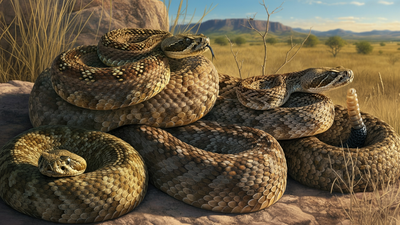
Texas is home to ten different species of rattlesnake, more than any other US state except Arizona, ranging from rocky desert canyons to suburban backyards. These pit vipers begin emerging from their winter dens in late February as temperatures rise, and they remain most visible through their spring mating season, when they tend to be noticeably more defensive.
By September, falling temperatures send them back underground for brumation. While most Texas rattlesnakes avoid confrontation whenever possible, three species, the timber rattlesnake, the banded rock rattlesnake, and the mottled rock rattlesnake, are protected under state law. Their venom chemistry varies dramatically between species, a fact researchers have used to understand snakebite risk and to develop a life-saving heart medication still used today.
What types of rattlesnakes are found in Texas
Texas ranks second only to Arizona for rattlesnake diversity in the United States, with ten distinct species spread across deserts, prairies, forests, and rocky canyons throughout the state. Each species has adapted to a specific niche, from the rocky outcrops of the Trans-Pecos to the humid pine woodlands of East Texas, resulting in significant differences in size, behaviour, venom composition, and threat level.
Three of these species, the timber rattlesnake, the banded rock rattlesnake, and the mottled rock rattlesnake, are protected under Texas state law due to their limited ranges and declining numbers. Here is a closer look at each of the ten rattlesnake species calling Texas home.
Western diamondback rattlesnake: Texas's most common venomous snake
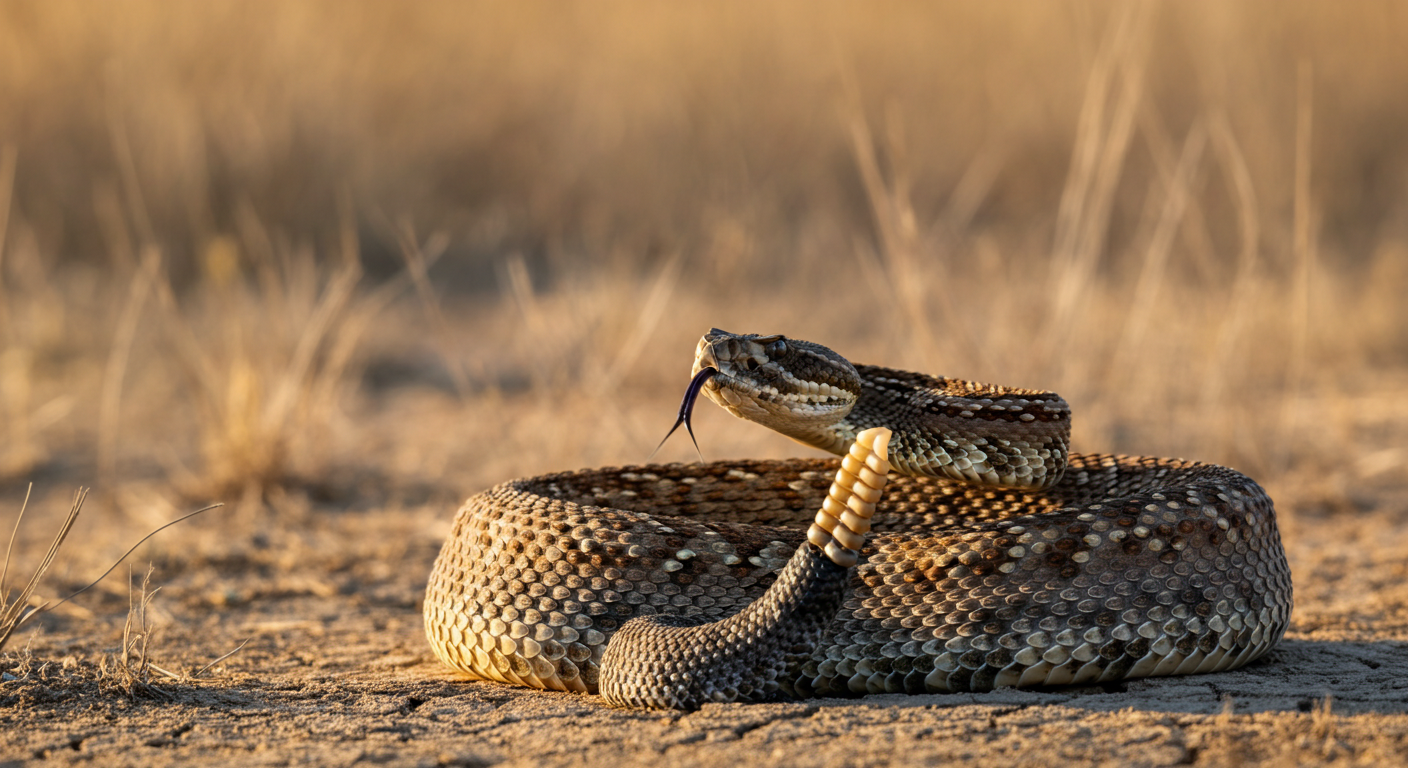
The western diamondback rattlesnake (Crotalus atrox) is found across nearly every region of Texas except the northern Panhandle and the wettest eastern counties, and it causes more snakebites than any other species in the state.
Unlike many of its relatives, the western diamondback rarely backs down from a confrontation, which contributes to its reputation as one of the most aggressive rattlesnakes in North America.
Research published in Toxicon found that this species shows relatively low geographic variation in overall venom toxicity, but populations at the northeastern edge of its range carry unusually high levels of tissue-damaging metalloproteinase activity, helping explain why bite severity can differ depending on where in the snake's range an encounter occurs.
Timber rattlesnake: A threatened species with one of the highest venom yields
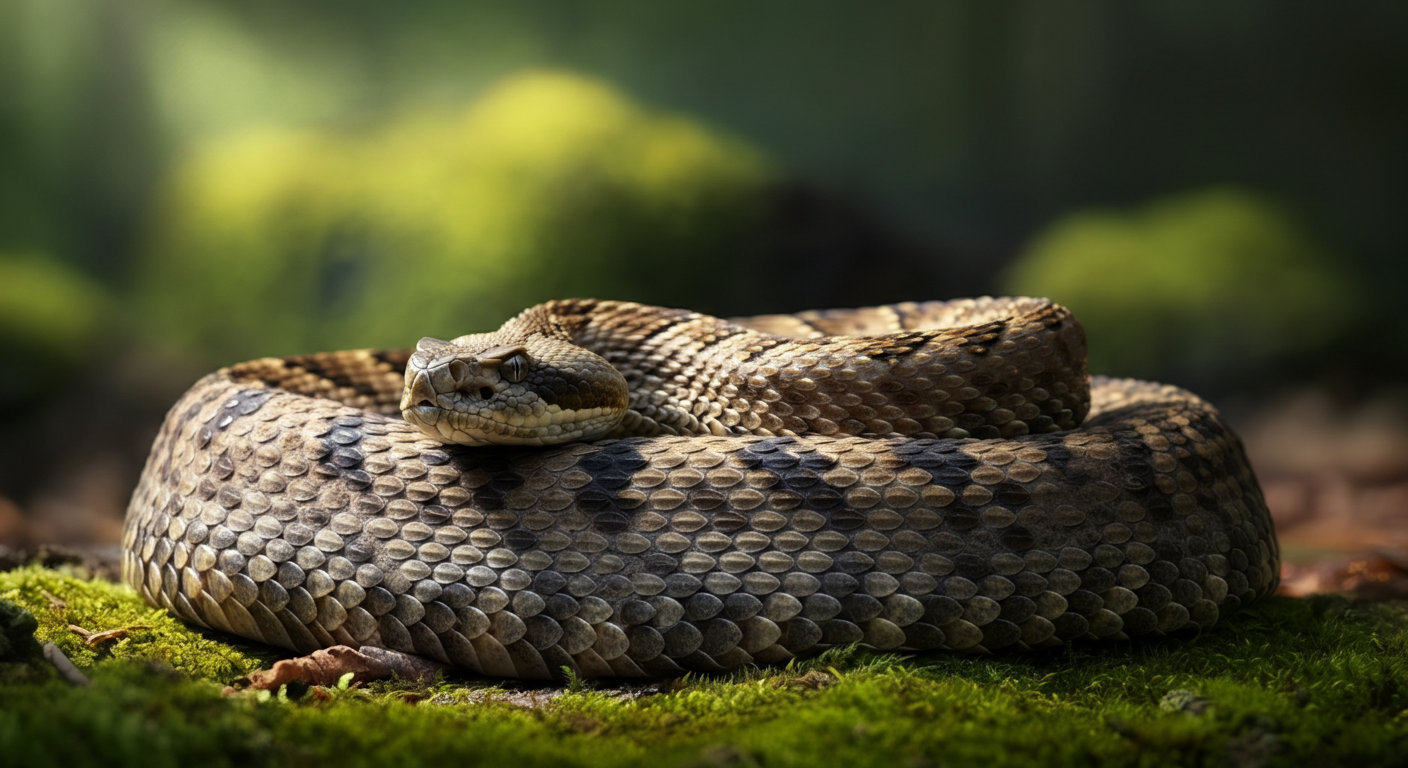
Found mainly in the eastern third of Texas near water sources, the timber rattlesnake is one of three rattlesnake species protected under Texas state law. A review published in Toxicon X documented that this species can inject an unusually high volume of venom per bite and noted that envenomation can trigger a rapid, severe drop in platelet count, even though field surveys cited in the same review found its populations declining across parts of its range.
Timber rattlesnakes prefer to stay still and rely on camouflage rather than rattle a warning, making them easy to overlook in leaf litter near streams and riverbanks, a behaviour that has made conservation tracking especially difficult.
Mojave rattlesnake: The only Texas snake with Mojave toxin
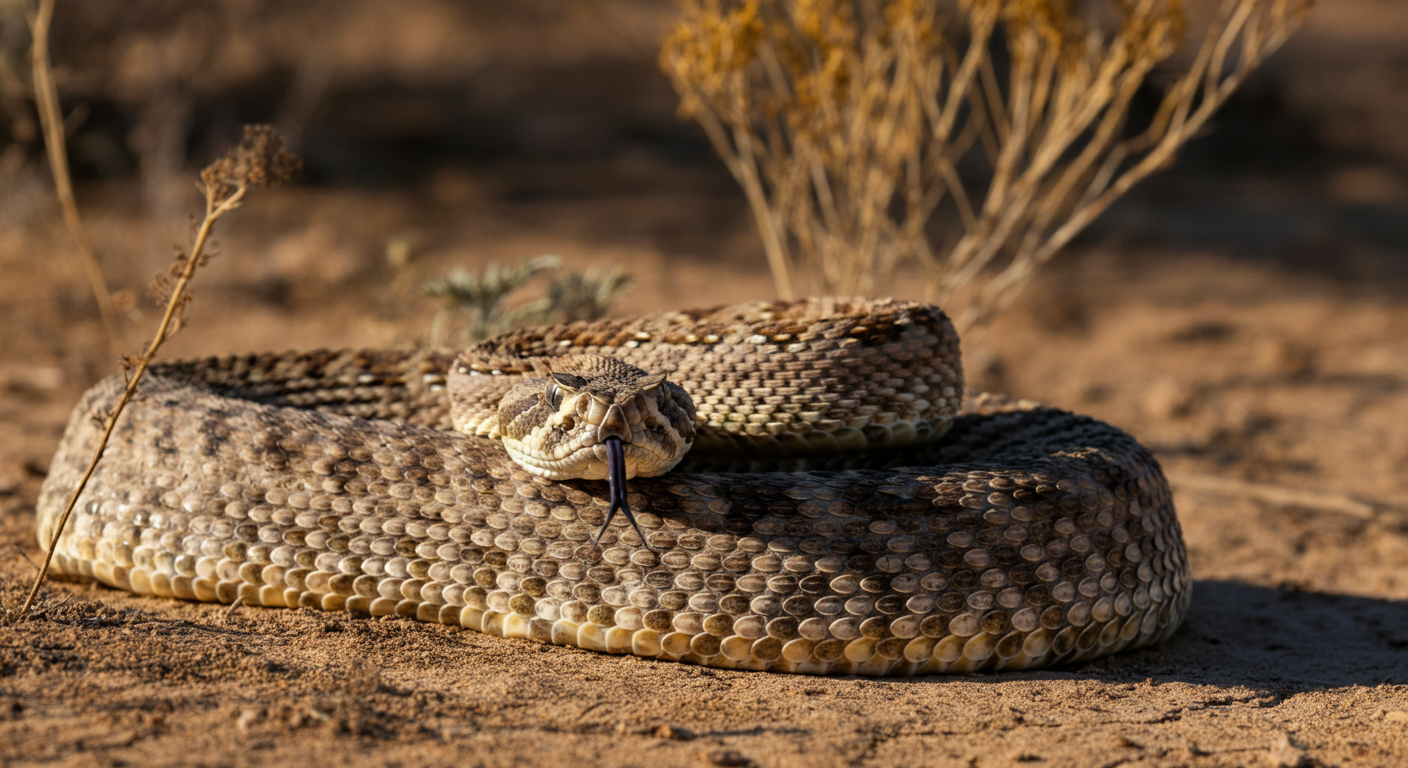
Restricted to the far western edges of Texas, the Mojave rattlesnake carries one of the most feared venoms of any North American pit viper. A study published in Scientific Reports confirmed a striking split within the species: Type A populations produce a potent neurotoxin called Mojave toxin with little tissue-damaging enzyme activity, while Type B populations lack the neurotoxin entirely but cause severe local haemorrhage instead, and some individuals carry a combination of both venom types.
Because the two cannot be told apart by appearance, every Mojave rattlesnake bite in Texas is treated as a potential neurotoxic emergency requiring prompt antivenom treatment regardless of which venom type the snake turns out to carry.
Western pygmy rattlesnake” The tiny snake behind a major heart drug
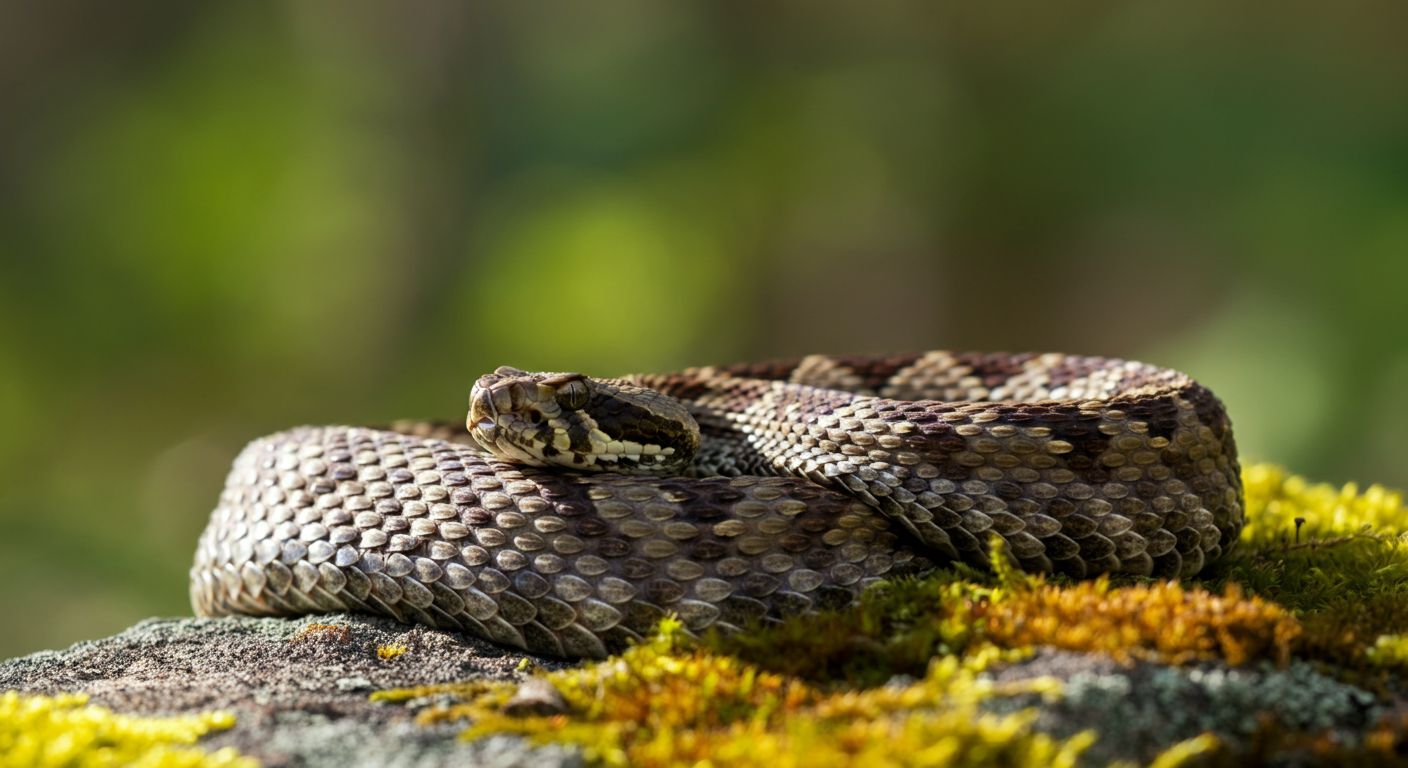
East Texas is home to the western pygmy rattlesnake, a small species rarely growing past two feet long with a rattle so faint locals nicknamed it the "rattle-less ground rattler." Despite its size, this snake's venom chemistry has had an outsized impact on medicine.
A review in Toxins explains how a disintegrin protein called barbourin, isolated from the venom of the closely related southeastern pygmy rattlesnake, served as the molecular template for eptifibatide, a glycoprotein IIb/IIIa inhibitor now used in hospitals worldwide to prevent dangerous blood clots in patients with acute coronary syndrome and during stent procedures.
Banded Rock Rattlesnake: A protected species of the Trans-Pecos
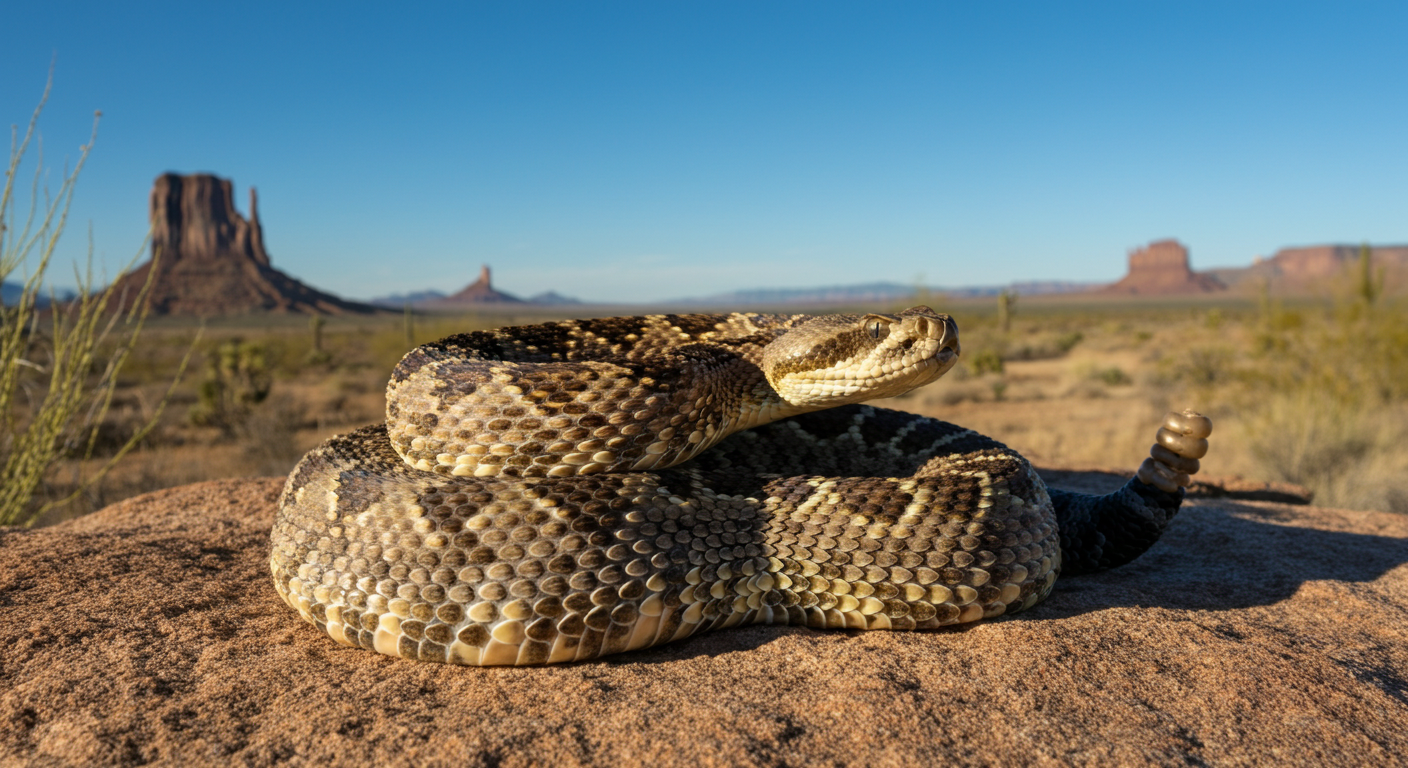
The banded rock rattlesnake (Crotalus lepidus klauberi) is found in the rocky mountain ranges of far west Texas and is one of the state's three legally protected rattlesnake species.
It is a small, strikingly patterned snake that blends almost perfectly into the grey limestone and granite outcrops it favours. It feeds primarily on lizards and small rodents and is rarely encountered by the public due to the remote terrain it occupies.
Its limited, fragmented range makes it especially vulnerable to over-collection by reptile enthusiasts, which is a major reason it carries legal protection in Texas.
Mottled Rock Rattlesnake: The other protected mountain dweller
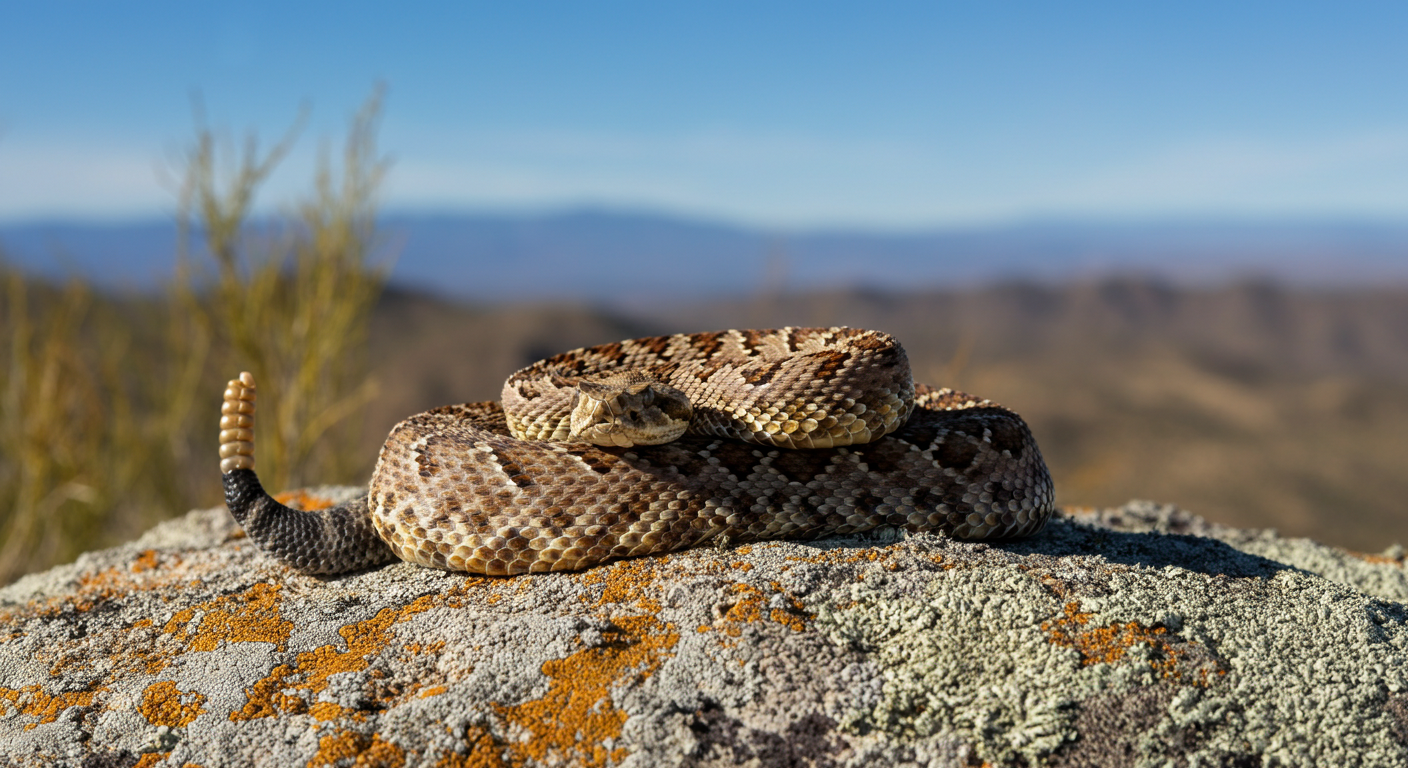
Like its banded cousin, the mottled rock rattlesnake (Crotalus lepidus lepidus) is found in the mountain terrain of west Texas and is protected under state law. It is the more widespread of the two rock rattlesnake subspecies found in Texas, ranging across the Chisos, Davis, and Guadalupe mountains. It tends to be even more cryptically coloured than the banded rock rattlesnake, often matching the pinkish or tan tones of the rocky surfaces it rests on.
Both rock rattlesnake subspecies are considered calm and slow to rattle, making accidental encounters more likely for hikers than an aggressive confrontation.
Black-Tailed Rattlesnake: Central Texas's distinctive pit viper
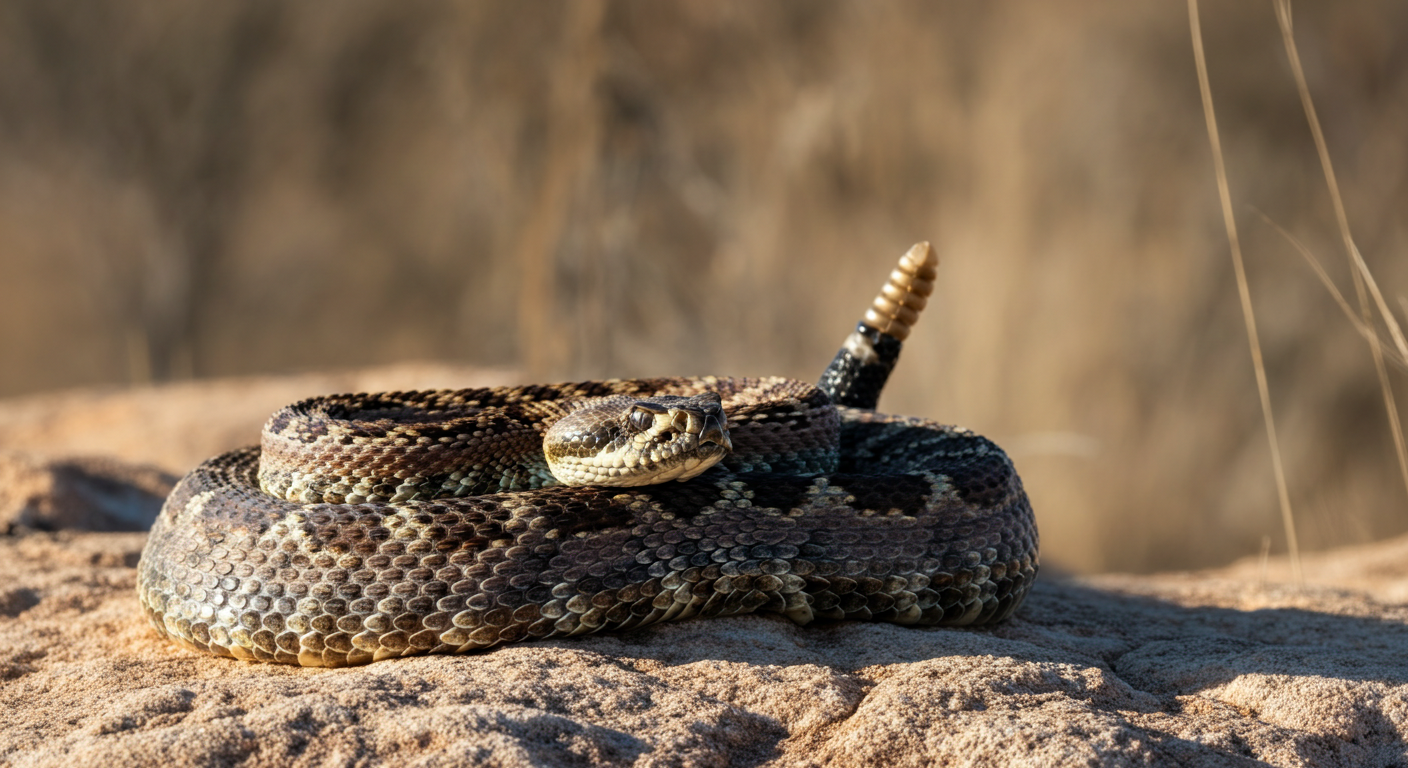
The black-tailed rattlesnake (Crotalus molossus) is named for its uniformly dark tail and is found across central and west Texas, often in rocky hillsides and canyon walls. It is generally considered one of the more docile rattlesnake species in Texas and is rarely defensive unless directly provoked.
Venom potency is considered moderate compared to the western diamondback, and bite cases are relatively uncommon.
It is largely nocturnal during summer months and most active at dusk and dawn during the cooler parts of spring and autumn, when it hunts small mammals and lizards across rocky terrain.
Prairie Rattlesnake: The Panhandle's dominant pit viper
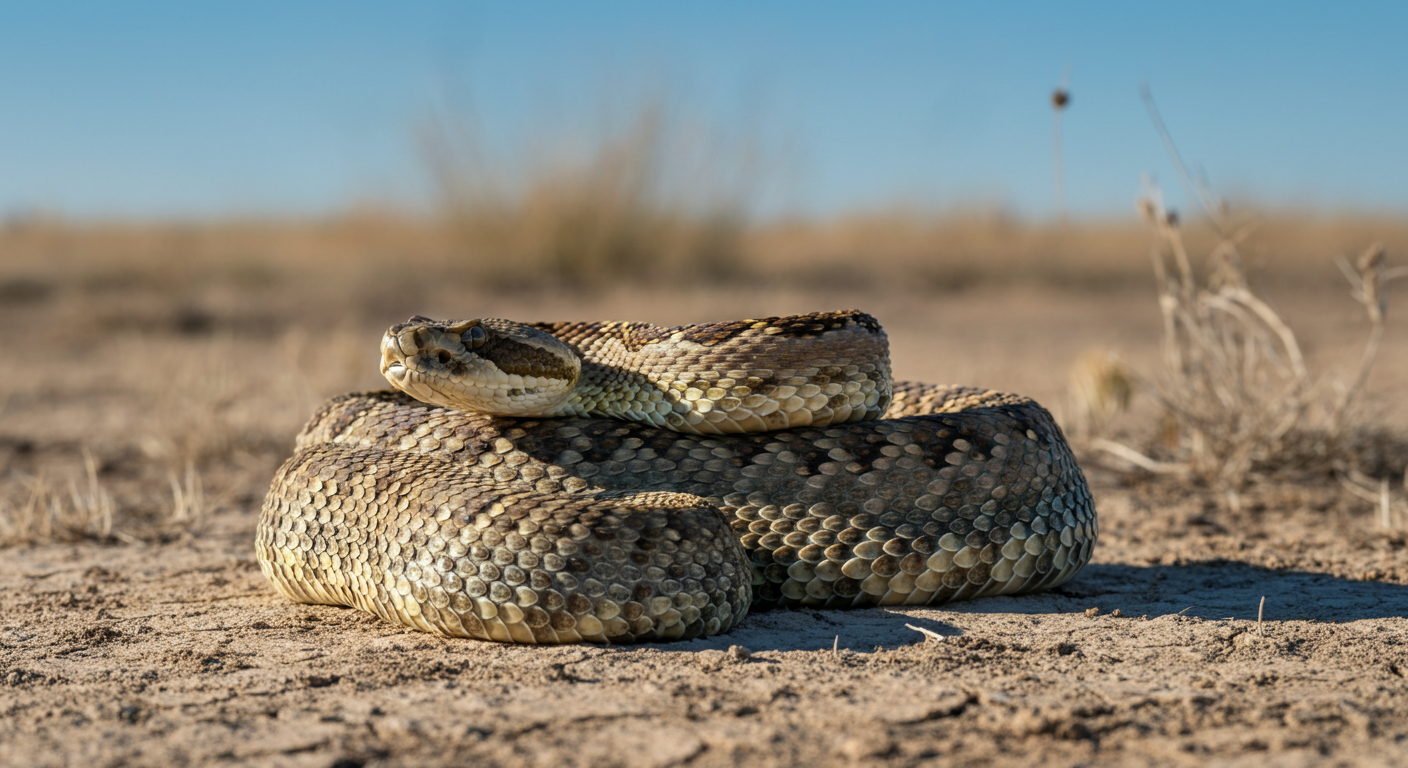
The prairie rattlesnake (Crotalus viridis) is the dominant rattlesnake species of the Texas Panhandle, where it inhabits open grasslands, prairie dog towns, and agricultural edges.
It is a medium-sized rattlesnake that often shelters in rodent burrows and can occasionally be found in large communal den sites during winter. Prairie rattlesnakes are the species most likely to be encountered by farmers and ranchers in the northern parts of the state.
Though not as medically significant as the western diamondback in terms of sheer bite frequency, the prairie rattlesnake's venom is capable of causing serious haemorrhagic injury and requires antivenom treatment in confirmed envenomation cases.
Western Massasauga: A grassland species under pressure
The western massasauga (Sistrurus tergeminus) is a small, heavy-bodied rattlesnake found in the prairies and grasslands of central Texas. It is considerably less aggressive than the diamondback and often relies on camouflage rather than rattling when disturbed. Ongoing habitat loss from agriculture and urban expansion has placed significant pressure on the western massasauga's populations, and the species has drawn attention as a candidate for federal protection.
Its small size and relatively low venom yield mean bites are rarely life-threatening to healthy adults, but medical evaluation is still recommended after any confirmed bite.
Desert Massasauga: Rock Rattlesnakes and Massasaugas Round out Texas's diversity
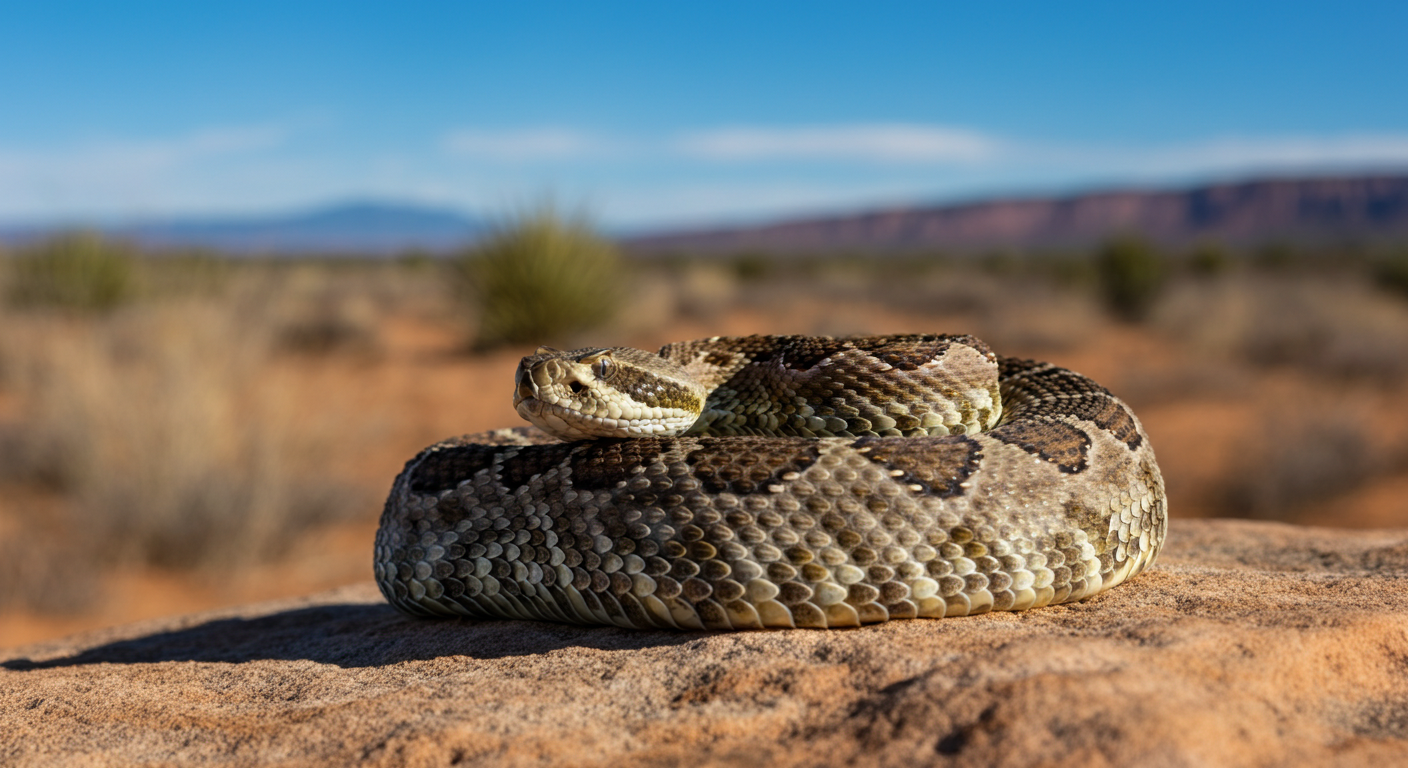
The desert massasauga (Sistrurus tergeminus edwardsii) is the smallest rattlesnake found in Texas and one of the smallest in North America, rarely exceeding 20 inches. It is found primarily in the arid grasslands and desert scrub of far west and south Texas and is secretive by nature, making sightings uncommon. Like the western massasauga, it tends to freeze or retreat rather than rattle when approached. Together, both massasauga subspecies and the state's eight other rattlesnake species make Texas one of the most rattlesnake-diverse states in the country, a fact driven by the sheer range of habitats the state contains, from humid eastern pine forests to high-altitude desert mountains in the west.









 English (US) ·