

 1 hour ago
6
1 hour ago
6
ARTICLE AD BOX
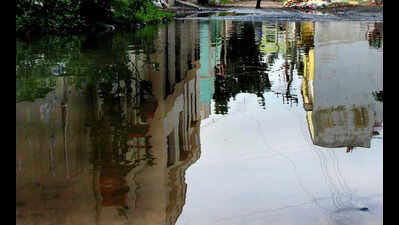
New Delhi: More than 23,000 industries operating in 17 industrial areas are covered by 13 common effluent treatment plants (CETPs) in Delhi. While two CETPs in Narela and Bawana were upgraded in 2024, the remaining 11 are operating close to their assumed lifespan of 20 years, the Confederation of Delhi Industries and CETP Societies has flagged, pointing to their ageing civil infrastructure, worn-out mechanical and electrical equipment, outdated treatment schemes and underutilisation.A CETP is a centralised facility designed to treat effluents released from multiple industrial units. The treated water by CETPs should meet the prescribed standard of Delhi Pollution Control Committee (DPCC) for parameters, including pH, biological oxygen demand, chemical oxygen demand and ammoniacal nitrogen. Most CETPs are unable to meet the prescribed water quality standards, the confederation has claimed, saying that wastewater entering CETPs now contains a higher proportion of domestic sewage and conveyance systems have not been desilted for years.Delhi environment minister Manjinder Singh Sirsa said the National Environmental Engineering Research Institute (NEERI) is conducting a survey to understand the upgradation requirements of these 11 CETPs. “It will start submitting reports from next month, after which we will take action accordingly.”An official said the survey will focus on what is reaching the CETPs and what is being treated, considering the industrial area and other factors.
“Once the survey is conducted, we can plan the upgradation,” he added.In a recent letter to chief minister Rekha Gupta, the Confederation of Delhi Industries and CETP Societies highlighted the need for technological upgradation of the 11 CETPs, which were set up between 2001 and 2010 to treat wastewater emanating from occupiers within the industrial area.“The CETPs’ total cumulative capacity is 212 MLD and inflow is about 80 MLD, meaning it is about 38% of the design capacity, as the CETPs were overdesigned against the low available flow.
The prescribed effluent standards have become stricter, and the influent characteristics have shifted towards a mix dominated by domestic sewage alongside industrial wastewater, which was not the original design basis of the CETPs.
Accordingly, technological upgradation is necessary to reliably meet the current discharge norms, accommodate the changed wastewater characteristics, including the higher domestic sewage contribution, and ensure long-term operational sustainability,” said the confederation.Anil Gupta, board member, CPCB and DPCC, and chairman, Jhilmil CETP Society, said illegal inflow of domestic sewage from JJ clusters and nearby residential areas into the CETP conveyance systems, along with change in land use and activity from industrial units to banquets, restaurants and service stations, has altered the influent characteristics.“It has increased biochemical oxygen demand (BOD) loads beyond design parameters of CETPs, creating operational difficulties.
Heterogeneous industrial wastewater poses uniform treatment challenges in CETPs. Besides, DPCC’s pollution norms are more stringent than the pan-India standards. Even NEERI-upgraded facilities at Bawana and Narela fail to consistently meet them despite advanced technologies,” said Gupta.S K Tandon, general secretary, Confederation of Delhi Industries and CETP Societies, said the CETP drainage system urgently requires desilting to increase inflow to CETPs.
“The system hasn’t been desilted or maintained for years. Consequently, septic, anaerobic conditions have prevailed in the closed conveyance system,” he said.According to experts, upgradation of CETPs is crucial. Bhim Singh Rawat, associate coordinator, South Asia Network on Dams, Rivers and People, said the timeline for upgradation is being delayed.“Most CETPs are unable to treat heavy metals released from some industries. For instance, illegal dyeing units are present across the city, which are not connected to CETPs and end up releasing harmful effluents into drains that meet the Yamuna. Such polluting industries should be shifted. Besides, the policy of zero liquid discharge was introduced in 2019 to treat and recycle the water, but it has not been implemented yet,” he said.







 English (US) ·