

 1 hour ago
3
1 hour ago
3
ARTICLE AD BOX
Last Updated:May 01, 2026, 09:15 IST
The total deployment figure—2,400 companies—had never been seen before for a state election, anywhere for Assembly elections ever.


Forces arrived from 21 states and Union Territories, each sending their State Armed Police and IR battalions eastward.
It all started with a missive in March from the Ministry of Home Affairs addressed to West Bengal’s Chief Secretary, Home Secretary, and Director General of Police, carrying the months-long crux of meetings on the West Bengal polls. What followed was a mobilisation so vast, so meticulously choreographed, and so historically unprecedented that it will be studied in election security briefings for years to come, which also resulted well, as poll violence was extremely low this time.
21 states stripped their own police battalions and sent them eastward. Five Directors General of Central Armed Police Forces packed their bags, left their New Delhi headquarters, and camped in one state for days. Nearly 4,000 bulletproof and Quick Response vehicles flooded Bengal’s roads. Special trains were commandeered. Daily situation reports landed at the MHA every morning by 10 am sharp.
And at the centre of it all were 2,400 companies of armed personnel, expectedly the highest ever deployed for any Assembly election in independent India’s history.
The Order That Started It All
It began, as most things do in Indian bureaucracy, with a letter. On March 17, 2026, the Election Commission of India wrote to the MHA with an unusual request: more forces for West Bengal, beyond the 480 CAPF companies already sanctioned and on their way. The existing deployment covered CRPF (230 companies), BSF (120), CISF (37), ITBP (47), and SSB (46), already a substantial force by any measure.
But the ECI wanted more. Two days later, on March 19, the MHA responded with a missive that authorised an additional 1,920 companies of CAPFs, SAPs, and IR battalions. The total deployment figure—2,400 companies—had never been seen before for a state election, anywhere for Assembly elections ever.
Four Waves, One Relentless Timeline
The induction wasn’t chaotic; it followed phased logistics. By March 31, 300 companies from five forces had reached. By April 7, 300 more arrived, with J&K and Tripura de-inducted companies redirected.
By April 10, another 300 were added, drawing from J&K, Manipur, and West Bengal border duties. By April 13, 277 companies, including RPF for the first time, plus SAPs from three states, had reached Bengal. By April 17, a massive final wave of 743 companies moved through Assam via inter-state movement—443 CAPF companies plus 300 SAP/IR battalion companies from 18 more states—for the elections.
Five DGs Leave Delhi. Nothing Like This Before.
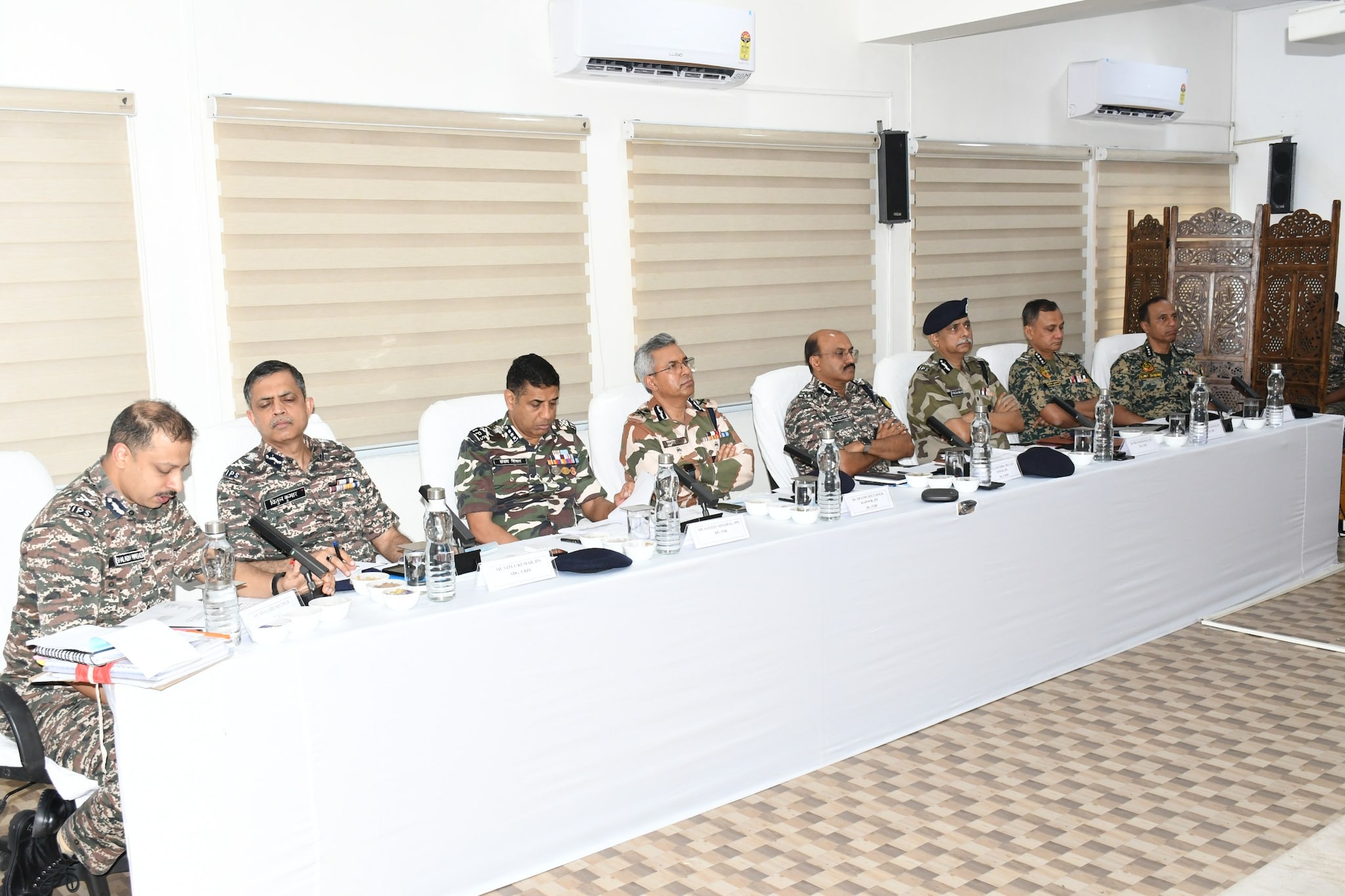
Before the first boot hit Bengal’s ground, something remarkable happened at the top. Five Director General-rank officers—the heads of CRPF, BSF, CISF, ITBP, and SSB—left their headquarters in New Delhi and personally camped in West Bengal to oversee the ground situation.
These are officers whose jurisdictions span active insurgencies in the Northeast, live border tensions with Pakistan and China, and Naxal-affected heartlands. Their desks in Delhi do not sit empty lightly. Yet for days, they were in Bengal, monitoring, coordinating, and troubleshooting on the ground.
It was unprecedented. No state election in India had ever seen this level of top brass physically present in the field simultaneously. While a few called it a necessity, others called it ignorance of other key responsibilities.
Both reactions, in their own way, captured the sheer gravity of what West Bengal 2026 had become.
21 States Contributed For One Election
The deployment map told its own story. This was not a central government operation alone; it was a national one. Forces arrived from 21 states and Union Territories, each sending their State Armed Police and IR battalions eastward:
Bihar, Uttar Pradesh, and Madhya Pradesh led the charge with 40 companies each. Jharkhand sent 28, Nagaland 20, Punjab 20, Chhattisgarh 25, Arunachal Pradesh 12, and even Goa, with its tiny police force, contributed five companies. From the Himalayan state of Sikkim to the western shores of Goa, from Chandigarh’s UT police to Mizoram’s jungle battalions, every corner of India had a presence on Bengal’s polling ground.
It was, in effect, the entire country standing guard over one state’s election.
Handpicked stories, in your inbox
A newsletter with the best of our journalism
News india 2,400 Companies, 5 DGs, 21 States: The Bengal Election That Emptied Delhi's Security Headquarters
Disclaimer: Comments reflect users’ views, not News18’s. Please keep discussions respectful and constructive. Abusive, defamatory, or illegal comments will be removed. News18 may disable any comment at its discretion. By posting, you agree to our Terms of Use and Privacy Policy.
Read More





 English (US) ·