

 1 hour ago
4
1 hour ago
4
ARTICLE AD BOX
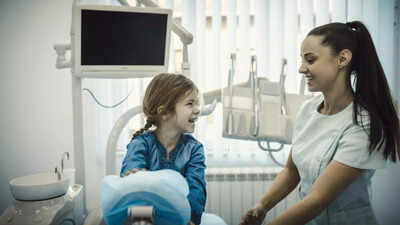
Areeba Pasha, a spirited 2-year-old girl from Mumbai, has triumphed over adversity after battling a rare condition characterized by mirror-image organ placement and duodenal web, which led to relentless vomiting. Thanks to the innovative two-stage endoscopic treatment at Gleneagles Hospital, Areeba can now savor her meals, gain strength, and live vibrantly.
Areeba Pasha, a 2-year-old girl from Kurla, was unable to eat or drink without vomiting due to a rare combination of situs inversus and duodenal web. The Hospital performed a delicate endoscopic surgery in two stages, helping her regain health and normal growthMumbai: A team led by Dr. Anil Tambe, Paediatric Hepatologist and Gastroenterologist, Gleneagles Hospital, Mumbai, treated a 2-year-old girl who was suffering from constant vomiting, severe weight loss, and failure to thrive.
The child was diagnosed with a rare combination of situs inversus, a condition in which all organs are located on the opposite side of the body, along with a duodenal web, a thin membrane blocking the passage of food from the stomach into the intestine.
She is now recovering well, seeing her eat, gain strength, and grow normally has brought immense relief and joy to her family.Areeba Pasha, a resident of Kurla, Mumbai, suffered from relentless vomiting that made every meal a struggle.
Whatever she ate or even drank would come back up, leaving her weak and frail. Day by day, she was losing weight, and her tiny body weighed only 6–7 kilograms, far below what a child her age should. Her parents were terrified, watching their little girl struggle with every bite, feeling helpless and desperate for answers.
The constant vomiting had turned mealtimes into moments of fear rather than joy. It was clear that she needed urgent, expert care to survive and grow.
Her fragile condition tugged at everyone’s hearts, and every moment counted in the fight to save her. Dr Anil Tambe, Paediatric Hepatologist and Gastroenterologist, said, “The investigations revealed that her liver, spleen, heart, and stomach were all reversed, a complete mirror image of normal human anatomy. She was vomiting every single feed, losing weight rapidly, and her growth was severely affected. What made her condition extremely rare was the combination of situs inversus, where every organ is flipped, and a duodenal web, which is already uncommon in children.
All her organs were completely reversed, a condition known as situs inversus. Her liver was on the left instead of the right, her spleen on the right, and her stomach on the left. Even her heart was located on the right side rather than the left. What should have been normal was on the opposite side. Essentially, her entire internal anatomy was a mirror image of what is considered normal, making her condition extremely rare and complex.
A duodenal web in the first part of the intestine was acting like a curtain, blocking food from moving ahead. This obstruction caused everything she consumed to collect like a dam, eventually coming back as vomiting. A barium study confirmed that food was unable to pass beyond the blocked area.”Dr Anil further added, “Operating in such a reversed anatomy requires tremendous precision because every structure is located in the opposite place.
Normally, such cases require a big open surgery, but we decided to use a minimally invasive endoscopic approach to reduce the risk for this very small child. We cut the web gently in two stages, four weeks apart, giving enough time for healing. After the final procedure, the passage opened beautifully, and she started tolerating feeds.
Today, she is eating well, gaining weight and living like a normal child. This case highlights how delicate and timely care can completely change a child’s future.”“As parents, watching our daughter vomit daily and lose so much weight was heartbreaking. She had become so weak that we were terrified something terrible would happen. When we were told that her organs were all reversed and that she had a blockage inside, we felt completely lost. We also worried about how we would manage the cost and whether such a rare treatment was even possible for her. But the team at Gleneagles Hospital supported us at every step, explained everything patiently, and treated her with so much care.
Today, seeing her eat normally and smile again feels like a miracle. We are grateful beyond words,” said the mother of Areeba.“Areeba’s case was rare, complex, and required extraordinary precision, especially because situs inversus changes the entire anatomical layout. Our team worked with utmost care and coordination to ensure she received the treatment she needed at the right time. Cases like this remind us why specialised paediatric care and timely intervention are so important. Her recovery is a moment of pride and hope for all of us,” concluded Dr Bipin Chevale, CEO, Gleneagles Hospital Mumbai.





 English (US) ·