

 1 hour ago
6
1 hour ago
6
ARTICLE AD BOX
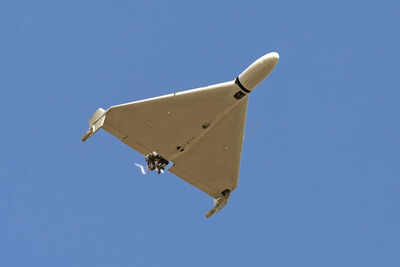
Iran is shifting its retaliation strategy from dramatic displays to sustained pressure, utilizing cheap drones to exhaust air defenses and rattle populations across Israel and Gulf states. This approach aims to drain expensive interceptor inventories and destabilize the region, making the conflict a drawn-out endurance test rather than a single event.
Iran’s retaliation strategy is shifting from spectacle to stamina - and cheap drones are the workhorse.Driving the newsInstead of relying mainly on the kind of large, concentrated barrages it used in last year’s 12-day war with Israel, Tehran is now leaning into a steady, repeatable rhythm of launches meant to keep air-defense networks switched on, inventories under pressure, and populations rattled across Israel and multiple Gulf states, according to Financial Times report.
FT reported that since the US and Israel began striking Iran, western officials said Tehran responded with ballistic missiles and drones “in over 25 waves” across a wide target set that includes Israel and US partners in the Gulf. Since the killing of supreme leader Ayatollah Ali Khamenei, Tehran’s retaliation has spilled across nearly the entire Middle East - underscoring how the Islamic Republic has turned cheap drones and missiles into tools of regional terror. In the war’s opening hours, Iran unleashed waves of ballistic missiles and low-cost drones not only at Israel but also at the UAE, Bahrain, Kuwait and Qatar, widening the battlefield almost instantly. By the second day, the campaign expanded to Saudi Arabia, Qatar and Oman. The sheer geographic reach of the conflict is staggering, directly involving at least 11 countries and disrupting oil and gas flows while shaking financial markets worldwide, an Axios report said.
The Axios report described it as “earthquake in the Gulf”.Iran had warned before hostilities that any strike on its soil would prompt retaliation not only against Israel but also against US bases across the Gulf and in Iraq - a threat it quickly made real. As US President Donald Trump said Operation Epic Fury is expected to last four to five weeks, the window for further escalation remains wide - and Iran’s reliance on waves of cheaper drones suggests a strategy designed to spread fear, exhaust air defenses and destabilize the broader Middle East.Why Iran is leaning on cheap dronesIran’s retaliation arithmetic is lopsided by design. Bloomberg framed the dynamic with a brutal simplicity: “Iran's Missile Math: $20,000 Drones Take on $4 Million Patriots.” In this kind of fight, Iran doesn’t need to win the sky. It just needs to make the sky unaffordable. The Shahed-136 is not, in the usual sense, impressive. It’s slow. It’s loud. It’s relatively easy to spot when air defenses are watching closely.
And yet it keeps showing up, because it does three things Iran needs right now.First, it forces defenders to spend money and burn inventory. Patriot interceptors are expensive, and advanced systems like THAAD cost even more. In Bloomberg’s account, Gulf and USdefenses have been highly effective, but effectiveness has its own price tag, and stockpiles don’t refill overnight. Second, drones scale. They can be produced in large numbers and launched in waves that don’t have to be perfect to be disruptive. Seth Frantzman, a drone-warfare analyst, told The New York Times that even when Shaheds underperform compared with more sophisticated weapons, they can still slip through and create panic and disorder. “They give the Iranians a cheap air force-like weapons system,” he saidThird, they widen the map of the war. Ballistic missiles aimed at Israel are one thing.
Drones drifting toward Gulf cities, ports, hotels, and oil infrastructure are another. They blur the line between military confrontation and everyday life, turning countries that would prefer to remain mediators into unwilling participants.This is not accidental. The Financial Times described Iran’s emerging approach as a two-track campaign: sustained barrages toward Israel, paired with intensive attacks on US partners in the Gulf, including civilian infrastructure alongside military sites.
The drone fits both tracks because it’s cheap enough to expend and politically potent enough to frighten.What’s new in Iran’s retaliation strategyIn the last major Israel-Iran confrontation, Iran’s attacks were often described as telegraphed: large, dramatic salvos that gave air defenses time to prepare. This time, the rhythm has changed.A former Israeli security official, quoted in the Financial Times, described a deliberate shift toward attrition, “a ‘drizzle’ compared with last year’s attacks.” Then, in a line that captures the anxiety of strategists watching a familiar opponent behave differently, the official added: “Who said the Iranians will play by our rules?” The change isn’t just tempo. It’s also targeting and delegation.1) From spectacle to steady pressureInstead of wagering everything on a few headline-grabbing barrages, Iran appears to be testing whether constant, smaller attacks can stretch defenses, exhaust operators, and force hard choices about what is “worth” intercepting. As the Financial Times noted, some incoming threats were either deemed not dangerous enough to spend premium interceptors on, or they evaded defenses in growing numbers. 2) A broader strike portfolio: civilian disruption as leverageHitting ports, airports, hotels, and residential areas in Gulf states changes the political equation. Benham Ben Taleblu, of the Foundation for Defense of Democracies, suggested in the Financial Times that Iran may be escalating “hard, fast and early” to create a crisis so intense that US partners pressure Washington and Israel to stop. Whether or not that gamble works, the intent is legible: make the war contagious.3) A more decentralized trigger fingerOne of the most revealing windows into Iran’s posture came not from a general, but from its foreign minister. Abbas Araghchi, in an interview referenced widely in reporting on the conflict, described a military operating on pre-set guidance rather than real-time central control: “Our military units are now in fact independent and somehow isolated and they are acting based on instructions, general instructions given to them in advance," Araghchi said.
That statement does two things at once. It signals resilience (decapitation strikes won’t paralyze retaliation) while also planting plausible distance between civilian leaders and whatever lands where it shouldn’t.The most striking version of that distancing is the line also attributed to Araghchi about strikes outside the intended script: “What happened in Oman was not our choice…As a matter of fact, our military units are now in fact independent and somehow isolated,” Aragchi said. If Iran is telling the world its forces may be semi-autonomous, it is also, intentionally or not, warning that escalation could become harder to control.The strategic bet: Drain interceptors, crack coalitions, buy timeIran’s cheap drones are not a replacement for its missile force. They’re a way to sequence it.Analysts quoted by Bloomberg suggested Iran may be using large numbers of Shaheds in part to conserve more damaging ballistic missiles for later phases, while still keeping pressure constant.
In the Financial Times, Western officials described retaliatory launches “in over 25 waves” across Israel and multiple Gulf states, with the pattern resembling endurance tactics rather than a single retaliatory “answer.
” There’s also a psychological layer. In Israel, Danny Citrinowicz described the steady barrages as producing “this overwhelming feeling… that you have to be near your shelter,” according to the Financial Times.
In the Gulf, the message is different: even the safest cities can be reached, and the costs of staying out of the war may be rising.Finally, the cheap-drone strategy dovetails with a political goal: shorten the patience of everyone around the battlefield. Kelly Grieco, a senior fellow at the Stimson Center, summed up the operational logic in Bloomberg’s report: “Attrition strategy makes operational sense from Iran’s perspective,” she said, arguing Iran is calculating that defenders will exhaust interceptors and that Gulf political will could fracture.
What’s new, then, isn’t that Iran has drones. It’s that Iran is using them as the front edge of a retaliation doctrine built for a world where it expects to be hit first, lose leaders quickly, and still keep launching. The “drizzle” is not a shrug. It’s an attempt to make the war last just long enough for someone else to demand it stop.What’s nextIran’s cheap-drone strategy will be tested by two constraints: launcher survival and defender adaptation.1) Expect air defenses to triage harder - and hunt cheaper intercept optionsThe longer Iran keeps sending low-cost threats, the more pressure there will be to conserve premium interceptors for missiles that pose the greatest danger - and to use cheaper methods against drones when possible (short-range air defenses, electronic warfare, directed-energy systems, fighter patrols, or point-defense guns). Bloomberg noted the region has fewer purpose-built anti-drone defenses than high-end missile shields, which is part of the current stress test.
2) Watch for “phase shifts” from TehranIf Iran believes the attrition approach is working - or if it fears its launch infrastructure is being degraded - it may change the mix: fewer drones and more ballistic missiles, more precise systems, or different target priorities. FT’s reporting underscored that Israel is trying to take out launch capacity, which could push Iran toward “use them or lose them” behavior. 3) The Gulf escalation track is acceleratingA major marker: the drone strike on the US Embassy in Riyadh. Axios reported that Saudi officials said two drones struck the embassy, causing a small fire and minor damage, amid the widening regional confrontationThat sort of incident increases the risk of expanded retaliation cycles - and raises the stakes for Gulf governments weighing how much disruption they will tolerate.4) The political clock matters as much as the military oneAttrition campaigns aim to outlast an opponent’s willingness to keep paying - financially and politically. Cheap drones are central because they make “endurance” a strategy, not just a slogan.(With inputs from agencies)








 English (US) ·