

 1 hour ago
6
1 hour ago
6
ARTICLE AD BOX
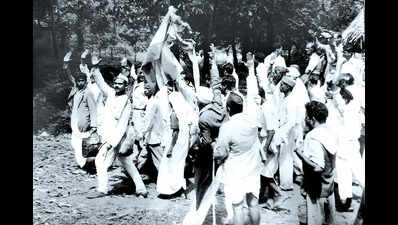
Satyagrahis at a non-violent march

On June 18, 1946, Ram Manohar Lohia did something extraordinary in Goa. He didn’t merely challenge Portuguese colonial rule, he handed people their self-belief. Standing before a gathering of Goans who had long submitted to oppression, he called on them to overthrow their colonial masters.
But more importantly, he sold a dream to the people of Goa: that Goa would be free the moment India was. All they had to do was prepare to embrace the imminent freedom, by learning to think freely, speak freely, and write freely.Mahatma Gandhi lent his voice to the cause, writing to the Portuguese governor general stating that “in free India, Goa cannot be allowed to exist as a separate entity in opposition to the laws of the free state.” On June 18, 1946, perhaps for the first time, people realised the significance and implications of freedom.
That day earned its name — Kranti Diwas, the Revolution Day.As Lohia had foreseen, Liberation came. The power shifted. The colonial flag came down.
As we mark 80 years of that defining moment, it is worth pausing to ask: how faithfully have we honoured the revolution’s promise? Every effective revolution demands not just the overthrow of the old order, but a well-planned structure to replace it.The early signs were encouraing.
Goans reorganised themselves with remarkable speed, embracing democratic governance, rebuilding educational institutions, and laying the groundwork for economic growth. Mining, tourism and the liquor trade flourished. Goa prospered.But progress came at a cost. The officials deputed from mainland India to assist the transition — meant to be guides — instead introduced Goans to the corrosive culture of corruption.
It was an early, damaging lesson.Decades on, the wounds run deeper. Agriculture, the mainstay of Goa’s villages for centuries, is being abandoned and left to wither. The comunidades, the age-old gaunkari system, have been mishandled and misused to serve those in power rather than the people they belong to.Most troubling of all is what is happening to Goa’s social fabric. The in-built harmony between communities of different castes and faiths — something Goa long took pride in — is fraying.
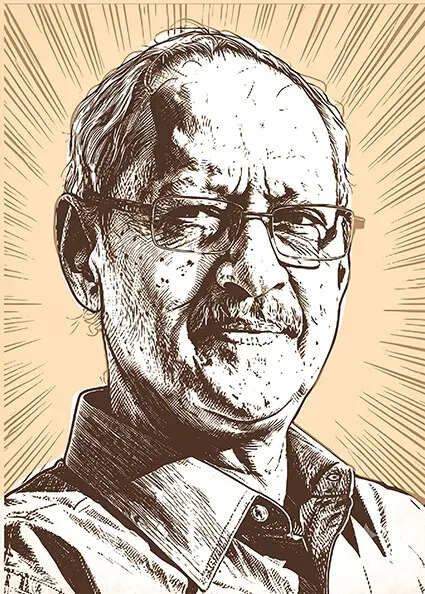
Intellectual leadership, which any healthy democracy needs, is conspicuously absent.And then there is freedom of expression — the very freedom Lohia urged Goans to cultivate back in 1946. That it is under pressure today. The beating that the freedom of expression is taking in present-day Goa is what bothers me the most.(Damodar Mauzo, Jnanpith awardee, spoke to Govind Maad)



 English (US) ·