

 5 days ago
13
5 days ago
13
ARTICLE AD BOX
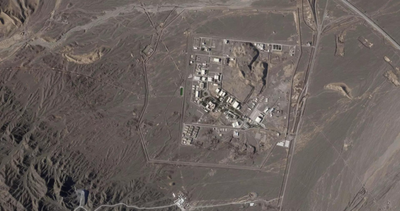
Iran's extensive Natanz nuclear complex was hit during US and Israeli military actions targeting the Islamic Republic’s facilities, Reuters reported citing Iran's ambassador to the UN nuclear watchdog on Monday.
International Atomic Energy Agency has raised radiation risks given active and operational nuclear power plants in the region.Iranian TV also reported loud explosions in the Natanz city, raising risks of radiation. This is the second attack on the nuclear facility within a year. US President Donald Trump had claimed last year in June that US had completely "obliterated" Iran's nuclear enrichment facilities.The result of repeated strikes has been a dangerous paradox.
Each attempt to neutralise Natanz appears to deepen its symbolic and strategic centrality. With operational nuclear reactors spread across the wider region, from the UAE to Jordan, the head of the IAEA, Rafael Mariano Grossi, has warned that further escalation could carry “serious consequences,” including the risk of radiological release.
Why Natanz is crucial for Iran's nuclear enrichment
Natanz is Iran’s primary uranium enrichment hub. It suffered extensive damage, including to underground halls targeted by US bunker-busting munitions last year.
It is situated about 220 kilometers southeast of Tehran. The site has repeatedly been targeted in military strikes attributed to Israel and has sustained extensive damage both above ground and underground.According to the International Atomic Energy Agency, the Natanz facility enriched uranium to 60% purity, a level technically short of, but uncomfortably close to, weapons-grade material. Over the years, the site has faced repeated disruptions, from Israeli airstrikes to the infamous Stuxnet cyber sabotage widely believed to have been carried out jointly by the US and Israel.To mitigate such risks, Iran has expanded construction at greater depths near Kuh-e Kolang Gaz La (Pickax Mountain), seeking to shield critical infrastructure from future attacks. Despite these strikes and cyber operations, the IAEA has stated that any radioactive contamination has remained confined within the Natanz complex.
'Threat to nuclear safety'
IAEA chief has raised alarm over the threat to nuclear safety and possible radiological release with "serious consequences" in case of an attack. "The IAEA has extensive knowledge of the nature and location of nuclear and radiological material in the region, and we have clear guidance for actions necessary in case of an attack or an accident causing a radiological release as well as the ability for hands on help if it is required. Let me underline that the situation today is very concerning. We cannot rule out a possible radiological release with serious consequences, including the necessity to evacuate areas as large or larger than major cities," IAEA chief Rafael Mariano Grossi said. "Iran and many other countries in the region that have been subject to military attacks have operational nuclear power plants and nuclear research reactors, as well as associated fuel storage sites, increasing the threat to nuclear safety. The United Arab Emirates has four operating nuclear reactors. Jordan and Syria have operational nuclear research reactors. Bahrain, Iraq, Kuwait, Oman, Qatar, and Saudi Arabia have also been attacked.
These countries all use nuclear applications of some sort or the other. We therefore urge utmost restraint in all military operations," he added.
How Iran has been protecting its nuclear sites
Satellite imagery suggest that Iran had been taking deliberate steps to shield its nuclear infrastructure from further scrutiny and attack. Images from Planet Labs PBC released earlier this year showed newly constructed roof coverings over buildings damaged in last year’s US and Israeli strikes at Natanz and Isfahan. The structures appeared designed less for full reconstruction and more to obstruct overhead surveillance, particularly at a time when Tehran has restricted access to inspectors from the International Atomic Energy Agency. Experts reviewing the imagery believe the coverings may allow Iranian technicians to assess what equipment or material survived the strikes without exposing those efforts to satellite monitoring.
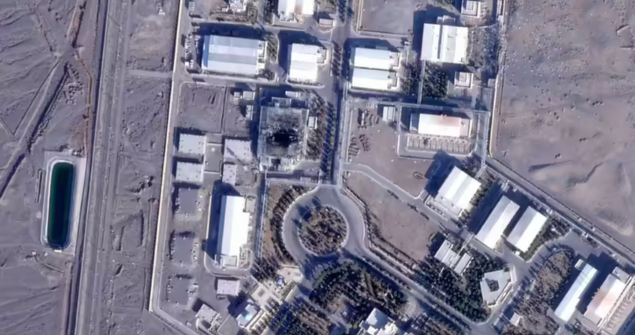
This satellite image from Planet Labs PBC shows the rubble of the Pilot Fuel Enrichment Plant at Iran's Natanz nuclear enrichment site on Dec 3, 2025 (Image credit: AP)The focus on concealment is especially significant given the strategic importance of the two facilities. As Natanz and Isfahan were hit last year in US strikes, rather than abandoning the sites, the evidence suggests Tehran worked to secure, salvage, and potentially restore elements of its programme under tighter protective measures. Iranian president Iranian president Masoud Pezeshkian repeated Tehran's stance of not backing down from rebuilding its nuclear infrastructure.“Destroying buildings and factories will not create a problem for us, we will rebuild and with greater strength,” he told state media during his visit to Iran’s atomic energy organization, adding that the country does not seek nuclear weapons.“It’s all intended for solving the problems of the people, for disease, for the health of the people,” Pezeshkian said.






 English (US) ·