

 49 minutes ago
2
49 minutes ago
2
ARTICLE AD BOX
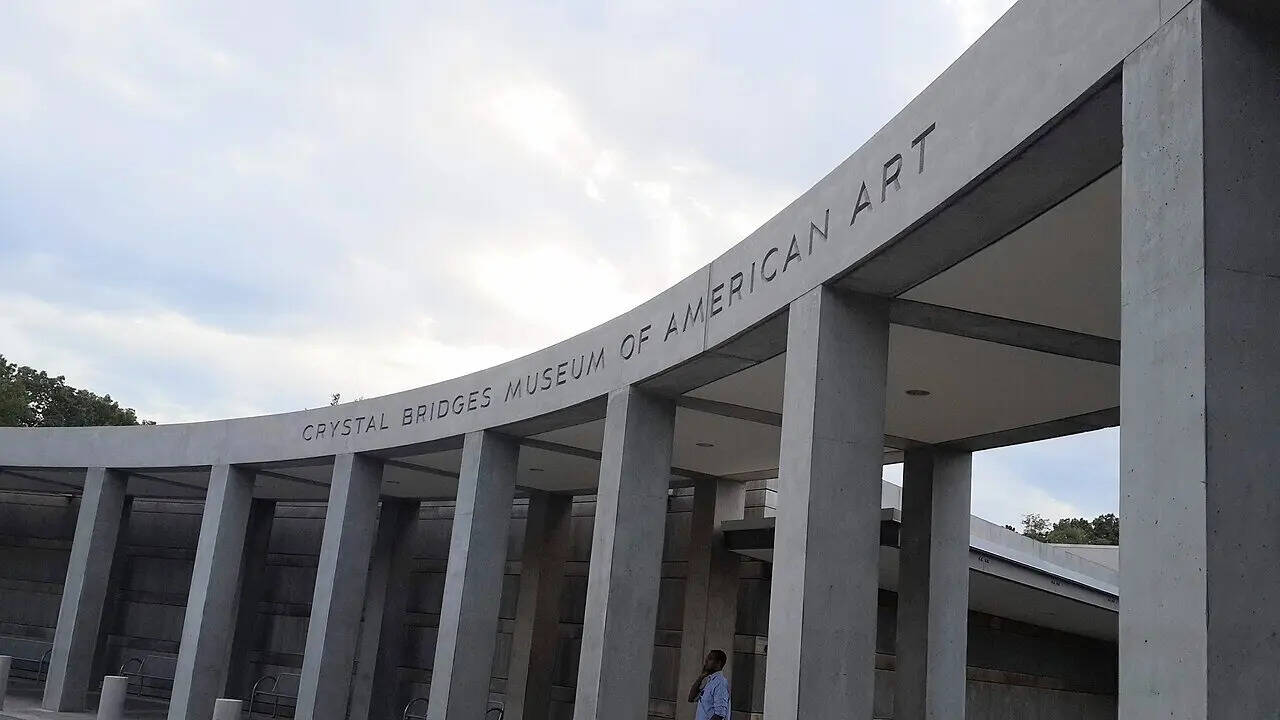
Alice Walton revolutionised art philanthropy by establishing Crystal Bridges in Arkansas, bringing world-class art to everyday Americans. Image Credits: Wikimedia Commons
The strategy for collecting art among wealthy patrons had always been straightforward, even if it felt like the golden rule. The collection would consist of great pieces collected over a lifetime and then given away to an institution based in New York, Chicago, or Los Angeles.
The name of the benefactor was immortalised on the building in the form of marble, and new wings opened up, but the national art treasure remained firmly ensconced within that one square mile of property.But a closed-loop system generates a huge geographical wall for millions of families who live beyond these coastal centres. If high-calibre arts can only be accessed through expensive vacation trips and prestigious urban ZIP codes, then cultural engagement becomes a privilege of proximity.Breaking this mould entirely, Alice Walton turned away from typical centres of culture and based her fortune in Northwest Arkansas, thereby proving that first-rate artistic facilities are best located where people really reside, transforming the participants in our cultural legacy in ways unforeseen.Reinventing the cultural landscape from the Ozarks outwardThere is no shortage of interest in the arts; there is a vast distribution problem.
It does not serve the public good to have a masterpiece locked away indefinitely in the basement vaults of an extravagantly endowed coastal museum. Education through fine arts comes only when new coordinate points are created.According to institutional operational records published in the comprehensive structural overview titled About Crystal Bridges, the museum was established in 2005 as a public, non-profit charitable organisation nestled entirely in the Ozark landscape of Bentonville, Arkansas.
When the doors opened in 2011, it completely scrambled the traditional travel patterns of the art world.Rather than furthering the proliferation of fine art in a space saturated by galleries, this pivotal endowment injected colonial portraits, mid-twentieth-century masterpieces, and innovative contemporary pieces into an area that had long been neglected from such high-profile exhibitions. Through providing free admission to a sprawling 120-acre forest complex, the endowment removed any financial considerations in the way of locals and visitors alike from viewing this priceless art.
Her initiative, Art Bridges, now partners with over 300 institutions nationwide, subsidising loans of masterpieces to regional museums. This ensures art's accessibility, transforming cultural engagement beyond traditional coastal hubs and fostering local programming. Image Credit: Wikimedia Commons
Art Bridges and the creation of a national galleryThis step to establishing one location at the centre of the heartland, however, was only the first part of a revolutionary path in philanthropy. The realisation that even the most awe-inspiring building is dependent upon individuals' willingness to travel to it led to an understanding that art must be made mobile in order to truly provide equitable access.This decentralised philosophy is exactly what transformed a local success story into a nationwide network. As detailed in the multi-institutional framework Discover Art Bridges, a separate dedicated initiative was launched to explicitly dismantle the logistical bottlenecks that keep smaller museums from hosting major works.
The recorded data shows that the foundation now coordinates with a sprawling partner network of over 300 regional institutions across 49 states.Instead of forcing a small community gallery to navigate the crushing insurance fees, high-security shipping costs, and complex climate-control mandates required to borrow a historic American painting, the foundation steps in to fully subsidise those operational hurdles.
This active loan program breathes life into regional spaces by circulating thousands of masterpieces directly out of deep storage vaults and into everyday American neighbourhoods.
It provides the financial and strategic runway for local curators to build deep, culturally relevant programming that speaks directly to their own communities.In the end, this paradigm shift brings a tremendous shift far beyond conventional forms of charity. Instead of viewing an incredibly large fortune as something to be collected and locked away as trophies, this method sets the stage for a whole new paradigm of stewardship in today’s world. What matters is not how much art the donor accumulates, but how fully they liberate it from its confines and allow it to spark the inspiration of others.



 English (US) ·