

 1 hour ago
7
1 hour ago
7
ARTICLE AD BOX
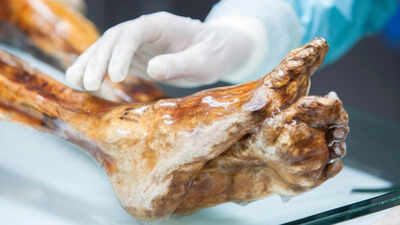
Imagine dying over five thousand years ago, only to still be ‘alive’ — in a way.Researchers have just found that Ötzi the Iceman, the world’s most famous natural mummy, isn’t just a lifeless relic from the Copper Age.
He’s still hosting a busy community of cold-loving microorganisms, more than 5,300 years after he died.
The study, published in Microbiome by scientists at Eurac Research in Italy, flips the script on what we thought happened to life in the deep freeze.And Ötzi isn’t just frozen in time — he’s, in fact, a living, evolving ecosystem. Inside and on his remains, scientists found traces of ancient gut bacteria, glacier-dwelling creatures, and tough fungi that seem to have survived all these years.
This isn’t just cool for archaeology; it’s giving us our best-ever window into ancient microbial life and raising a whole lot of questions about what life can survive.
Who was Ötzi the Iceman?
Per the study, Ötzi was found in 1991 by two hikers in the Ötztal Alps, near the border of Italy and Austria. At first, everyone thought he was just a recently lost mountaineer. But turns out, he actually lived around 3300 BCE. His body was preserved inside a glacier for thousands of years, and, since then, scientists have practically studied every inch — from his diet, health, DNA, to even the wound that probably killed him.
Now, the spotlight’s on the microbes hitching a ride with Ötzi.The research team took samples from just about everywhere: Ötzi’s skin, tissues, ice around him, meltwater, and the controlled environment he’s stored in now. They used DNA sequencing, genome analysis, old-school culturing, and more to get a comprehensive picture of the Iceman’s microbial life.
What about the findings?
What did the researchers find? Far from a bunch of dead, frozen microbes, they saw three main communities: gut bacteria from Ötzi’s own body, microbes picked up during his time sealed in the glacier, and modern organisms that moved in after he was discovered and thawed.One of the wildest discoveries was the group of psychrophilic (cold-loving) yeast and fungi clinging to his remains. These aren’t just surviving; some seem to be thriving in the cold: both in the glacier and inside Ötzi’s present climate-controlled chamber (kept at around -6°C). One standout is a yeast genus called Glaciozyma. It’s adapted to freezing environments and is still alive, as lab tests proved it. Some of these organisms have been on or around Ötzi for thousands of years and held out just fine.The researchers even found ancient gut microbes that show what life inside him was like back then. There are bacterial species related to high-fiber diets and pre-industrial ways of living; types that are becoming rare, or have disappeared, from many modern Western guts. Looking at these, you get hints about how our own gut bacteria have changed with processed food, antibiotics, and big-city life.
What’s next?
But this discovery isn’t just about archaeology. It stretches into microbiology, climate science, medicine, and more.
The big takeaway? Life is a lot tougher than we thought. Some organisms can hang on, dormant or active, in brutal environments for mind-boggling stretches of time. Ötzi, it turns out, is less a snapshot of the past and more a living science experiment, where ancient and modern life mingle and adapt.Of course, there are plenty of unanswered questions. Scientists still don’t know exactly how these cold-loving microbes survived for so long, whether they stayed active or went quiet and dormant, or how their DNA has changed over the ages. They’re also eager to check if other ancient, frozen bodies around the world are hiding similar surprises.








 English (US) ·