

 1 hour ago
4
1 hour ago
4
ARTICLE AD BOX
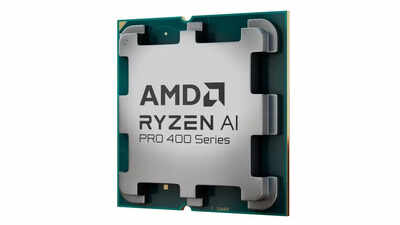
AMD has announced Ryzen AI portfolio at Mobile World Congress 2026. The company has launched the AMD Ryzen AI 400 Series and Ryzen AI PRO 400 Series desktop processors with an aim to deliver on-device AI acceleration and fast performance, enabling users to run AI applications and LLMs locally and tackle compute-intensive applications.
Additionally, AMD is expanding the Ryzen AI 400 Series mobile portfolio to include workstations.Ryzen AI 400 Series processors are the first for next-generation desktop AI PCs that support Microsoft Copilot+ PC experiences. They feature a neural processing unit (NPU) providing up to 50 TOPS of AI compute.
AMD Ryzen AI 400 Series for desktops and notebooks
AMD says that the Ryzen AI 400 Series desktop processor family combines high-performance “Zen 5” central processing unit (CPU) cores, AMD RDNA 3.5 graphics, and a dedicated AMD XDNA 2 NPU for responsiveness, efficiency and local AI acceleration.
AM5 desktop systems powered by Ryzen AI 400 Series processors are expected to be available starting in the second quarter of 2026 from OEMs, including HP and Lenovo.AMD also launched Ryzen AI PRO 400 Series mobile processors. According to the company, the Ryzen AI 9 HX PRO 470 delivers up to 30% faster multithreaded performance compared to Intel Core Ultra X7 3581, accelerating compute-intensive professional workloads.
These processors are claimed to offer NPUs that deliver up to 60 TOPS of AI compute, and leverage advanced on-device AI acceleration.Mobile workstations powered by Ryzen AI PRO 400 Series processors are expected to be available starting in the second quarter of 2026 from OEMs, including Dell Technologies, HP and Lenovo.The company also says that AMD PRO delivers enterprise-grade security, manageability, and reliability through foundational hardware and software designed to simplify IT operations and protect investments over time. It offers “expanded remote management features [that] improve visibility, recovery, and control, enabling IT administrators to diagnose issues, restore systems, and maintain business continuity without a desk-side visit.
”








 English (US) ·