

 1 hour ago
5
1 hour ago
5
ARTICLE AD BOX
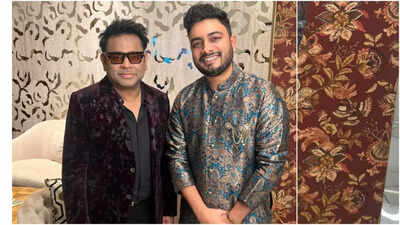
Playback singer Abhay Jodhpurkar discusses the evolving music industry, highlighting shrinking creative freedom and label politics. He shares insights on fair compensation through streaming royalties and the invaluable lessons learned from A. R. Rahman's unique creative process. Jodhpurkar also reflects on his breakthrough with Shah Rukh Khan's 'Mere Naam Tu' from Zero.
Singer Abhay Jodhpurkar has carved a distinctive space for himself in the contemporary music landscape, from lending his voice to chart-topping Bollywood tracks to collaborating with maestros like A R Rahman and composers Ajay-Atul. Best known to many listeners as the voice behind Mere Naam Tu picturised on Shah Rukh Khan in the film Zero, Jodhpurkar speaks candidly about the evolving realities of the music industry - from shrinking creative freedom and the pressures of social media visibility to label politics, royalties in the streaming era, and the invaluable lessons he has learned from working with Rahman. In this conversation with Bombay Times, the singer reflects on navigating the business of music while staying true to the art.
Excerpts...Your Bollywood debut was particularly memorable because you became the voice of Shah Rukh Khan in Mere Naam Tu from Zero. How did that opportunity come about, and what do you remember most about recording a song that became such a defining moment in your career?To be launched as the voice of Shah Rukh Khan is the greatest debut that could ever exist, and thanks to Ajay-Atul, I got that. I had just moved to Bombay in 2017, and I was trying to make an entry into Bollywood, and that’s when I came across Ajay Atul.
They stumbled upon one of my covers of their song Jeev Rangla, and when they heard it, they immediately got in touch with me and wanted to try me out for a few songs, including Mere Naam Tu.I remember I was in Mahakaleshwar Temple in Ujjain, and when I stepped out of the temple, I was all ecstatic and full of energy. That’s when I got a call saying that I needed to be in Yash Raj Studios right then. I said I couldn’t make it immediately, but I hoped we could wait till the next day so that I could come.
I flew the next day and recorded the scratch of Mere Naam Tu. At that point, they were still speculating and contemplating whether they wanted to retain my voice or not, but they recorded it and kept a version of mine for the song.
The song was then shot for fourteen days, and that’s when Shah Rukh also felt that the voice was really matching with him, so we should keep it, we should retain it. That’s how Mere Naam Tu from Zero happened.
I’m so grateful to Ajay Atul for giving me such a huge song. It’s a huge responsibility, there’s so much pressure and expectations on their shoulders, but despite that, they took a risk on my voice. The song did really well, and I’m really grateful that I got a big break for my favourite SRK. It’s been a dream come true, and I can never be grateful enough for it. There is frequent discussion about the politics of music labels and industry gatekeeping. From your experience, how do label dynamics influence opportunities and artistic freedom for singers? I think labels have become much bigger than the musicians themselves.
The power dynamic has clearly shifted more towards the corporate side and away from artistic inclinations. Even the briefs are often vague and very generic, and there’s an attempt to interfere in the musical aspects of things, which isn’t right. Those decisions should ideally be taken purely by creative minds.I also feel that respect and clarity in communication are extremely important, but sometimes it turns into a Chinese whisper.
As a result, the final product ends up going in a direction that nobody wants, and it becomes a disaster. Everyone needs to be on the same page, and decisions should be made while the song or the music is actually being created. That’s how it should be done. It shouldn’t be driven by power dynamics shifting towards owners or political decision-makers or owners instead of creative minds.
So yes, I think a lot of opportunities get wasted because there isn’t enough space given to what could truly serve the art, as opposed to focusing only on the financial or commercial aspects. With the rise of streaming platforms and changing royalty structures, do you think playback singers today receive fair recognition and compensation for their work? Absolutely. With so many platforms today, like Spotify, Gaana, Apple Music, JioSaavn, and Amazon Music, artist revenues have definitely increased. There’s also a body called ISAMRA that collects royalties for singers and lyricists. Earlier, the cut used to go only to the composer and the label, but now artists also receive a share. Although the amount is still less compared to what they receive, but atleast it’s significant and has steadily increased over time. ISAMRA has also started collecting royalties globally, so we do earn a decent amount now. For a playback singer, that’s definitely a good thing. A lot of credit goes to the pioneers of our industry who helped make this possible, including Lata Mangeshkar ji and many other artists. Because of them, we’re receiving royalties today.
So yes, it’s a fairly decent support system for artists, and it really helps you sustain your artistic journey. You have worked with A. R. Rahman what sets his creative process apart, and how has collaborating with him shaped your growth as an artist? Ever since I’ve been singing for A. R. Rahman sir, every recording session has been a revelation. It’s been a soul-reviving and deeply enriching experience because he taps into a version of you that you didn’t even know existed and brings out the best in you. What really stands out are the things he says and the values he stands for. He gives you complete freedom to play. It’s like he opens up a playground for you, gives you a direction, and then asks you to surrender and give your best in that moment. He listens, picks up the best parts, and does it so beautifully. One of the most important things I’ve learned from him is to always be original, stay true to yourself, and be honest when you’re singing and emoting.
Because you’re trying to play a character, and he feeds you these emotions and sentiments, it feels like an entire sea of emotions and musical notes. How you process that and bring it out is very personal, so being true to yourself becomes essential. Lacking originality is something which is not going to make you go a long way, so he often says, “I need to hear your crystal-clear thought. I need to hear you. And every time I hear you, there should be an upgrade.
If you’re not competing with yourself, you’re wasting time.” He encourages constant rediscovery and a childlike attitude towards music, and even life, where you experiment freely and stay honest. That, to me, is very precious.
Vulnerability is something which he really uses well while recording. He likes raw emotions. He often says to forget about the technicalities because those can always be fixed, we have technology for that, but he wants to hear your soul and understand exactly what the character is trying to say.
That emotion should be audible and felt when he hears you. Over the years, I’ve always been his student, but now he’s also become a friend. He guides me through difficult situations and is always there as a mentor. I feel incredibly grateful to have received his blessings right from the beginning of my career, including the formative years of becoming a playback singer. I used to do a lot of work for him, transcribing music and doing scratch recordings, and all of that laid a very strong and beautiful foundation for my journey.
This project was especially special because I sang in my mother tongue. It’s the first time a soundtrack like Gandhi Talks has released in six languages- Tamil, Telugu, Kannada, Malayalam, Marathi, and Hindi. Being part of the Marathi versions has been truly beautiful, and sounds gorgeous. So yes, I’m really grateful. In today’s music industry, what are some of the biggest challenges and pressures singers face — creatively, financially, and professionally? I think the biggest challenge for a playback singer or a musician today is the lack of freedom.
There’s very little scope to really add what you can bring to the table, and artists aren’t given enough space or freedom to breathe. Because of that, individuality often gets curbed, everyone wants a typical sound. There’s a formula in place, and that leaves very little room for creativity or exploration, which can be very limiting.
There’s also constant pressure to be seen and visible on social media. Having a presence has almost become more important than the actual work, and I think that’s quite problematic From a financial perspective, I feel there should be a dedicated budget even for scratch singing.
A lot of times, singers help shape a song and give it its final form, but eventually someone else records it because the label takes a call or wants a bigger name. In those cases, people don’t get paid for the time and effort they’ve put in, which is very problematic. I also feel overall budgets can be improved. There’s so much money that goes into shooting visuals, but the audio department often gets ignored when it comes to budgeting, and that’s something that really needs to be worked on.
Professionally speaking, though, it’s a very personal journey for every artist. We’re also living in good times where there’s so much exposure and so many platforms available. Independent music is growing, and that gives artists a lot more scope to expand, explore, and branch out professionally.




 English (US) ·