

 54 minutes ago
5
54 minutes ago
5
ARTICLE AD BOX
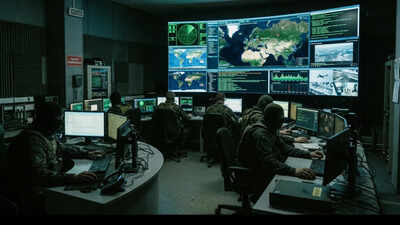
Russian intelligence agencies are aggressively intensifying efforts to steal Western technology, defence research and industrial secrets across Europe as sanctions linked to the Ukraine war squeeze Moscow’s wartime economy, senior European intelligence officials have said.Officials from Sweden, Finland, Estonia and the United Kingdom said Russia is using fake companies, middlemen, cyber spies and covert procurement networks to obtain restricted machinery, software and dual-use technologies needed to sustain military production and keep pace with the West. They warned that Moscow is becoming more willing to take risks, including cyberattacks on critical infrastructure, despite the likelihood of being identified.“They really know what they need,” and are putting “serious effort” into acquiring advanced machine tools, factory equipment, research and dual-use technology, Christoffer Wedelin, deputy head of operations at the Swedish Security Service, said.The warnings come as Russia faces mounting economic strain after four years of international sanctions and heavy military spending linked to the war in Ukraine. Intelligence officials said sanctions have significantly restricted Moscow’s access to advanced Western machinery, precision manufacturing systems, software and research partnerships.
Anne Keast-Butler, the director of the UK’s signals intelligence agency, accused Russia on Wednesday of “relentlessly targeting” the UK and its European allies through technology theft as well as sabotage and assassination plots.
Defence, aerospace and quantum technology in focus
European officials said Russia is targeting sectors considered vital for future military and industrial competitiveness, including aerospace, quantum research, Arctic and marine technology, satellite systems and advanced manufacturing.In Sweden, authorities say Russian operatives have focused on defence-related research and technology linked to the Gripen fighter jet programme. Wedelin said Moscow was also attempting to procure camera and laser technologies developed for civilian use that could later be integrated into Russian weapons systems.Moscow is also seeking technology that could help it gain a long-term strategic advantage over Western countries, according to Finland’s Security and Intelligence Service.“We're talking about space technology, quantum ... arctic technology, marine technology,” said Juha Martelius, the agency’s director. He added that space technology is something Russia needs “right now”.Martelius also said Russia was attempting to obtain sanctioned computer technology and software updates for industrial machine tools.
Fake companies and covert supply chains
European intelligence agencies warned that Russia’s methods have become increasingly sophisticated.
Officials said Moscow is relying on shell companies and intermediaries operating through third countries to bypass export restrictions and sanctions enforcement.In May, Swedish police arrested two people on suspicion of violating sanctions linked to a Turkey-based company that allegedly shipped dozens of metalworking and metal-turning machine tools to Russia.As the schemes become more complex, Wedelin warned that Western firms could unknowingly become part of Russia’s supply chain.“All of the security and intelligence services in Russia are helping out on the state's efforts to get this," he said.
Cyberattacks becoming more aggressive
Officials also raised concerns about an escalation in Russian cyber operations targeting European infrastructure. Wedelin said Russia-linked actors had attempted to attack a Swedish power plant last year in what appeared to be a shift from surveillance and reconnaissance to more disruptive activity.Russia-linked actors tried to “destroy” the plant but failed because the system detected the intrusion, Wedelin said. He added that the operation was partly aimed at undermining Western support for Ukraine.Before the incident, Sweden’s security agencies had mostly observed intelligence gathering, reconnaissance missions and cybercriminal activity. Wedelin said the attempted attack marked a significant change in Russia’s approach.“They're no longer caring as much about potential attribution after their activities, so they are taking greater risks to achieve their goals,” he said.
Economic pressure driving Moscow’s actions
The intelligence officials linked Russia’s increasingly aggressive tactics to growing concerns over the state of the Russian economy.Russia’s war spending now accounts for roughly a third of the country’s gross domestic product, according to Martelius. Officials said sanctions, inflation and the prolonged war effort were placing increasing strain on the country’s finances and industrial capacity.Kaupo Rosin, head of Estonia’s Foreign Intelligence Service, said Russia’s economy “is not doing well at all”.Russian officials had planned for a budget deficit of 3.7 trillion roubles for 2026 but had already reached around 3.4 trillion roubles by the end of February, Rosin said.He added that rising oil prices had temporarily improved Russia’s revenues but warned that continued Western pressure could still push Moscow towards a financial crisis later this year.Rosin also said intelligence gathered by Estonia suggested the tone within Russian official circles had changed in recent months, with earlier expectations of “total victory” in Ukraine fading.Stalled battlefield gains and economic pressure have left some Russian officials privately questioning “what is this all for,” Rosin said.Despite the growing strain, Martelius cautioned against assuming that economic hardship alone would lead to political change in Russia.“It is ‘very dangerous ... to start analyzing Russia as if it is some country like ours," Martelius said. “It is not.”








 English (US) ·