

 2 hours ago
4
2 hours ago
4
ARTICLE AD BOX
3 min readNew DelhiMar 14, 2026 04:10 AM IST
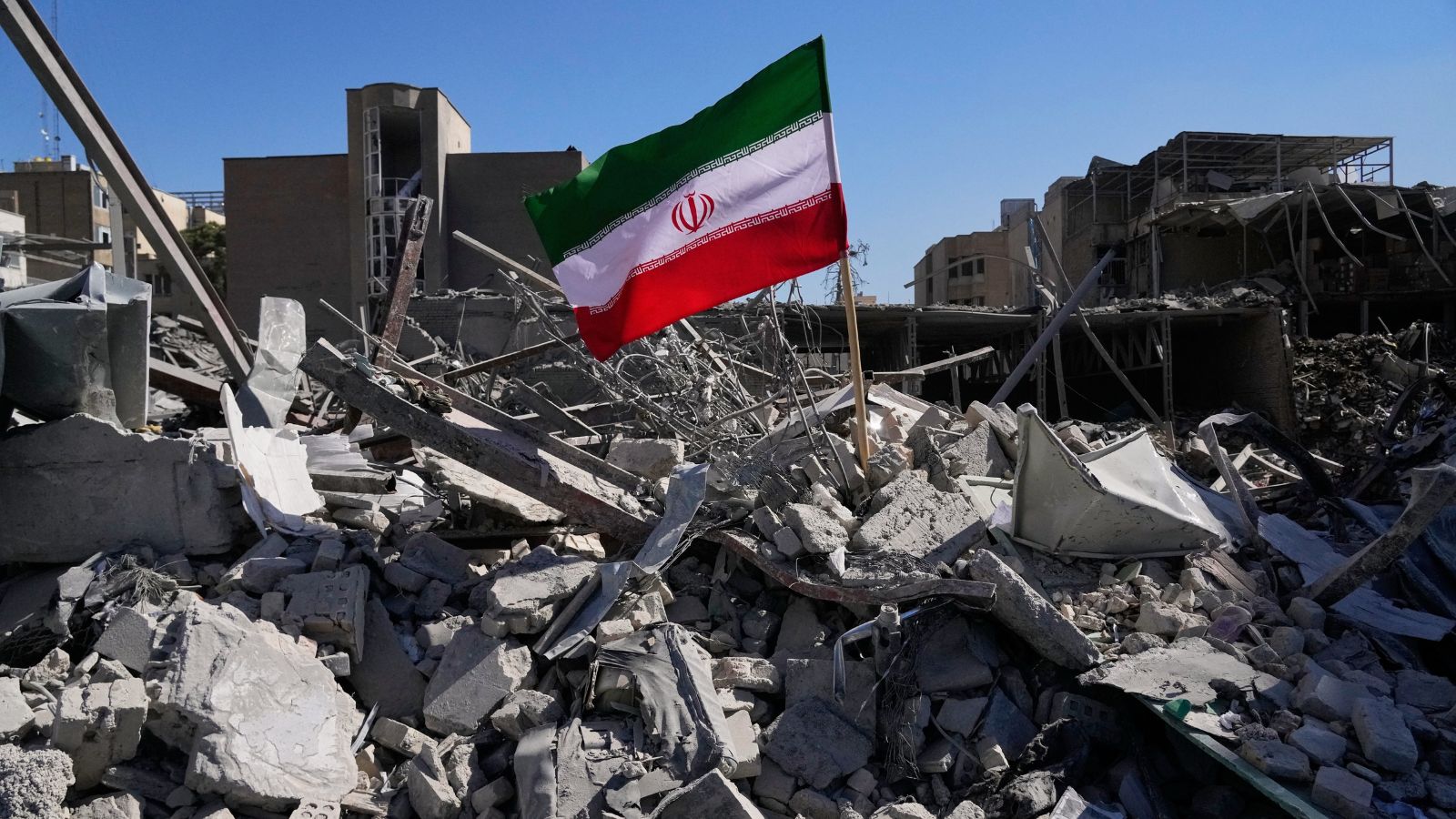 An Iranian flag is placed among the ruins of a police station struck Monday during the U.S.–Israeli military campaign in Tehran, Iran. (AP Photo/File)
Tehran is learnt to have reached out to Delhi to take the lead in issuing a statement on behalf of the BRICS, currently chaired by India, condemning the US and Israeli strikes against Iran in the last two weeks.
This has put Delhi in a diplomatic pickle since it has stayed away from taking sides in the ongoing conflict.
Prime Minister Narendra Modi has spoken to leaders of the countries in the region targeted by Iran, condemned the attacks and thanked them for looking after the Indian community “in these difficult times”.
On Thursday night, Modi spoke to Iran’s President Masoud Pezeshkian and expressed “deep concern over the escalation of tensions and the loss of civilian lives as well as damage to civilian infrastructure”.
In a post on X following the phone call, Modi said he “urged for dialogue and diplomacy” and “reiterated India’s commitment to peace and stability”.
External Affairs Minister S Jaishankar also spoke to his Iranian counterpart Seyed Abbas Araghchi Thursday night – their fourth conversation since the outbreak of hostilities on February 28. In a post on X Friday, Jaishankar said they “discussed bilateral matters as also BRICS related issues”.
The BRICS grouping has Brazil, Russia, India, China and South Africa (the original five), along with Egypt, Ethiopia, Iran, Saudi Arabia, the UAE and Indonesia. Saudi Arabia and the UAE, which host US bases and personnel, have been targeted by Iranian missiles and drones. The fact that all three countries are in the BRICS has made diplomatic navigation difficult for India.
Story continues below this ad
India, which holds the rotational presidency of the grouping for 2026, is expected to host the summit of BRICS leaders later this year.
A readout by the Iranian government in Persian said Araghchi “briefed” Jaishankar on the situation arising from the “aggressions and crimes committed” by the US and Israel’s “Zionist regime” against Iran and its “consequences on the stability and security of the region and the world”. He emphasised the “firm will” of the Iranian government, people and armed forces to exercise the “legitimate right to self-defence against the aggressors”.
Araghchi, the Iranian readout stated, emphasised the need for international and regional forums and organisations to “condemn military aggression against Iran”. Underlining the “importance of the role and position of BRICS” as a forum for developing multilateral cooperation, he considered it necessary for this institution to play a “constructive role” at the “current juncture to support the stability and security of the region and the world”.
According to the Iranian readout of the phone call, Jaishankar, while announcing India’s readiness to develop bilateral and multilateral cooperation in regional and international forums, also emphasised the importance of “finding a way to strengthen stability and sustainable security in the region as a collective need”.

Shubhajit Roy, Diplomatic Editor at The Indian Express, has been a journalist for more than 25 years now. Roy joined The Indian Express in October 2003 and has been reporting on foreign affairs for more than 17 years now. Based in Delhi, he has also led the National government and political bureau at The Indian Express in Delhi — a team of reporters who cover the national government and politics for the newspaper. He has got the Ramnath Goenka Journalism award for Excellence in Journalism ‘2016. He got this award for his coverage of the Holey Bakery attack in Dhaka and its aftermath. He also got the IIMCAA Award for the Journalist of the Year, 2022, (Jury’s special mention) for his coverage of the fall of Kabul in August 2021 — he was one of the few Indian journalists in Kabul and the only mainstream newspaper to have covered the Taliban’s capture of power in mid-August, 2021. ... Read More
Stay updated with the latest - Click here to follow us on Instagram
© The Indian Express Pvt Ltd



 English (US) ·