

 2 hours ago
8
2 hours ago
8
ARTICLE AD BOX
A high-stakes debate unfolded in Lok Sabha on Friday as Amit Shah led the discussion on the Women's Reservation Bill, highlighting strategic interventions and coordinated opposition.
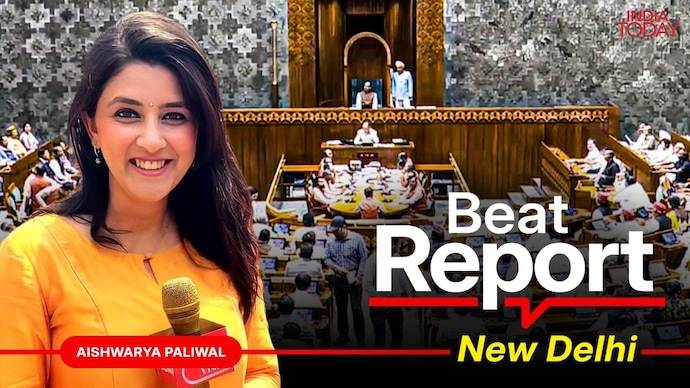
By 6.30 pm, Shah shifted to addressing Opposition concerns, rejecting claims of regional imbalance.
The Lok Sabha on Friday evening witnessed a tightly choreographed mix of strategy, symbolism and sharp exchanges as amendments to the Women's Reservation Bill came up for discussion, with Union Home Minister Amit Shah's intervention shaping the tone of the debate.
From the visitors' gallery, the proceedings unfolded as a minute-by-minute display of parliamentary mechanics -- where numbers, coordination and political messaging carried as much weight as the arguments themselves.
The stakes were unmistakably high. This was not merely a legislative exercise, but a moment with the potential to reshape political representation and expand the Lok Sabha in the years ahead. Inside the House, every seat, movement and whispered exchange appeared consequential.
Within minutes of taking position in the gallery, one detail stood out: the Opposition appeared unusually coordinated. There was restraint in their responses, as though bound by an unspoken understanding.
A STEADY BUILD-UP
At 5.50 pm, the House was already filling up. Amit Shah was seated in the front row in a white kurta, with senior BJP leaders -- Nirmala Sitharaman, JP Nadda, Shivraj Singh Chouhan and Kiren Rijiju -- taking their places around him.
A minute later, Opposition benches began filling up. Priyanka Gandhi Vadra entered quietly and took her seat, adding to the sense that this would not be an ordinary debate.
Conversations ahead of the session suggested Shah had spent the previous two hours refining his speech with his team, pointing to a calibrated intervention.
STRATEGY HUDDLES & SILENT SIGNALS
At 6.03 pm, Priyanka Gandhi was seen in a brief discussion with KC Venugopal, seemingly finalising Congress's immediate floor strategy.
Across the aisle, Trinamool Congress leaders Mahua Moitra and Saugata Roy took their seats. Soon after, Akhilesh Yadav walked in and sat beside Awadhesh Prasad, the MP from Ayodhya. The House was nearly full.
6.08 PM: AMIT SHAH RISES
At 6.08 pm, Amit Shah rose to speak. Even as attention turned to him, MPs continued to enter -- Supriya Sule arrived with her party colleagues, underlining the importance of numbers.
Opening on a combative note, Shah accused the Opposition of being "anti-women", prompting immediate protests. Opposition MPs rose to reject the charge, leading to loud exchanges.
THE NUMBERS GAME
At 6.16 pm, Congress leader Manickam Tagore entered carrying a notepad and began moving across benches, checking attendance and counting numbers. The exercise was methodical, almost military in precision.
Through this, Priyanka Gandhi remained seated, calm and expressionless, offering no visible reaction to Shah's speech.
FAULTLINES EMERGE
By 6.30 pm, Shah shifted to addressing Opposition concerns, rejecting claims of regional imbalance and asserting that the government viewed all regions equally, from southern states to smaller territories like Lakshadweep.
The Opposition responded quickly. Leaders, including Tagore and Venugopal, pressed for clarity on delimitation and seat allocation, arguing that southern states should not be disadvantaged. They demanded safeguards, including a 50 per cent increase in seats and delimitation based on 2026 data.
The debate had moved beyond reservation to larger questions of representation, federal balance and trust.
POLITICAL STRIKES & IDENTITY PITCH
At 6.45 pm, Akhilesh Yadav rose, questioning the government's credibility and suggesting Opposition scepticism stemmed from past experience.
Minutes later, at 6.51 pm, Shah introduced the OBC dimension. In a political landscape where OBCs remain a decisive electoral bloc, he accused Congress of being "anti-OBC" and invoked leaders such as Jawaharlal Nehru, Indira Gandhi and Rajiv Gandhi, contrasting their record with the BJP's projection of Narendra Modi as an OBC Prime Minister.
The speech expanded into a blend of history, identity and political messaging.
CONTROLLED CHAOS
Despite sharp exchanges, the Opposition's coordination remained intact. It appeared restrained, as if guided by an invisible thread.
At 6.58 pm, Rahul Gandhi entered and took his seat beside Venugopal, receiving a quick briefing. Tagore continued his rounds, recalculating numbers.
Across Opposition benches, communication remained constant but discreet -- glances, nods and brief exchanges. Trinamool MPs, though seated separately, appeared aligned through non-verbal cues, while Sule gathered her party MPs into formation.
A MONOLOGUE BUILDS
Shah's speech gathered pace, turning into a high-energy monologue outlining the government's actions since 2014, repeatedly targetting the Opposition.
The contrast in the House was stark. BJP MPs sat composed, listening, while Opposition leaders remained engaged in quiet calculations.
FINAL MOMENTS
At 7.15 pm, Shah took a direct swipe at Rahul Gandhi, accusing him of lowering the dignity of Parliament.
At 7.18 pm, Prime Minister Narendra Modi entered the House as Shah concluded his speech, bringing the hour-long intervention to a close.
What unfolded was more than a speech. It was a carefully structured political performance -- combining preparation, provocation and precision -- set against a backdrop of tight floor management and high-stakes parliamentary arithmetic.
- Ends
Published By:
Sahil Sinha
Published On:
Apr 18, 2026 15:59 IST
Tune In




 English (US) ·