

 47 minutes ago
4
47 minutes ago
4
ARTICLE AD BOX
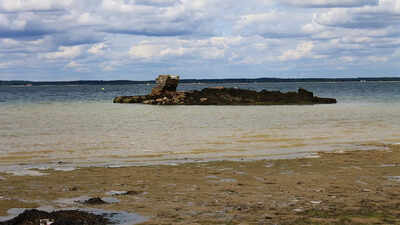
Marine archaeologists discovered an intact Mesolithic factory complex at Bouldnor Cliff, off the Isle of Wight, revealing advanced technological skills. Image Credits: Wikimedia Commons
Consider the image of submerging oneself in the cold and murky waters around the southern coast of England, thinking one would see no more than mud and algae, but instead encountering a fully intact factory complex from an earlier age resting at the bottom of the sea.
This was precisely the scenario encountered by marine archaeologists exploring an underwater site called Bouldnor Cliff, situated just off the Isle of Wight. It was previously thought that the Stone Age inhabitants of Britain were primitive hunter-gatherers wandering the interiors of the country.Nevertheless, as professional scuba divers meticulously removed layers of marine sediments from underneath the Solent Strait, they discovered something amazing, which utterly demolished all those earlier misconceptions.At the bottom of the sea, the team uncovered campfires, flint tools, and enormous pieces of wood that had clearly been cut and manipulated into shape by human hands. The deep ocean’s cold temperature and lack of oxygen made it an ideal natural time capsule for protecting fragile organic artefacts that would otherwise have degraded entirely if they were left above ground.Discovery of an advanced manufacturing plant under the seabedThis remarkable discovery was undoubtedly one of the most revolutionary discoveries made by any scientist because it proved that the ancient British civilisations possessed advanced technological skills long before people had ever imagined. According to a study, titled Submerged Prehistoric Landscape Archaeology, undertaken by the University of York, the Bouldnor Cliff was a perfectly preserved Mesolithic community, which thrived about 8,000 years ago.
The worked wood found at the site was not just casual debris or firewood; it consisted of large, flat timber planks that had been carefully cut, split, and hollowed out using stone axes.
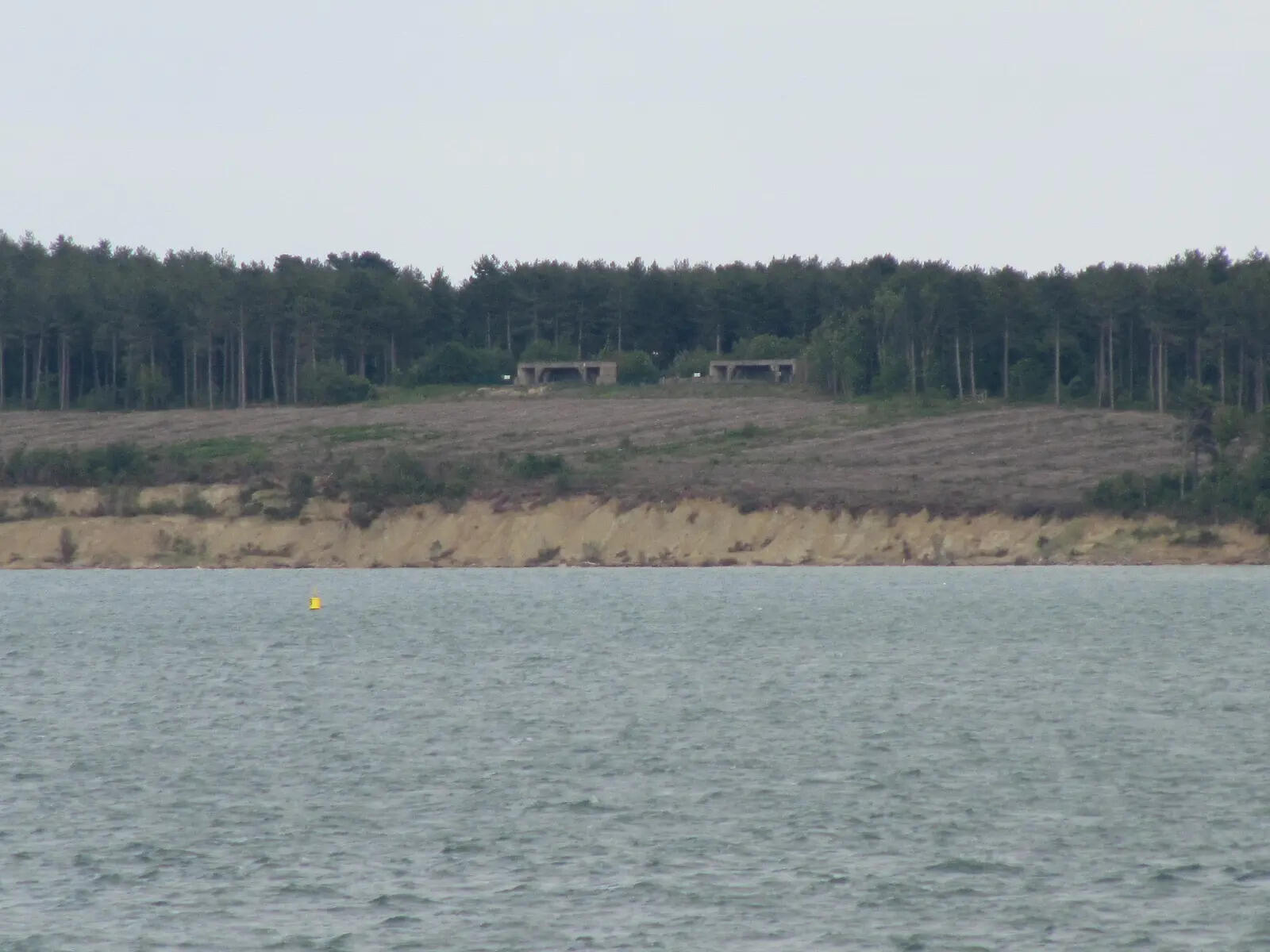
Found at Bouldnor Cliff, the site yielded worked wood, tools, and campfires, proving sophisticated maritime navigation and trade with Europe before rising sea levels submerged this connected world. Image Credits: Wikimedia Commons
The design structure of the wooden objects indicates that these people were constructing a high-end shipyard, manufacturing log boats and ships for transportation in local water routes. These people were far from leading isolated lives in the forest since they used the coast as a major highway in their daily lives.
The sophisticated construction skills of wooden objects helped in building water transport means and thus enabled maritime navigation to become a natural part of their daily activities.How rising waters covered up a connected European worldThe true extent of this lost maritime world becomes even more intriguing when looking into the geographical context in which these early sailors lived. During the Mesolithic period, the British Isles were yet to become islands; instead, they formed a large piece of land mass connected to continental Europe, called Doggerland. In the Nature Ecology & Evolution research, it is stated that during this period, the ancient humans were mobile in nature and travelled through extensive territories across Europe.The advanced boat-building hub at Bouldnor Cliff served as a vital coastal gateway, allowing early Britons to easily cross open water channels to trade tools, materials, and technologies with continental European cultures. Eventually, as the great ice sheets melted at the end of the last Ice Age, global sea levels rose dramatically, flooding the low-lying valleys and completely swallowing this coastal shipyard beneath the waves of the Solent.Today, however, the area serves as a powerful reminder that the oceans of today conceal an entire chapter of human history that has been forgotten. Indeed, this area serves to demonstrate the need for brave scientists willing to venture into the unknown in order to explore the deep connections among us humans.A very humbling idea indeed that when the present-day ships and yachts are gliding through the bustling sea of Solent, an engineering marvel of ancient times sleeps silently in the deep mud under their hulls.









 English (US) ·