

 1 week ago
7
1 week ago
7
ARTICLE AD BOX
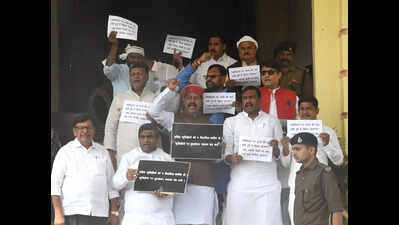
Patna: The state assembly on Tuesday unanimously passed the Bihar Civil Nyayalay (Court) Bill, 2026, replacing the Bengal, Agra and Assam Civil Courts Act, 1887, framed during the colonial period.
The new law seeks to modernise the civil courts framework in the state and marks a departure from the 19th-century statute that had remained in force for over a century.The Civil Nyayalay (Court) Bill was among four Bills cleared by the House during a brief sitting that lasted only 24 minutes. While the civil courts reform Bill was passed unanimously, three other amendment Bills — relating to recruitment in govt undertakings and the constitution of municipal empowered standing committees — were passed through a voice vote.The three amendment Bills are: the Bihar Technical Services Commission (Amendment) Bill, 2026, the Bihar Staff Selection Commission (Amendment) Bill, 2026, and the Bihar Municipality (Amendment) Bill, 2026. All four Bills were moved by parliamentary affairs minister Vijay Kumar Chaudhary.With the passage of the Bihar Technical Services Commission (Amendment) Bill, 2026, the selection of personnel for appointment to second- and third-grade posts in govt undertakings, such as boards and corporations, will now be made through the technical services commission.
Meanwhile, the selection of candidates for filling fourth-grade posts in the same undertakings will be made through the staff selection commission.The Bihar Municipality (Amendment) Bill, 2026 facilitates the constitution of the empowered standing committee of municipal bodies. As per the amendment, members of municipalities and corporations will now themselves select the members of the empowered standing committee through secret ballot.
Earlier, the mayor used to constitute the committee.Responding to an amendment moved by AIMIM member Akhtarul Iman, the parliamentary affairs minister said that a necessary directive would be issued to ensure that meetings of empowered standing committees are not held when the state legislature — comprising the legislative council and assembly — is in session (budget, monsoon, winter or any special session), as MLCs and MLAs are also ex officio members of the empowered standing committee.The first three Bills were passed by the House through a voice vote after opposition members moved amendments. The Civil Nyayalay (Court) Bill, which replaces the 1887 colonial-era civil courts law, was passed unanimously.






 English (US) ·