

 1 hour ago
4
1 hour ago
4
ARTICLE AD BOX
Last Updated:March 10, 2026, 14:52 IST
In a March 9 interview with CBS News, Trump stated he is considering "taking over" the waterway to secure energy supplies. Can he?


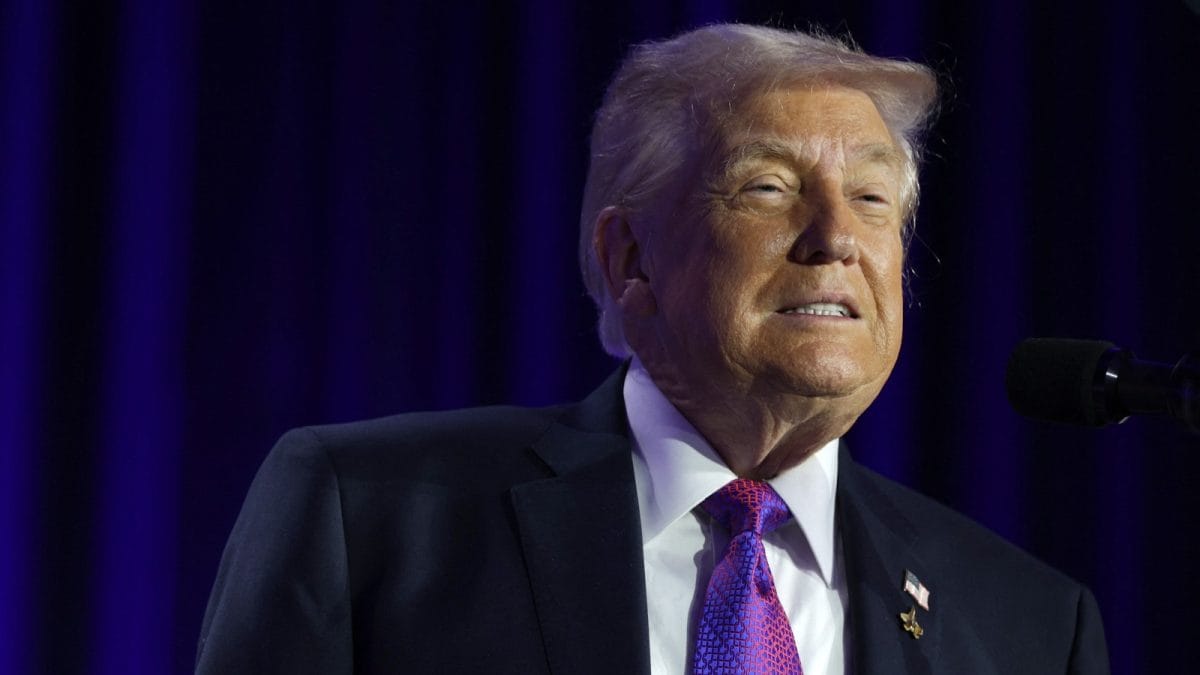
US President Donald Trump (Image: Reuters)
United States (US) President Donald Trump has explicitly threatened to take control of the Strait of Hormuz if Iran continues to disrupt global oil flows.
The waterway, which passes directly through the territorial waters of Iran and Oman, is currently in a state of “near-total collapse" regarding commercial traffic.
Following military strikes, Tehran has challenged this international right of passage and its Iran’s Revolutionary Guard (IRGC) declared the strait “closed" and has issued warnings that any vessel attempting to pass will be attacked.
Trump, meanwhile, has issued severe warnings and outlined specific military measures to reopen it. Can he take control?
THE STRAIT OF HORMUZ
It is a narrow, strategically vital waterway in the Middle East that serves as the only sea passage from the Persian Gulf to the open ocean. It links the Persian Gulf (to the west) with the Gulf of Oman and the Arabian Sea (to the southeast).
It is bordered by Iran on the North coast, the Musandam Peninsula (an exclave of Oman) and the United Arab Emirates on the South. It is about 21 to 33 miles (33–54 km) wide at its narrowest point. Due to the narrowness, ships must use two-mile-wide lanes (one inbound, one outbound) separated by a two-mile buffer zone to prevent collisions. Major islands within or near the strait include Qeshm, Hormuz, Larak, and Hengam, most of which are controlled by Iran.
The Strait of Hormuz is the world’s most critical oil chokepoint. It handles approximately 20% of global oil consumption (around 20 million barrels per day) and 20-25% of the world’s liquefied natural gas (LNG), primarily from Qatar. Over 80% of the oil passing through the strait is destined for Asia, with China, India, Japan, and South Korea being the primary importers.
THE CLAIMS OF CONTROL
On March 4, the IRGC declared it had gained “complete control" over the strait, vowing to “set ablaze" any vessel attempting to pass. Trump and CENTCOM have dismissed Iran’s claims of total control. The U.S. Navy has been ordered to prepare escort missions for commercial tankers to ensure the “free flow of energy".
China has deployed a naval fleet, including the missile destroyer Tangshan, to the region to secure its own energy supplies. Pakistan has launched Operation Muhafiz-ul-Bahr on March 9 to escort its merchant vessels through the disrupted waterway. Russia is participating in joint naval exercises with Iran and China in the area, according to reports in foreign media and Al Jazeera.
WHO CONTROLS THE STRAIT OF HORMUZ?
Under international law, control is divided between the bordering nations, though navigation is theoretically protected by global treaties:
Iran: Controls the northern coastline and several strategic islands (Hormuz, Qeshm, Larak). Its territorial waters extend 12 nautical miles from its shore.
Oman: Controls the southern coastline (the Musandam Peninsula). Most major shipping lanes used by tankers are located within Omani territorial waters.
United Arab Emirates (UAE): Also borders the southern approaches and maintains a significant monitoring and coast guard presence.
International Law: The United Nations Convention on the Law of the Sea (UNCLOS) guarantees “transit passage" for all ships, meaning neither Iran nor Oman can legally block the waterway for international transit during peacetime.
While technically an international waterway, the strait is currently “effectively closed" for most commercial operators. Maritime traffic has plummeted by 90-95% since the conflict began on February 28, with major shipping lines like Maersk and Hapag-Lloyd suspending all transits, according to reports.
Iran has reportedly indicated it may allow passage to ships from countries it deems friendly, such as
China.
WHAT TRUMP SAID ABOUT THE TAKEOVER
In a March 9 interview with CBS News, Trump stated he is considering “taking over" the waterway to secure energy supplies.
He suggested the U.S. Navy would begin escorting oil tankers through the strait “if necessary" and provided “political risk insurance" to encourage operators to resume travel. Trump warned that if Iran stops the flow of oil, the U.S. will hit them “TWENTY TIMES HARDER" than they have been hit so far.
He threatened to destroy targets that would make it “virtually impossible for Iran to ever be built back" as a nation, using the phrase “Death, Fire, and Fury".
TRUMP’s MIXED RHETORIC
Trump has offered a mix of optimistic and escalatory rhetoric regarding the conflict that began on February 28.
On March 9 and 10, Trump repeatedly claimed the war would be over “very soon". He described the conflict as a “short-term excursion" to “get rid of some evil". He claimed military objectives were “pretty much complete" and ahead of schedule.
Despite predicting a quick end, he told Republican leaders on March 9, “We’ve already won in many ways, but we haven’t won enough". Trump noted that the U.S. has intentionally left some “most important" targets, such as Iran’s electrical grid, untouched for potential later strikes if needed.
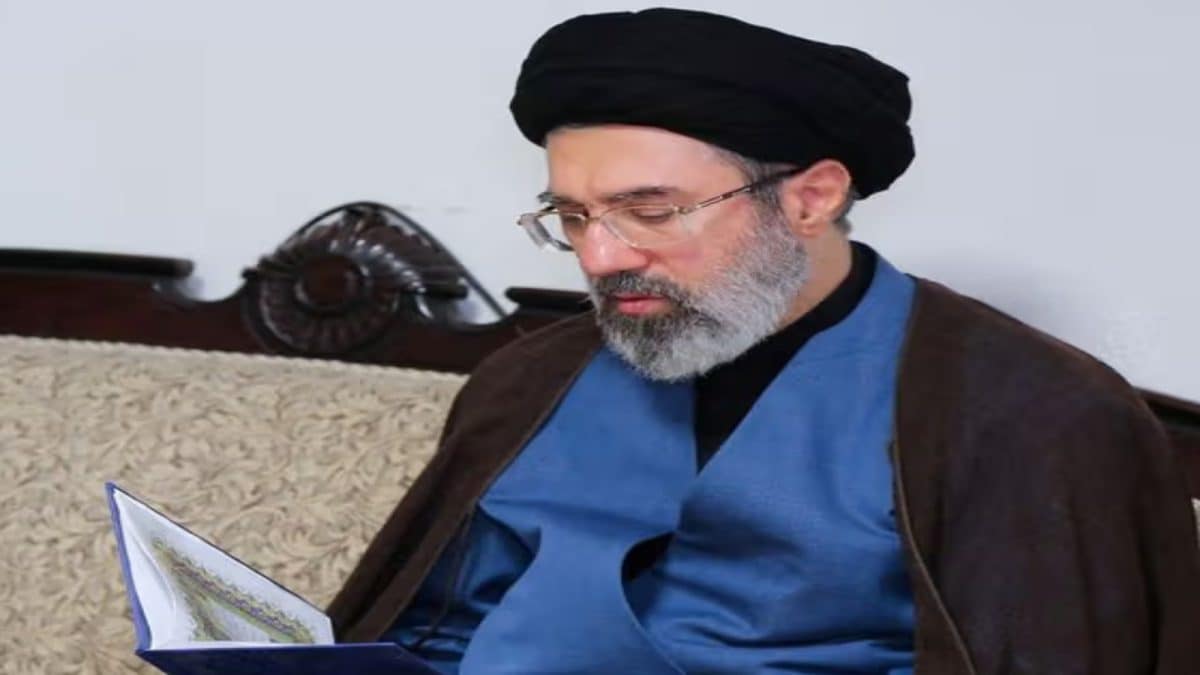
He expressed disappointment in the appointment of Mojtaba Khamenei as the new Supreme Leader but has sent mixed signals on whether he is seeking full-scale regime change.
To combat surging oil prices, Trump announced he would waive certain oil-related sanctions on other countries to boost global supply. Trump held a “positive" phone call with Russian President Vladimir Putin on March 9 to discuss both the Iran and Ukraine wars.
With agency inputs
First Published:
March 10, 2026, 14:52 IST
News explainers Can Trump Take Over Strait Of Hormuz Passing Through Iran? Who Actually Controls It? Explained
Disclaimer: Comments reflect users’ views, not News18’s. Please keep discussions respectful and constructive. Abusive, defamatory, or illegal comments will be removed. News18 may disable any comment at its discretion. By posting, you agree to our Terms of Use and Privacy Policy.
Read More




 English (US) ·