

 1 hour ago
5
1 hour ago
5
ARTICLE AD BOX
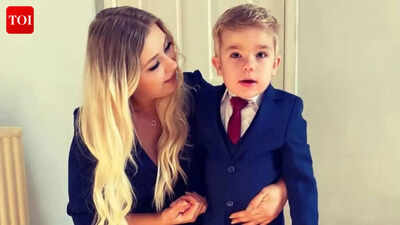
Most parents think of childhood as a time for new words, first days at school, silly jokes, and dreams about what’s next. For Georgia Nonas, every birthday brings a deeper kind of heartbreak: her son is fading before her eyes.“I’m watching my child fade away every single day, and it’s enough to break a person,” Georgia, 29, says about her son Cody, as reported by Metro. He’s eight years old, and he has Sanfilippo syndrome, one of those rare genetic illnesses people call “childhood dementia.”For the Nonas family, life suddenly dropped them into a world most people don’t even know exists. Most folks picture dementia as something linked to old age, but thousands of children around the world live with conditions that slowly strip them of memories, movement, speech, and independence.
In Sanfilippo, kids lose skills they already had, and right now there’s no cure. For Cody, things have been getting worse, and his family is left to deal with the grief and exhaustion that comes with a disease that only goes in one direction.
What is Sanfilippo syndrome?
Per Mayo Clinic, the official name of Sanfilippo syndrome is Mucopolysaccharidosis Type III (MPS III), a rare genetic disorder where the body can’t break down certain sugars properly.
These sugars build up inside cells, especially in the brain and nervous system, and start to cause more and more harm as time goes on.Sanfilippo’s called childhood dementia because kids slowly start to lose their mental and physical abilities. Most seem healthy at first. Many hit milestones just like other children, but eventually things shift, and they have trouble with speech, behavior gets tougher, maybe they can’t sleep, or they actually lose skills they’d already learned.As it progresses, it can affect nearly every part of a child’s life. Skills like speaking, walking, eating by themselves, even simple communication — they all slip away, and no one can say exactly how fast it’ll happen.Read more: Dementia is no longer rare, say neurologists
Cody’s heartbreaking story: An 8-YO bpy fighting a hard battle
When Cody was little, you couldn’t see what was coming. The warning signs arrived slowly. His mom says that at one, he already had hearing problems and nonstop ear infections. They had no idea what it meant.
Later, he regressed; he said “mama” and “baba,” and then stopped talking altogether. Doctors first diagnosed autism when he was just two. It wasn’t until he was three that they finally said Sanfilippo syndrome.Georgia remembers the day: “It was the worst day of my life. Everyone just sat there silent. I couldn’t even process it,” she recalls. “I’d fake being OK all day, but once I was alone, I’d cry until I fell asleep.
Then I’d wake up, and it would hit me all over again.”There are a few types of Sanfilippo. Cody has Type A, the fastest-moving and most aggressive. Georgia only learned what this really meant after many appointments. “Cody’s body is missing an enzyme, so waste builds up in his spinal cord and brain. It’s progressive; over time, this damage takes away his ability to talk, eat, or walk. It causes brain damage.”On top of all that, Cody also has epilepsy, another common struggle with this syndrome.
He needs daily painkillers for his muscles and joints, and takes sleeping aids to get some rest. Just day-to-day life is a challenge: his sleep, his movement, his speech — even eating is hard.Since the diagnosis, Georgia’s been sharing their story on social media. Her goal is to get the word out, since she’d never heard of the syndrome herself. “If someone sees Cody’s story and thinks, ‘Oh, my child looks like that too,’ it could mean an earlier diagnosis, which is so important for getting help and therapies.”Despite everything, Georgia takes each day as it comes with Cody, her “loving little boy” with “the most contagious smile.” “Everyone who meets him is amazed. I couldn’t be prouder,” she says.There’s no treatment for Sanfilippo in the UK, but the family is waiting for the FDA in the US to approve a gene therapy. No, it’s not a traditional cure, but it could slow things down and give Cody more months, maybe even years, of staying himself.
“Our hope is just to hold on to the Cody we know for as long as possible. I don’t want birthdays to be reminders of the clock running out. Hope is really all we hang on to.”Read more: Dementia symptoms: Forgetfulness or early dementia? Doctors explain
Why do people call it childhood dementia?
Most people aren’t used to hearing “dementia” and “children” in the same sentence, but this term covers more than a hundred rare genetic disorders. The symptoms look a lot like adult dementia: kids lose the ability to talk, remember things, move, reason, or care for themselves.
Sometimes the impact is even greater, because it starts so soon, before a life has really begun.Families deal with a pain that doesn’t let up. And as there’s not much room for hope of recovery, the losses pile up. Parents, siblings, caregivers — all find themselves in a constant cycle of letting go, then letting go again.
Is there any cure?
Right now, there isn’t one. Treatment is about making life as comfortable as possible: addressing symptoms, supporting movement and sleep, managing seizures and behavior.
Research is ongoing, with scientists looking into gene therapy and enzyme replacement, but these are still out of reach for most.Raising awareness is half the battle. Childhood dementia gets only a tiny fraction of the attention or funding that adult neurological diseases get, even though its effects are so crushing. Georgia and other advocates are fighting for more newborn screening and research, but most of all, for a little recognition.For the Nonas family, awareness isn’t just a campaign slogan: it’s about other families not feeling lost and alone. Their message? Dementia isn’t just for the elderly. Sometimes it steals childhoods, too.








 English (US) ·