

 39 minutes ago
2
39 minutes ago
2
ARTICLE AD BOX
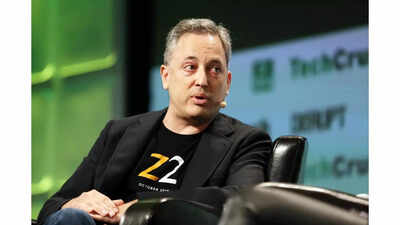
Tech investor and former White House Czar David Sacks has responded to Pope Leo XIV’s first encyclical on artificial intelligence, agreeing with the Pope’s warning about the risks of AI but cautioning against giving governments too much control over the technology.
The Pope’s letter, titled “Magnifica humanitas: on safeguarding the human person in the time of artificial intelligence,” discusses issues including AI monopolies, ethics, employment and human dignity. Sacks, who has previously served as the White House AI and crypto czar, said the debate over AI regulation should also focus on how governments may use such powers.
David Sacks warns about government control over AI
Reacting to the Pope’s comments, Sacks said, “The Pope rightly warns that AI must serve human dignity, not become a tool of domination or exclusion.”However, he questioned whether governments alone should regulate AI development. “But if we hand governments sweeping power over AI development in the name of safety, how do we prevent it from being used to censor, surveil, and control citizens — as Orwell foretold in 1984?” he wrote.Sacks added, “This is the real alignment problem.”He also quoted the Latin phrase “Quis custodiet ipsos custodes,” meaning “Who will guard the guardians,” while warning about the concentration of power.“Power tends to corrupt, and absolute power corrupts absolutely,” Sacks wrote.
Here’s what David Sacks wrote
The post shared by David Sacks reads:The Pope rightly warns that AI must serve human dignity, not become a tool of domination or exclusion.But if we hand governments sweeping power over AI development in the name of safety, how do we prevent it from being used to censor, surveil, and control citizens — as Orwell foretold in 1984? This is the real alignment problem.“Quis custodiet ipsos custodes.” Who will guard the guardians?“Power tends to corrupt, and absolute power corrupts absolutely.”The oldest questions of human nature and authority don’t disappear in the AI age. They become newly relevant.







 English (US) ·