

 1 hour ago
4
1 hour ago
4
ARTICLE AD BOX
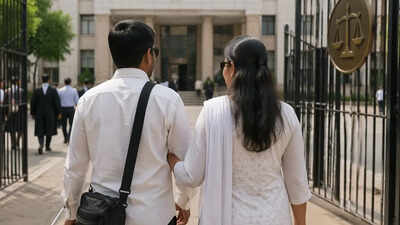
NEW DELHI: In a significant order upholding personal liberty and choice, the Delhi High Court on April 18 allowed a 100 per cent visually impaired interfaith couple to live together after interacting with the woman, who expressed her clear desire to reside with the petitioner and marry him.According to news agency ANI, a division Bench of Justice Navin Chawla and Justice Ravinder Dudeja recorded that the woman, who appeared in person before the Court, "emphatically stated" that she wishes to stay with Ram Kripal and that both intend to get married soon. Taking note of her statement and her status as a major, the Court held that she is free to reside with the petitioner. The Court also noted the opposition from her father, who told the Bench that he disapproved of the relationship and would sever ties if she chose to go with the petitioner.
However, the Court made it clear that her autonomy would prevail.Taking into account the sensitivity of the matter and the apprehensions expressed by the petitioner, the Bench directed the State to provide police assistance to safely escort the couple to a place of their choice.It further directed the local beat constable to share contact details with them to ensure immediate assistance in case of any emergency.
With these directions, the habeas corpus petition was disposed of. The case arose from a habeas corpus petition filed by Ram Kripal under Article 226 of the Constitution through Advocate Anubhav Tyagi, along with Advocates Kuldeep Jauhari, Sahil Ahuja and Partha Sharma, alleging that his partner, also 100 per cent visually impaired, had been forcibly taken away and confined by her family due to their interfaith relationship.Earlier, on April 15, the High Court had issued notice and directed that the woman be produced before it. The woman had been living independently in a Delhi hostel before she was allegedly taken away by her family in March. The petitioner had also alleged threats and police inaction.The case has drawn attention for highlighting the vulnerabilities faced by two visually impaired individuals asserting their right to choose a partner, despite societal barriers and familial opposition.





 English (US) ·