

 5 days ago
10
5 days ago
10
ARTICLE AD BOX
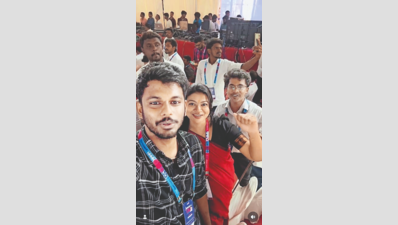
Influencers slip in propaganda between posts
For a while now, Chennai-based nano influencer M Manoj Samuel (@sammjilifestyle) has been building his follower base with reels on tourist spots and new food places in the city. But over the past couple of months, he’s been slipping in political pitches as well.
A reel here and there extolling the virtues of the Dravidian model, a post now and then on the chief minister’s breakfast scheme and free bus travel for women, before switching back to his staple feed. The political posts are not tagged as advertisements. “I’ve not received payment for them,” says Manoj. “I just do them because I want to.”A similar crossover is visible on the page of R Vasanth, known for interviewing reality television contestants from shows such as Bigg Boss. With 1.8 lakh followers, Vasanth posts a short video reviewing DMK’s new election anthem, ‘Stalin Thodaratum Tamil Nadu Valaratum’, treating it like a new film song.
“Songs have long functioned as DMK’s audio manifesto, from ‘Kallakudi Karunanidhi’ and ‘Odi Varugiran Udhaya Sooriyan’ in the 1950s and 1960s to cassette-era campaign music in later decades,” says R Deepak, a political analyst, who has worked in IT war rooms of several parties. “Those songs travelled through loudspeakers mounted on vans and were played before every public meeting. The medium may have changed, but the idea is the same — get the message across early and keep repeating it well before formal campaigning begins.
”Deepak says micro- and nano-influencers are now filling the space occupied by street-level audio campaigns. “Instead of trying to cover every neighbourhood, the focus now is on showing up repeatedly in the same digital spaces people spend time in. Younger voters are no longer picking up political cues from rallies or posters. Most of the time, they come across them while watching entertainment.”DMK’s recalibration follows its 2021 experience, when ‘Stalin dhan vararu’ song gained traction but was called out for being promoted through paid advertisements on YouTube, Twitter and Facebook.
While the campaign delivered reach, the paid nature of the push was discussed publicly.“Open political advertising puts off digital-native voters, who tend to skip anything marked as sponsored or owned by a party,” says R Chandrasekaran, a psephologist tracking the 2026 assembly polls for a Chennai-based political consultancy. “Messages that come through familiar faces feel more like peer talk and are less likely to be dismissed by undecided viewers.”For 2026, DMK’s campaign planners say the focus is on creators with 10,000 to five lakh followers, whose audiences are concentrated by region, language or profession. People familiar with a recent coordination meeting say these creators are not asked to post identical content. Instead, they are encouraged to weave political material into their existing formats. “Influencers dance to DMK’s new audio manifesto and party-linked proxy pages then aggregate and recirculate these 30 to 50-second clips, extending their lifespan,” says a member of DMK’s promotion team.Other parties are adapting at different speeds. AIADMK has begun testing influencer outreach but continues to depend largely on its traditional organisational network. BJP relies more on professional content teams and data firms to produce short explainers or issue-based videos with influencers. In the recent elections in Bihar, the party created social media accounts with local faces, posted targeted videos against rivals and took many of them down after polling.
BJP sources say a similar approach could be rolled out in TN, with new proxy pages expected to target DMK and Vijay’s Tamilaga Vettri Kazhagam (TVK).For TVK, the newest entrant on the poll scene, digital mobilisation has taken a different route. Actor-turned-politician Vijay’s former fan pages now function as informal party channels, sharing reels of his speeches, road journeys and interactions with supporters.
These pages also remix party music into dance videos. His campaign song ‘Unga Vijay’ has crossed one crore views on YouTube, driven by fan-led circulation.An AIADMK IT wing functionary says influencer-led outreach does not replace ground-level mobilisation or party structure. “Such efforts and songs are not about persuasion on polling day. They are about familiarity months in advance,” says Chandrasekaran.“My political reels draw fewer responses than entertainment or brand promotions,” says Manoj. “But I post them because I want people to know what is available to them. It’s just to get information across.”
| 'Low cost, high engagement'Nano-influencers with 10,000 to 50,000 followers charge 5,000-15,000 per post in Tamil Nadu, while micro-influencers with audiences up to five lakh command 20,000 to 75,000, says a Chennai-based VJ and influencer. Mega and macro with more than 10 lakh followers influencers may have larger reach and more credibility but have a more distant relationship with their following, say advertising experts. A week of sustained paid advertising on major platforms can cost several lakh rupees, without any assurance of engagement. Micro and nano influencers on the other hand have smaller followings but cost less and come across as more authentic. Election strategists say engagement levels are 40% higher because viewers see the content as part of their regular viewing, not as a political pitch. Spending is also harder to track when spread across hundreds of small accounts, making the job of Election Commission observers more complex. |



 English (US) ·