

 1 hour ago
2
1 hour ago
2
ARTICLE AD BOX

Diabetes is undergoing a transformation, increasingly affecting young adults in their 20s and 30s, fueled by contemporary lifestyles and hereditary influences. This rise in early onset heightens the chances of facing serious health complications later on. Individuals in their 40s often grapple with diabetes alongside other metabolic disorders.
A lot of people think that diabetes is one disease that stays the same throughout life, but that's not true. The way diabetes gets worse can be very different depending on when it starts.
Urbanization, dietary changes, increased consumption of processed foods, and reduced physical activity have contributed to the early onset. We reached out to Dr David Chandy, Director of Endocrinology at HN Reliance Foundation Hospital, to know about the impact of diabetes at different ages.

"Over the last two decades, one of the most striking changes in diabetes is that we are seeing it occur at much younger ages than before.
Earlier, type 2 diabetes was largely considered a disease of people in their 40s or 50s, but today it is increasingly being diagnosed in individuals in their 20s and 30s. When diabetes develops in the 20s, it often tends to be more aggressive. Younger individuals typically have stronger insulin resistance related to obesity, sedentary lifestyles, and genetic susceptibility.
Because the disease starts earlier, they are exposed to high blood sugar for a longer duration, which increases the lifetime risk of complications involving the heart, kidneys, eyes, and nerves," said Dr.
David."In the 30s, diabetes is frequently linked to lifestyle pressures such as long working hours, reduced physical activity, irregular sleep patterns, and gradual weight gain. Many people remain undiagnosed for years because early symptoms can be mild. By the 40s, diabetes often occurs alongside other metabolic conditions such as hypertension, fatty liver, and abnormal cholesterol levels, which together significantly raise cardiovascular risk," he highlighted.Dr Mohit Sharma, Senior Consultant in Internal Medicine at Amrita Hospital, Faridabad, said, "I frequently observe that diabetes diagnosed in the 20s manifests distinctly compared to diabetes emerging in the late 30s or 40s. Diabetes that starts in the 20s is often caused by a mix of genetic factors and modern lifestyle choices."
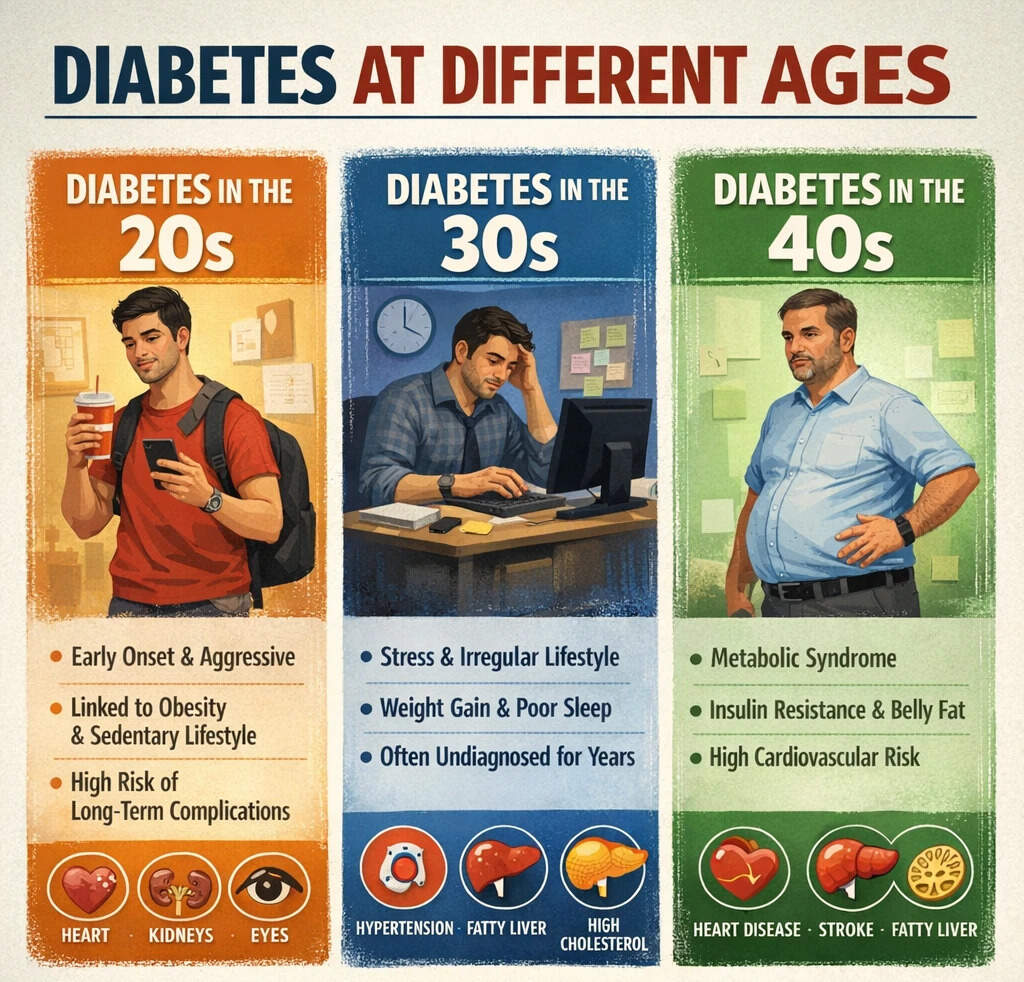
"Younger patients often work long hours, skip meals, don't get enough sleep, and are under a lot of stress.
For people in this age group, the body can handle the changes in blood sugar levels well at first, so it may take years for a diagnosis to be made. But since the disease starts early, the risk of long-term problems like nerve damage, kidney disease, or eye problems can be higher if control isn't kept up for decades. In contrast, diabetes that is found in people in their late 30s or 40s is more often linked to slow changes in metabolism.
Hormonal changes, weight gain, less exercise, and belly fat become more important. Insulin resistance is the most important thing at this point. The pancreas continues to generate insulin; however, the body's cells do not adequately respond to it. Many people also have other health problems that raise their risk of heart disease, such as high blood pressure, fatty liver, or high cholesterol," he explained further. "Awareness is another important difference. Young adults often fail to pay attention to early warning signs like tiredness, needing to pee a lot, or losing weight for no reason. People in their 40s, on the other hand, are more likely to get regular health check-ups, which help find problems earlier. The good news is that diabetes doesn't have to get worse. People can slow the disease down a lot by making changes to their lives, like getting enough sleep, eating a balanced diet, exercising regularly, and managing stress, no matter when they are diagnosed.
Early diagnosis and regular check-ups are still the best ways to stop long-term problems and help people live a completely active and healthy life," he concluded.Medical experts consultedThis article includes expert inputs shared with TOI Health by:Dr David Chandy, Director of Endocrinology at HN Reliance Foundation Hospital.Dr Mohit Sharma, Senior Consultant in Internal Medicine at Amrita Hospital, Faridabad.Inputs were used to explain how your risk of developing diabetes evolves with age and why regular checkups and lifestyle adjustments are essential in your 20s, 30s, and 40s.









 English (US) ·