

 3 days ago
6
3 days ago
6
ARTICLE AD BOX
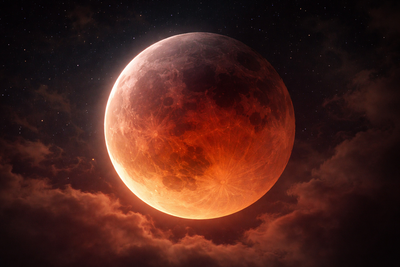
A lunar eclipse has always commanded attention. Long before telescopes and livestreams, people stepped outside to watch the Moon darken and flush copper-red against the night sky. Even today, eclipses trigger a mix of scientific curiosity and spiritual speculation.
The central question remains the same: does a lunar eclipse actually affect the human body or mind? From a scientific standpoint, a lunar eclipse occurs when the Earth moves directly between the Sun and the Moon, casting a shadow on the Moon’s surface. Unlike a solar eclipse, it does not change daylight exposure, radiation levels, or temperature in any significant way on Earth. The light we see during a total lunar eclipse is filtered sunlight bending through Earth’s atmosphere.
Physically, that shift in reflected light has no proven biological impact on the human body.There is no credible medical evidence showing that a lunar eclipse alters hormones, blood pressure, digestion, pregnancy outcomes, or mental health. The gravitational pull of the Moon during an eclipse is not stronger than during any other full moon. Ocean tides are influenced by the Moon’s gravity, but the human body is not affected in the same tidal way.
Scientifically, the eclipse is an astronomical alignment, not a physiological event.That said, perception matters. Many people report feeling restless, emotionally heightened, or unusually introspective during eclipses. These experiences are more likely psychological than physical. Eclipses are rare, visually dramatic events that break routine. They invite attention, anticipation, and meaning. In cultures where eclipses carry symbolic weight, expectations can shape how people interpret their own sensations.
When we anticipate change, we often notice it more acutely within ourselves.Sleep patterns can also be indirectly affected. A total lunar eclipse usually coincides with a full moon, and some research suggests that full moons may slightly influence sleep quality in certain individuals, possibly due to brightness or circadian sensitivity. However, findings are mixed and not conclusive. If sleep feels disrupted, it is more likely due to altered light exposure, excitement, or staying up late to watch the event rather than the eclipse itself.
Scroll down to read more.
So what should you do during a lunar eclipse?
First, observe it safely and mindfully. Unlike a solar eclipse, a lunar eclipse is completely safe to watch with the naked eye. No protective eyewear is required. Taking time to step outside, slow down, and watch the progression can be grounding. Astronomical events have a way of reminding us of scale and perspective, which can reduce stress rather than increase it.
Second, maintain normal routines. There is no medical reason to fast, avoid bathing, postpone meals, or change medication schedules during a lunar eclipse.
Eat regularly, hydrate well, and follow your usual health practices. If cultural or spiritual traditions in your family suggest certain rituals, they can be observed as personal choice rather than medical necessity.Third, prioritise sleep. If the eclipse is visible late at night from your location and you choose to watch it, plan accordingly. Lack of sleep has measurable effects on mood, focus, and immunity. The eclipse itself will not harm you, but sleep deprivation might.
Balance curiosity with rest.Fourth, use the moment for reflection if it feels meaningful to you. Across traditions, eclipses are often associated with pause, reset, or release. While these interpretations are symbolic rather than biological, taking time to journal, meditate, or reassess goals can be constructive. The benefit comes from intentional reflection, not from the eclipse exerting a physical force.
Now, what should you avoid?
Avoid misinformation. Claims that lunar eclipses emit harmful rays, contaminate food, or pose special risks to pregnant women are not supported by scientific evidence. There is no radiation surge, no toxic atmospheric shift, and no measurable biological threat linked specifically to a lunar eclipse.
Avoid anxiety-driven restrictions. If fear-based messages circulate on social media urging extreme precautions, approach them critically.
Astronomical alignment does not equal medical danger. If you feel uneasy, grounding practices such as slow breathing, limiting screen exposure, and relying on credible scientific sources can help.Avoid overinterpreting normal sensations. Headaches, fatigue, or mood fluctuations happen for many everyday reasons including stress, hydration levels, and sleep patterns. Attributing every minor change to an eclipse can amplify unnecessary concern.
In summary, a lunar eclipse does not directly affect the human body in any scientifically proven way. It does not alter hormones, damage cells, or disrupt biological systems. Its impact is primarily visual, cultural, and psychological. Yet that does not make it insignificant. Eclipses capture attention because they interrupt the ordinary rhythm of the sky. They remind us that we are part of a larger system governed by predictable celestial mechanics.The healthiest approach is balanced awareness. Watch if you wish. Reflect if it feels meaningful. Maintain your routines. Stay informed through credible science. The Moon passing through Earth’s shadow is a powerful image, but its influence on your body remains symbolic, not physical.






 English (US) ·