

 7 hours ago
6
7 hours ago
6
ARTICLE AD BOX
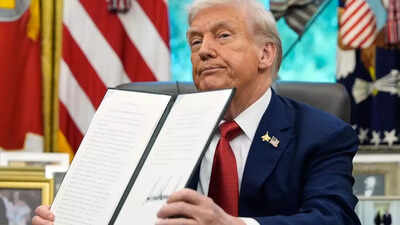
TikTok’s US deal has brought new legal scrutiny for Donald Trump and Pam Bondi. According to a Reuters report, Trump and Bondi are facing a new lawsuit that challenges the US government’s approval of an agreement involving the short-video app’s Chinese parent company, ByteDance.
The lawsuit claims that the approval of a plan to create a majority American-owned joint venture did not meet the requirements of a 2024 law governing the platform.The case was filed in the US Court of Appeals for the District of Columbia by the Public Integrity Project on behalf of two retail US investors in rival social media companies, the Reuters report noted. The plaintiffs have argued that the Trump administration’s approval of the TikTok deal was illegal, and they are seeking to renegotiate it.
According to the lawsuit, the aim is to require a renegotiated agreement “that doesn't put administration allies in a position to censor political content on one of the world's most popular media platforms,” the report added.However, the lawsuit does not seek to force a ban on TikTok, which has about 200 million users in the United States. Earlier, Trump had also declared that the deal met the terms of the divestiture law.
“Under the announced deal, ByteDance would still control all the essential elements of TikTok. Such a deal would subvert the very purpose of the TikTok Law, as ByteDance could continue to push Chinese propaganda and censor the content it does not like,” the lawsuit, seen by Reuters, alleged.
What we know about US TikTok deal with China’s ByteDance
In 2024, the US Congress passed legislation requiring Chinese tech giant ByteDance to sell its US assets by January 2025 or face a ban or potentially hundreds of billions of dollars in fines.
However, Donald Trump chose not to enforce the law, and Pam Bondi told companies they would not face liability for continuing to allow the use of TikTok.ByteDance said the new entity, TikTok USDS Joint Venture LLC, which was finalised in January and is 80% owned by non-Chinese investors, would safeguard US user data, apps, and algorithms through privacy and cybersecurity measures. However, the company provided limited details about the divestiture and the financial arrangements behind the deal.The creation of the joint venture followed years of disputes over the app that began in August 2020, when Trump attempted to ban TikTok over national security concerns, though the effort failed at the time.The latest lawsuit marks the first legal challenge to the agreement and could bring more details about the joint venture, which is central to TikTok’s continued operation in the United States and has drawn criticism from some lawmakers.







 English (US) ·