

 1 hour ago
4
1 hour ago
4
ARTICLE AD BOX
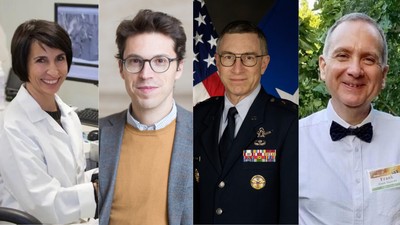
Left to right: Monica Jacinto Reza, Nuno Loureiro, William Neil McCasland, and Frank Maiwald — among the scientists linked to sensitive US defence and research programmes
Between July 2024 and February 2026, a sequence of disappearances and deaths involving individuals connected to sensitive US nuclear, aerospace, and advanced research programmes has drawn quiet but persistent attention.
Eight figures, ranging from a senior rocket engineer and a retired Air Force general to laboratory staff and leading researchers, have either vanished without a trace or died in circumstances that range from unexplained to clearly criminal. At first glance, the cases appear to form a pattern, particularly given their proximity to high-security work. Yet a closer examination reveals a far more complex picture: a mix of genuine mysteries, crimes and ambiguous deaths, all increasingly woven together by speculation that often moves faster than verified evidence.
A timeline of scientist deaths and disappearances
The chronology of events has played a major role in shaping the narrative. The sequence begins on July 4, 2024, when NASA-affiliated scientist Frank Maiwald died in Los Angeles at the age of 61. Maiwald had spent decades at the Jet Propulsion Laboratory working on advanced space instrumentation and planetary detection systems, including research aimed at identifying signs of life on worlds like Europa and Enceladus.
His death initially drew little public scrutiny, but the absence of a disclosed cause and reports that no autopsy was conducted later raised questions.Nearly a year later, on May 4, 2025, Anthony Chavez, a former Los Alamos National Laboratory employee, disappeared while out walking in New Mexico. Chavez had been associated with one of the United States’ most sensitive research environments, where work often intersects with nuclear science, national security and classified technologies.
With no phone or wallet on him and no confirmed sightings since, his case quietly remained unresolved.
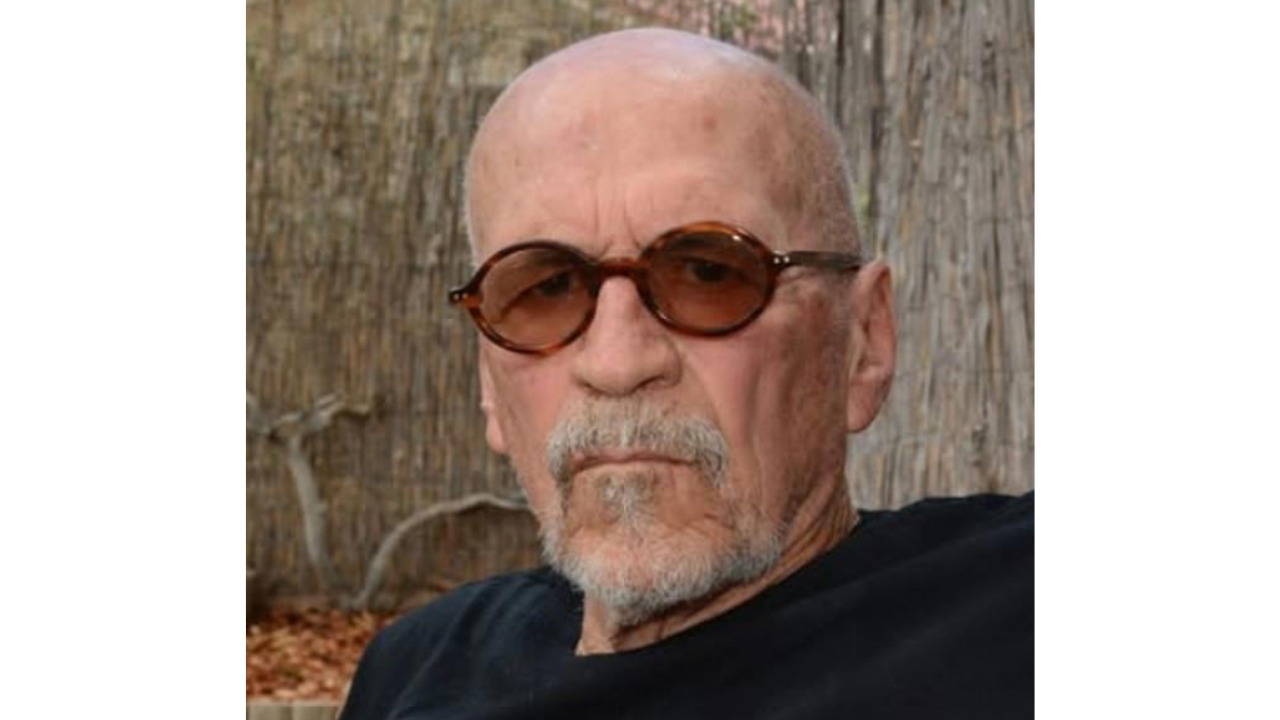
Anthony Chavez
The situation intensified in June 2025. On June 22 at around 9:10 a.m., Monica Jacinto Reza, a senior aerospace engineer and former Technical Fellow at Aerojet Rocketdyne, vanished while hiking near Mount Waterman in California. Reza was a leading figure in advanced rocket propulsion materials, co-inventing a nickel-based superalloy used in next-generation engines designed to reduce reliance on foreign propulsion systems.
Despite an extensive search lasting until June 30, involving helicopters, drones and canine units, no trace of her was ever found. Just four days later, on June 26 at approximately 2:20 p.m., Melissa Casias was last seen walking alone along State Road 518 in New Mexico. Casias worked as an administrative professional at Los Alamos National Laboratory, placing her within a high-security scientific ecosystem tied to nuclear and defence research.
Her disappearance stood out not only for its suddenness but for the discovery that her phones had been left behind and wiped clean.By late 2025 and early 2026, the list expanded further. Jason Thomas, who disappeared on December 12, 2025, had been serving as assistant director of chemical biology at Novartis, a senior role in pharmaceutical research involving complex biochemical systems. His body was later found on March 17, 2026.
Around the same time, on December 15, 2025, Nuno Loureiro, director of the MIT Plasma Science and Fusion Center and a globally recognised expert in plasma physics and fusion energy, was shot and died the following day.
Carl Grillmair, a Caltech astrophysicist known for his work on galactic structures, stellar streams and asteroid tracking, was killed on February 16, 2026. Less than two weeks later, on February 27, retired Air Force General William Neil McCasland vanished without a trace.
McCasland had previously commanded the Air Force Research Laboratory and overseen advanced space and defence programmes, placing him at the highest levels of US military science and technology.
The missing: Cases with no clear answers
Among all eight individuals, four cases remain particularly troubling due to the complete lack of resolution. Monica Jacinto Reza’s disappearance during what should have been a routine hike remains one of the most baffling.
As a senior aerospace engineer deeply involved in cutting-edge propulsion systems and materials science, her work sat at the intersection of innovation and national security. She was last seen behaving normally, and yet vanished in a matter of minutes in an area that was thoroughly searched, leaving investigators with no physical evidence to follow.
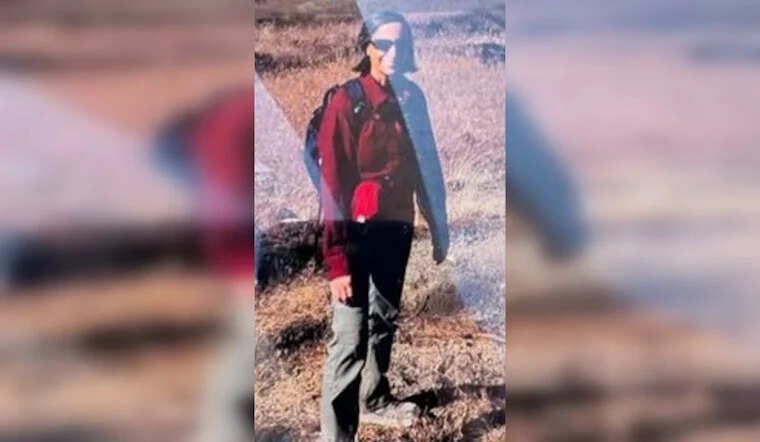
Monica Reza, Los Angeles County Sheriff's Department
Melissa Casias’s disappearance is equally puzzling, though for different reasons.
While her role at Los Alamos National Laboratory was administrative, it still placed her within one of the most tightly controlled scientific institutions in the United States, where even support staff operate within secure environments. The wiping of her phones introduces an element that investigators have not publicly explained.
Combined with her leaving home without essential belongings and being spotted miles away alone, the case stands out as behaviourally unusual.William Neil McCasland’s disappearance adds another layer due to his seniority and background. As a former commander of the Air Force Research Laboratory, he had oversight of highly advanced and often classified aerospace and defence projects. Leaving behind all personal devices but taking a firearm suggests a deliberate decision, yet no trace of his movements has been uncovered despite extensive search efforts.
His profile makes his disappearance one of the most sensitive in the list.Anthony Chavez’s case is quieter but no less unresolved. As a former employee of Los Alamos National Laboratory, he had been part of an institution historically central to nuclear weapons development and national security research. His disappearance shares similarities with others, particularly the absence of personal items and the lack of any subsequent sightings or evidence, reinforcing the sense that some of these cases, while different on the surface, may share deeper unanswered questions.
Deaths that raise questions but lack clarity
Not all cases involve disappearance, but some deaths remain difficult to fully contextualise. Frank Maiwald’s passing in 2024 continues to draw attention due to the lack of publicly available details. His recent work on technologies aimed at detecting life beyond Earth adds an additional layer of intrigue, even though no evidence suggests foul play.Jason Thomas’s case, while officially not considered suspicious, still contributes to the broader narrative.
His disappearance and later recovery from a lake, combined with known personal struggles, present a tragic but largely explained scenario. However, its timing alongside other incidents has led to its inclusion in wider discussions.
Murders with clear and grounded explanations
Two of the most frequently cited cases are also the most clearly explained. Nuno Loureiro’s killing in December 2025 was linked to a suspect motivated by personal resentment and psychological factors.
Investigations have found no connection between his death and his work in fusion science.Similarly, Carl Grillmair’s death in February 2026 was the result of a local dispute that escalated over time. The individual responsible had a documented history of trespassing and erratic behaviour, and the incident has been treated as a preventable but isolated act of violence.These cases demonstrate how easily unrelated incidents can be grouped into a larger narrative when viewed through a particular lens.
Real overlaps that keep the mystery alive
Despite the lack of a single explanation, certain overlaps between cases are real and noteworthy. Several individuals were connected to institutions such as Los Alamos National Laboratory or to defence-related research networks. Monica Reza and William McCasland, in particular, shared indirect professional links through advanced propulsion and Air Force research structures.There are also behavioural similarities that stand out. Multiple individuals disappeared while outdoors and without their phones or tracking devices, a detail that has drawn repeated attention.
While these overlaps may be coincidental, they are significant enough to sustain ongoing interest and concern.
The conspiracy layer: where speculation takes over
It is within these overlaps and gaps in information that conspiracy theories have flourished. One line of speculation suggests the possibility of foreign intelligence agencies targeting individuals connected to sensitive technologies. While such concerns are not inherently implausible, no evidence has been presented to confirm such activity in these cases.Another layer involves claims related to unidentified aerial phenomena and alleged classified programmes. These theories often cite McCasland’s name appearing in leaked communications and attempt to link it to a broader narrative of secrecy. However, these claims largely originate from non-official sources and remain unverified.Social media has amplified these ideas by presenting the cases as interconnected, often ignoring key differences or confirmed explanations.
This has created a perception of a coordinated pattern that does not fully align with the available evidence.
A fragmented mystery, not a single story
The most grounded interpretation is that this is not one unified mystery, but several overlapping stories. Four cases remain genuinely unresolved and deserve continued investigation, particularly given their connection to sensitive fields. At the same time, other cases have clear explanations that do not support the idea of a broader pattern.What emerges is a fragmented narrative shaped as much by unanswered questions as by speculation. The absence of definitive answers in some cases ensures that the story remains open, but the evidence so far points toward complexity rather than conspiracy.






 English (US) ·