

 1 hour ago
3
1 hour ago
3
ARTICLE AD BOX
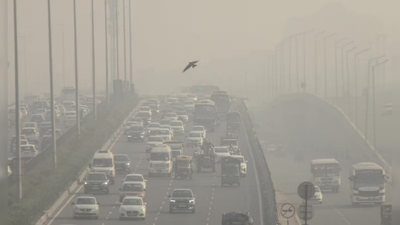
From GRAP-III To IV Within 24 Hrs As Delhi Air Quality Turns Severe
NEW DELHI: The Commission for Air Quality Management (CAQM) on Saturday imposed Stage-IV restrictions under the Graded Response Action Plan (GRAP) as toxic smog thickened over the capital and pollution levels spiked further into the severe category, a day after Stage-III was enforced.
The move bans entry of all non-Delhi registered vehicles below BS-VI emission norms into the city. Other curbs include a complete ban on construction and demolition activities, entry of non-essential BS-IV or lower diesel goods carriers. Schools will also have to switch to hybrid mode.
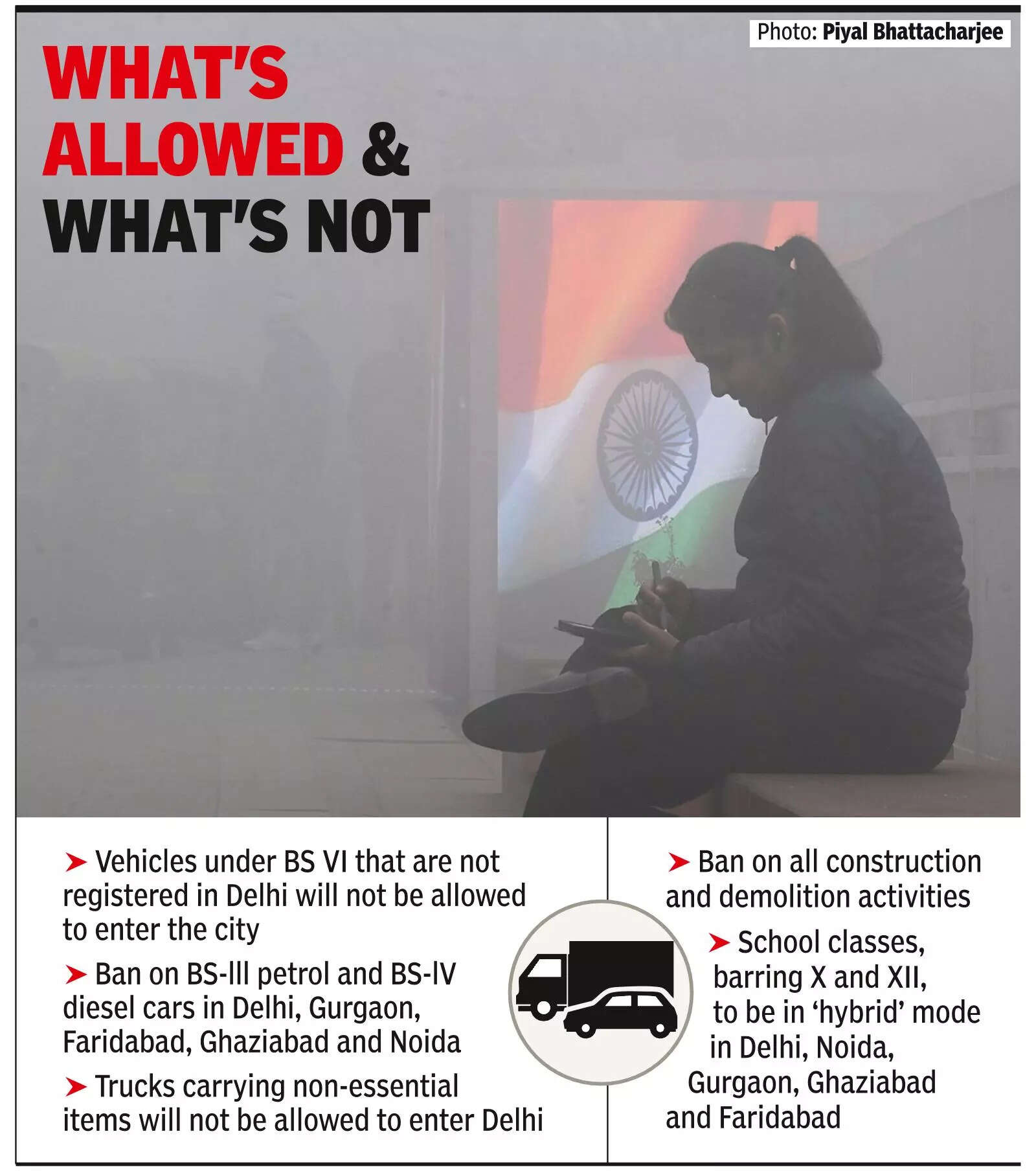
Entry Of All Non-Delhi Registered Vehicles Below BS-VI Category Banned
"The AQI of Delhi, recorded at 4 pm on Saturday stood at 400, which rose sharply to 428 by 8 pm due to western disturbance, calm winds and poor dispersion of pollutants.
To prevent further deterioration, the CAQM sub-committee unanimously decided to invoke all actions under Stage-IV of GRAP ('Severe+' air quality, AQI over 450) across NCR with immediate effect," the panel said.The Air Quality Index (AQI), on a scale of 0-500, stood at 400 at 4 pm, up from 354 on Friday. An AQI above 400 is considered severe. The last time Stage-IV was imposed was between Dec 13 and 24. Prior to this, the city's AQI had touched 401 on Dec 29.
Several areas recorded even higher levels: Anand Vihar (483), Dwarka Sector-8 (460), Wazirpur (459), Vivek Vihar (458), Mundka (456), Nehru Nagar (453), Punjabi Bagh (452), Rohini (450), Chandni Chowk (449) and Siri Fort (445).CAQM had already enforced Stage-III measures on Friday, anticipating deterioration. It also flagged poor compliance and incidents of open burning as major contributors to pollution.
Officials said multiple reports of garbage and biomass burning were received from residential and industrial clusters, worsening the situation. The agency stressed that strict enforcement of bans on open burning and dust control at construction sites is critical.
CAQM appealed citizens to adhere to GRAP measures aimed at improving AQI.According to IITM's Air Quality Early Warning System, severe conditions are likely to persist till Jan 18, with very poor levels expected between Jan 19 and 20.
"Ventilation index is likely to be 1,000 m2/s on Jan 18; 1,000 m2/s on Jan 19 and 4,500 m2/s on Jan 20 over Delhi. The ventilation index lower than 6,000 m2/s with average wind speed less than 10 kmph is unfavourable for dispersion of pollutants," it said, adding, the air quality is likely to be around the very poor category in the next six days.
Meanwhile, the city saw a hazy day with brief sunshine. The minimum temperature was 4.4 degrees Celsius, three notches below normal, while the maximum touched 24.6 degrees Celsius, five notches above normal. Moderate fog reduced visibility to 350 m at Palam and 250 m at Safdarjung in the morning, though flight operations were unaffected. IMD issued a yellow alert for dense fog in isolated areas. Sunday's temperature is likely to hover around 21-23 degrees Celsius (maximum) and 4-6 degrees Celsius (minimum).








 English (US) ·