

 1 hour ago
6
1 hour ago
6
ARTICLE AD BOX
3 min readNew DelhiMar 26, 2026 02:07 AM IST
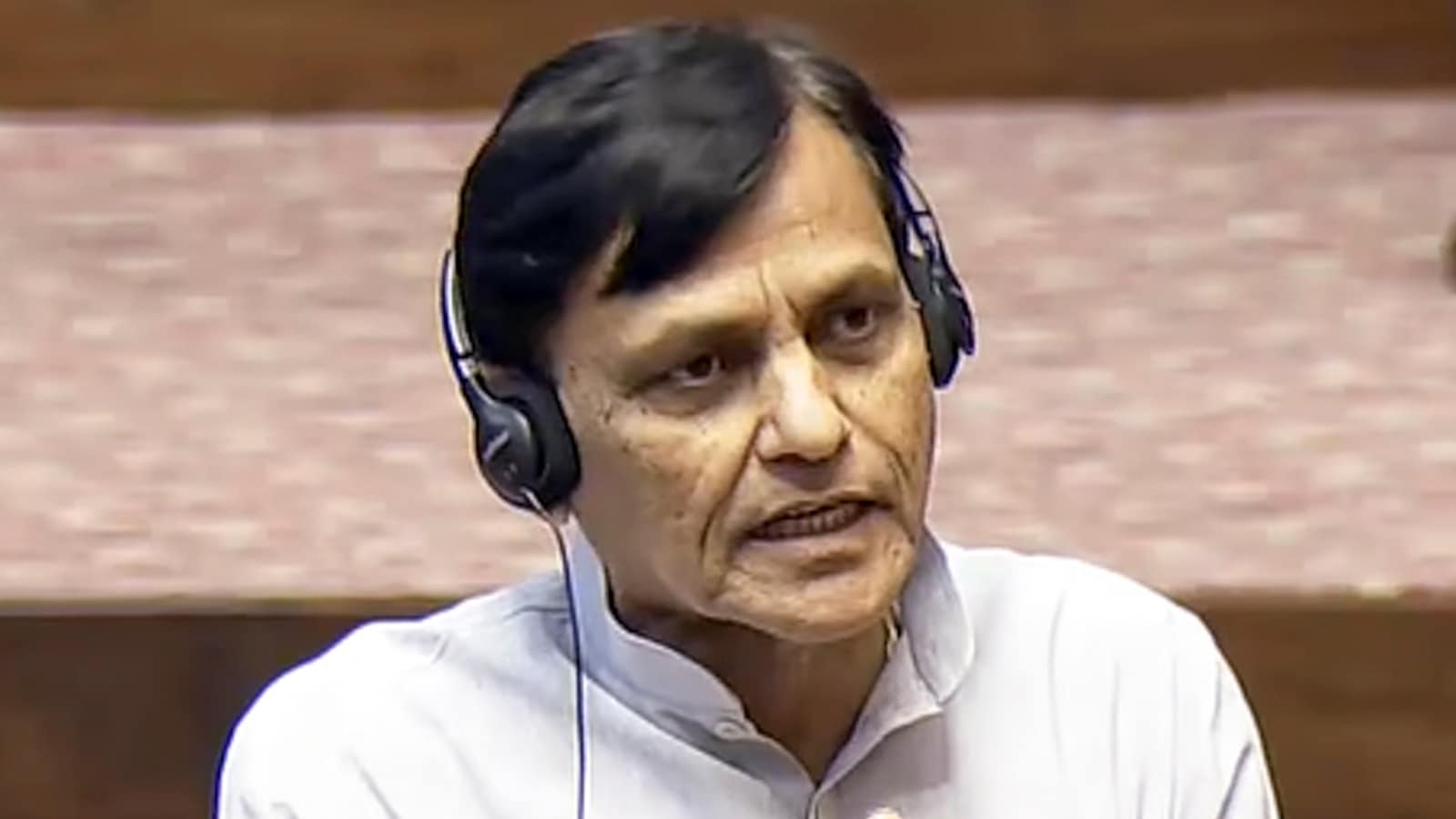 Union Minister of State for Home Affairs Nityanand Rai speaks in the Rajya Sabha during the second part of the Budget session of Parliament, in New Delhi, Wednesday, March 25, 2026. (Sansad TV via PTI Photo)
THE CENTRE on Wednesday introduced the Foreign Contribution (Regulation) Amendment Bill, 2026 in the Lok Sabha amid protests by Opposition members. The Bill proposes the creation of a “designated authority” to seize and manage the assets of non-profits that lose their licence.
Introduced in the House by Minister of State for Home Affairs Nityanand Rai, the Bill seeks to provide for vesting of foreign contribution and assets created out of foreign contribution in certain cases, including cancellation, surrender or cessation of the FCRA registration.
Opposing the Bill under Rule 72 of the Rule of Procedure, Congress member Manish Tewari said, “The Bill suffers from excessive delegation of essential legislative functions. Core aspects such as the manner of vesting, management, disposal of assets, timelines, exemptions and even appellate structures are left to be prescribed by the Central Government through rules. This effectively reduces Parliament to enacting a skeletal framework, contrary to the settled constitutional principle that essential legislative policy must be determined by the legislature itself.”
He said the Bill enables “wide and unguided executive control over property”, including provisional and permanent vesting of assets in a designated authority with powers of management, transfer, and disposal. “This raises serious concerns under Article 300A, as deprivation of property must be just, fair, and accompanied by adequate safeguards, none of which are meaningfully embedded in the statute,” he said.
By mandating prior Central Government approval before initiation of investigation, the Bill potentially compromises the independence of enforcement and creates scope for selective application, offending Article 14, Tewari said.
The current law —The Foreign Contribution (Regulation) Act, 2010 – which regulates the acceptance and utilisation of foreign contribution and foreign hospitality to ensure that such inflows do not adversely affect national interest, public order or national security, came into force on May 01, 2011 and has been amended in the years 2016, 2018 and 2020.
At present, approximately 16,000 associations are registered under the FCRA Act and receive around Rs 22,000 crore annually, according to the statement of objects and reasons of the Bill.
Story continues below this ad
Congress member Gowaal Kagada Padavi said the Amendment BIll is “draconian”. TMC member Pratima Mondal also opposed the introduction of the Bill, terming it “dangerous”.
Responding to the Opposition members’ observations, MoS Rai said the Bill aims to enhance transparency and ensure proper utilisation of funds received from abroad.
On the charge that the Bill is “dangerous”, Rai asserted that it is “indeed dangerous” for those who engage in forced religious conversion using foreign contributions, as well as for individuals who abuse foreign funding for personal gain.
“The objective of this Bill is not to hinder any educational institution or NGO that wishes to serve the nation — provided that its aims align with the sovereignty and integrity of the country’s ethos, and that it acts in conformity with the Constitution and laws of India. I also wish to make it clear that if anyone attempts to operate in contravention of the spirit of the Constitution, the laws of the land, or the national interest, the (Narendra) Modi government will not tolerate it. We are fully prepared to take action against such entities in accordance with the law,” Rai said.

Harikishan Sharma, Senior Assistant Editor at The Indian Express' National Bureau, specializes in reporting on governance, policy, and data. He covers the Prime Minister’s Office and pivotal central ministries, such as the Ministry of Agriculture & Farmers’ Welfare, Ministry of Cooperation, Ministry of Consumer Affairs, Food and Public Distribution, Ministry of Rural Development, and Ministry of Jal Shakti. His work primarily revolves around reporting and policy analysis. In addition to this, he authors a weekly column titled "STATE-ISTICALLY SPEAKING," which is prominently featured on The Indian Express website. In this column, he immerses readers in narratives deeply rooted in socio-economic, political, and electoral data, providing insightful perspectives on these critical aspects of governance and society. ... Read More
Stay updated with the latest - Click here to follow us on Instagram
© The Indian Express Pvt Ltd







 English (US) ·