

 1 hour ago
6
1 hour ago
6
ARTICLE AD BOX
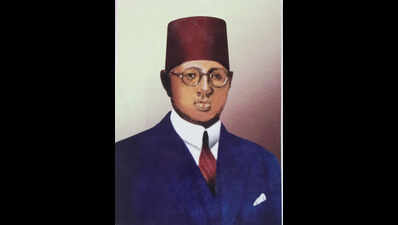
An illustration of Mohammad Barkatullah from M Irfan’s Urdu biography ‘Barkatullah Bhopali’
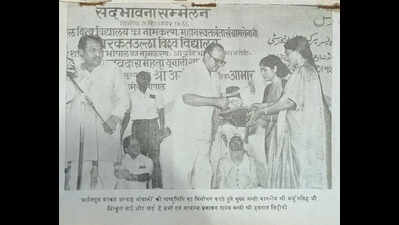
While an intense debate rages over ‘erasure’ of Mohammad Barkatullah’s name from the university that bears it, a more painful question lingers in the lanes of Itwara: Who was Barkatullah? The answer carries history’s cruelest irony.
The man who should have been Bhopal’s brightest icon — celebrated with the same fierce pride Bengal reserves for Netaji Bose — could silently slip into a footnote.Barkatullah entered the world on 7th July, 1859 in a small mud house in Itwara. He became one of the loudest voices against British imperialism.For nearly 40 years, he circled the globe building alliances for the idea of India. In the freezing Dec of 1915, amidst the rugged peaks of Kabul, Afghanistan, Barkatullah, alongside revolutionaries Raja Mahendra Pratap and Maulana Ubaidullah, breathed life into India’s first govt-in-exile.
Raja Mahendra Pratap was declared President; Mohammad Barkatullah was appointed Prime Minister.Four years later, the govt’s leaders walked into Moscow to meet Vladimir Lenin. Barkatullah, asked if he was a communist, replied: his only ideology was the expulsion of the British. He saw European colonialism as the enemy, and in the Soviets, a natural ally. He wrote and spoke of Hindus and Muslims dying together of starvation under colonial plunder.
His politics was built on one unshakable belief: India could only be free if its people fought together.
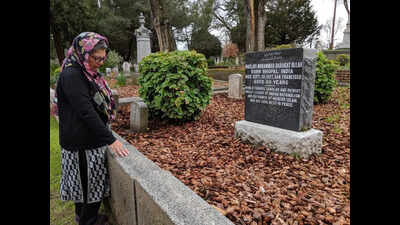
Divide-and-rule, he said, was Britain’s deadliest weapon.“Today, remembering Maulana Barkatullah is more than an act of historical recall; it is a reminder that freedom was achieved through the courage of those who organized beyond easy sight, who built networks across continents, and who kept faith when return seemed uncertain,” says historian Rana Safvi, who visited Barkatullah’s grave in San Francisco in 2019.
Books written by her include ‘The Forgotten Cities Of Delhi.
’Fading Memory Of A RevolutionaryBarkatullah moved from Bhopal to Bombay for higher studies, then to London. In Liverpool, he began teaching. His speeches and writings drew the British glare, and in 1899 he was forced to leave for the United States. There, he corresponded with Maulana Hasrat Mohani — the man who coined “Inquilab Zindabad”.Kailash Munshi, born in the same Itwara lane in 1955, grew up on stories of Barkatullah told by his father and still recalls them.“My grandfather spent his childhood with him, and he passed on the stories to my father. Me and my cousin Gomti Shankushal, who was the principal of Govt Kamla Nehri Girl’s Higher Secondary school in TT Nagar, heard so much about him that she wrote a book on him, “Krantidoot Barkat Ullah Bhopali”. She passed away in 2003,” says Munshi“Barkatullah was a polyglot and a very learned man. He could’ve secured a well-paying job anywhere in the world and lived in luxury.
But the man sacrificed everything for the sake of India. He didn’t even marry. His family’s house was occupied by distant relatives and later sold off. The need of the hour is that Bhopal and the state of MP should secure his legacy and his ideology,” Munshi adds.Historian Syed Khalid Ghani draws the parallel that stings. “Bhopal had a freedom fighter and cultural icon of the stature of Subhash Chandra Bose. Bose established the Provisional Government of Free India (Arzi Hukumat-e-Azad Hind) on Oct 21, 1943.
Barkatullah did that even before him. He was struggling for India’s freedom even before Gandhi came into the picture. He travelled to Japan, England, US, Germany, Russia, Afghanistan, Brussels, Switzerland, France.
And in those days, there were no commercial flights. Only ships, trains and a will of iron.”He notes the paradox of the moment: “The Prime Minister laid the foundation stone of Raja Mahendra Pratap Singh University in Aligarh in 2021.
He was the man who was the President of the govt in exile of which Barkatullah was the PM. How ironic is it that the Centre is making efforts to create a legacy for one and the name of the other is being erased in his own hometown.”The Last Thing He Wanted Remains UnfulfilledBarkatullah refused to return to India while it remained shackled.Yet Bhopal never left his heart. “I have moved around the world twice. I have seen many important personalities of the world but the simple people of Bhopal, its small houses and its small lanes are still dear to my heart,” he once wrote, his ink dripping with longing for his home.But he vowed to return only when the tricolor of freedom flew high.That day never came for him. On Sept 27, 1927, while attending a Ghadar Party event in Sacramento, California, his heart gave out. He passed away with his faithful brother-in-arms, Raja Mahendra Pratap, by his bedside.In the Urdu biography Barkatullah Bhopali, penned by M Irfan, Raja Mahendra Pratap recalls those somber hours: “At this unfortunate moment I performed all the funeral ceremonies.
The funeral of Maulana was attended by Hindus, Muslims and Sikhs alike.” Barkatullah’s dying wish was a heartbreaking request: that his mortal remains be disinterred and brought back home to rest in a free India.Nearly a century later, that wish remains unfulfilled. He rests still in Marysville, 75 miles from Sacramento, an exile even in death.It was only in 1988 that Bhopal offered a belated tribute to its almost forgotten hero by naming Bhopal University after him. Historians and residents argue that to remove his name from the only institution that bears it is to risk erasing him from the collective consciousness of the city. But the revolutionary’s ideas continue to battle erasure in the face of it all.


 English (US) ·