

 2 hours ago
4
2 hours ago
4
ARTICLE AD BOX
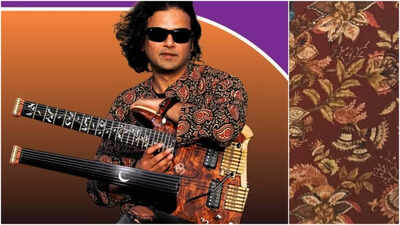
Anupam Shobhakar captivated the Kala Ghoda Arts Festival with his innovative blend of tradition and modernity. His unique double-neck guitar-sarod hybrid, Kali Maa, symbolized his journey from rock to classical training.
Indian classical musician Anupam Shobhakar brought a striking blend of tradition and experimentation to this year’s Kala Ghoda Arts Festival, where he presented the timeless grammar of raga in a contemporary setting.
Performing with Kali Maa, his custom double-neck guitar–sarod hybrid, Shobhakar’s set reflected his unusual musical journey — from playing rock in Mumbai to training in the revered Maihar tradition under Aashish Khan. For Shobhakar, the festival’s unique environment made the performance particularly meaningful. “Kala Ghoda has become a truly global platform under the leadership of Brinda Miller. What makes it special is how it places heritage and modernity side by side,” he says, adding that presenting raga in such an open, contemporary space felt “alive rather than nostalgic.” A defining feature of the performance was Kali Maa, the instrument he designed to bridge musical traditions. The hybrid instrument symbolises Shobhakar’s own artistic path — merging Indian melodic expression with the familiarity of a Western guitar. “Bringing Kali Maa to that stage felt symbolic,” he says. “It represented tradition and experimentation coexisting naturally.” The concert also featured a cross-cultural dialogue with Israeli musician Tal Kravitz, highlighting the parallels between Indian ragas and Middle Eastern modal systems.
According to Shobhakar, the collaboration was less about fusion and more about recognition of shared musical roots. “Both traditions explore microtones and unfold through improvisation,” he explains. “Music predates borders — audiences don’t need theory to feel that connection.
” Adding rhythmic depth to the performance was tabla exponent Amit Mishra. Shobhakar describes their collaboration as a true musical dialogue.
“The tabla wasn’t just accompaniment — it shaped the emotional arc alongside the melody,” he says, noting that the Banaras gharana’s distinctive rhythmic clarity anchored the experimental elements of the performance. For Shobhakar, these explorations underline the adaptability of Indian classical music. Having performed across the United States, Europe, Israel and India, he believes the global future of raga lies in confident cultural articulation rather than dilution.
“Indian classical music has structure, but it isn’t rigid,” he says. “Each raga has grammar, yet within that structure there is immense freedom.” Beyond performance, Shobhakar also serves as a jury member for the Grammy Awards, where he advocates for recognising depth in music in an increasingly fast-paced digital world. “Indian classical music unfolds slowly because it reveals emotional space,” he says. “In a fast world, depth becomes rare — and rare things are recognised.” Reflecting on his musical journey, Shobhakar sees no contradiction between his early rock influences and classical training. “Rock gave me fire and stage confidence. The Maihar tradition gave me discipline and focus,” he says. “Together, they form my voice.”





 English (US) ·