

 1 hour ago
3
1 hour ago
3
ARTICLE AD BOX
Last Updated:June 10, 2026, 20:55 IST
FIFA World Cup all set for its biggest edition, exploring Total Football, Tiki-taka, Gegenpressing, Joga Bonito and classic defensive systems shaping the game.
The FIFA World Cup begins in two days and the hype is increasing around the world, with the tournament all set to be the biggest ever, with the most number of teams, venues and a record number of players. Let’s take a look at some of the top tactics used in football ahead of the tournament:

The FIFA World Cup, which kicks off in two days, is generating growing excitement worldwide as it prepares to be the largest edition yet, featuring a record number of teams, venues and participating footballers. Ahead of the tournament, let's turn our attention to some of the key tactical trends expected to shape the competition

The beauty of football lies in its endless tactical diversity. It is a game defined by constant evolution, where no single system ever remains dominant for long. Every successful approach invites adaptation and every formation meets its counter, driving continuous reinvention across the sport
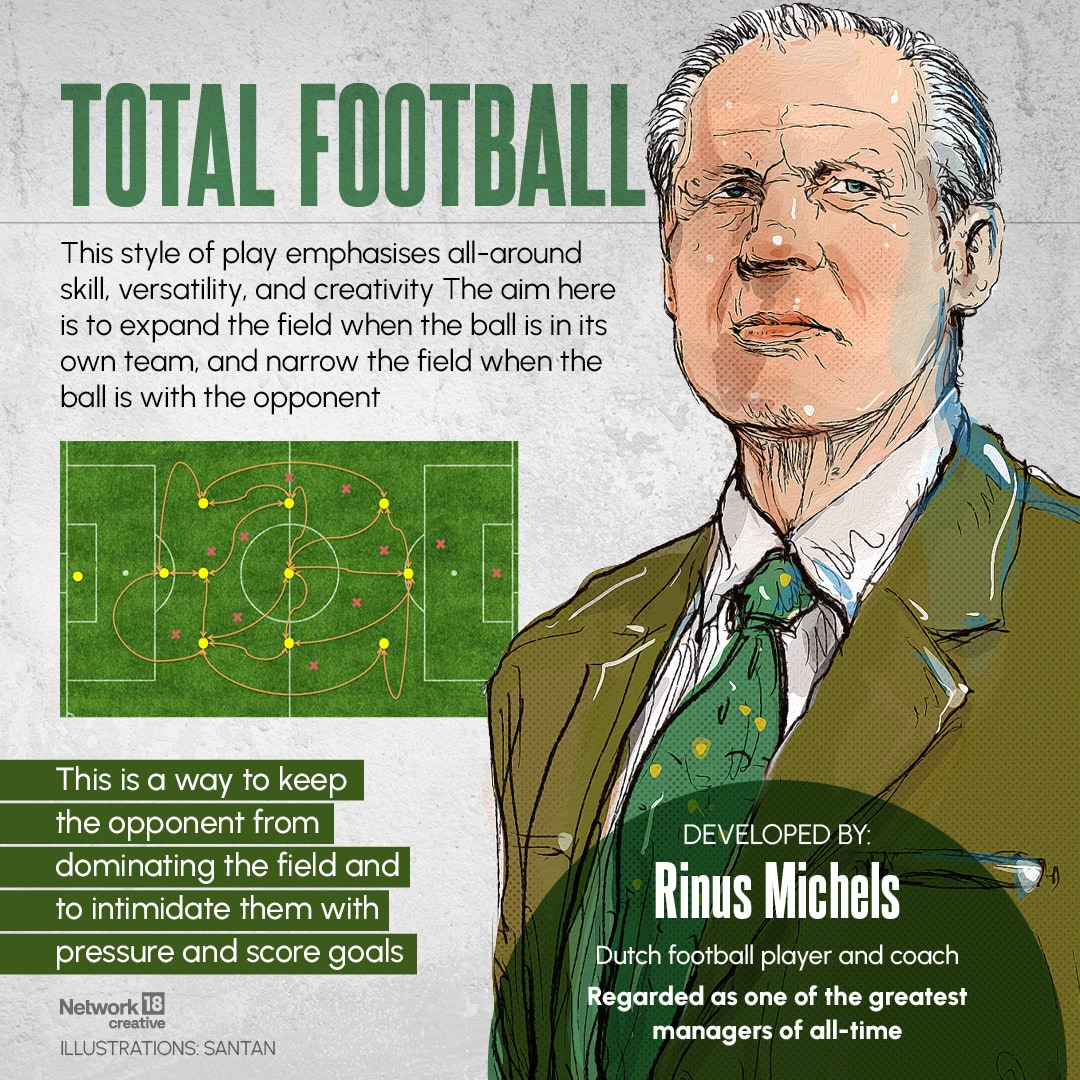
Total Football is an innovative tactical approach in football where players are not confined to fixed positions. When one moves out of their zone, a teammate steps in, demanding versatility and high intelligence to switch between attacking, midfield and defensive roles
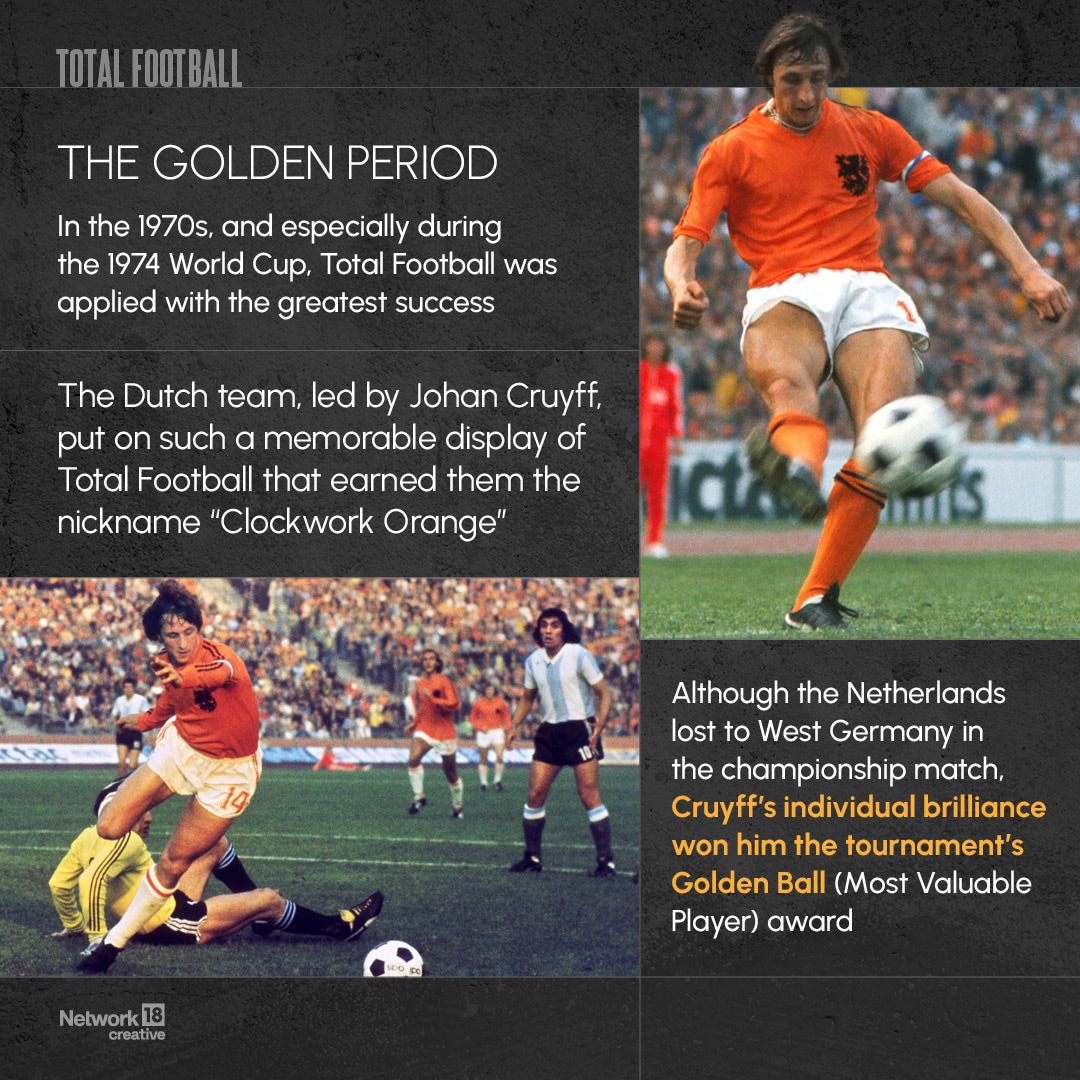
The system known as Total Football was pioneered in the 1970s by manager Rinus Michels and legendary footballer Johan Cruyff and was implemented at Dutch club AFC Ajax as well as the Netherlands national team
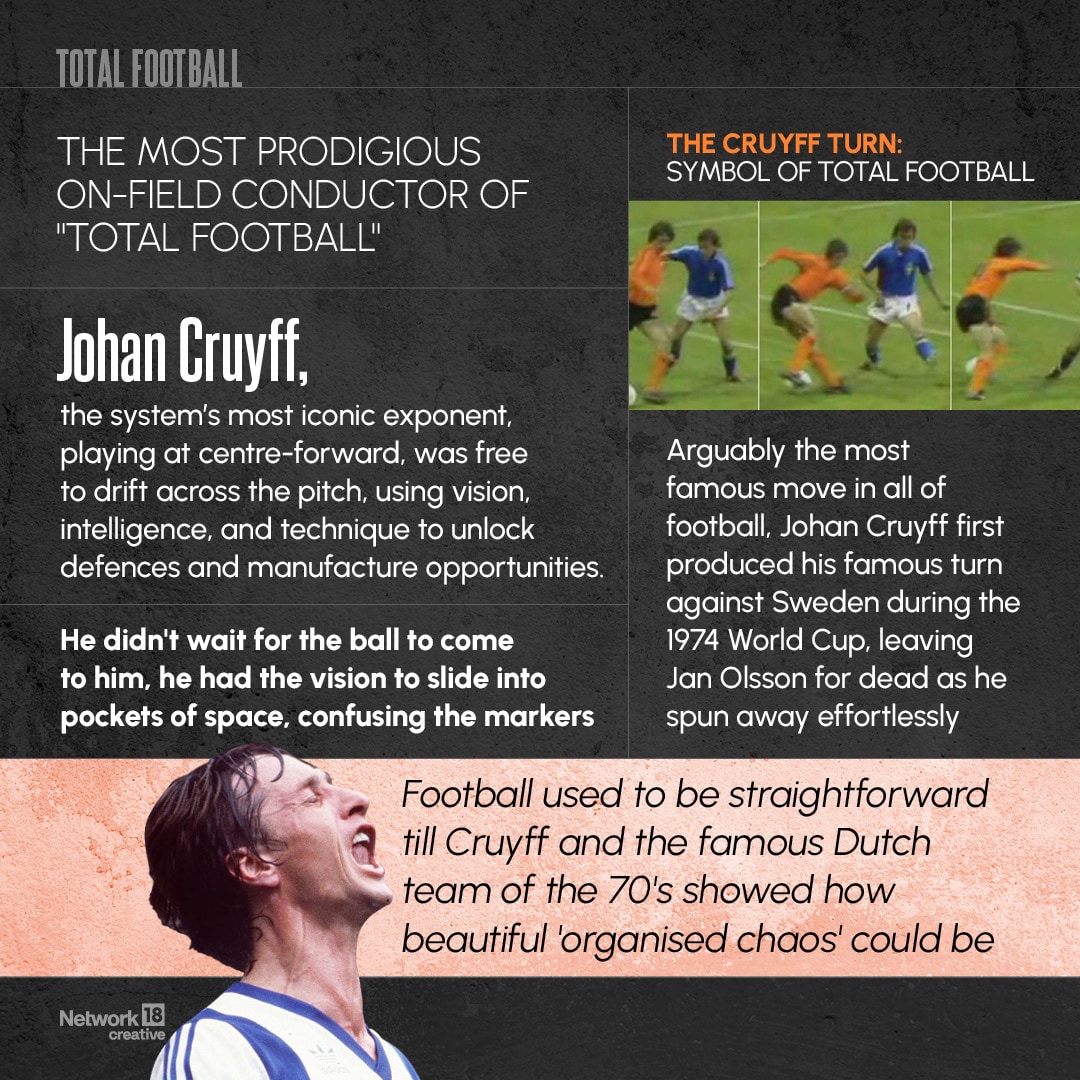
No outfield footballer is confined to a fixed position, with defenders often stepping into attacking roles and forwards dropping deep to support the defence. When out of possession, the team applies coordinated, collective pressing to recover the ball and limit the space available to the opposition
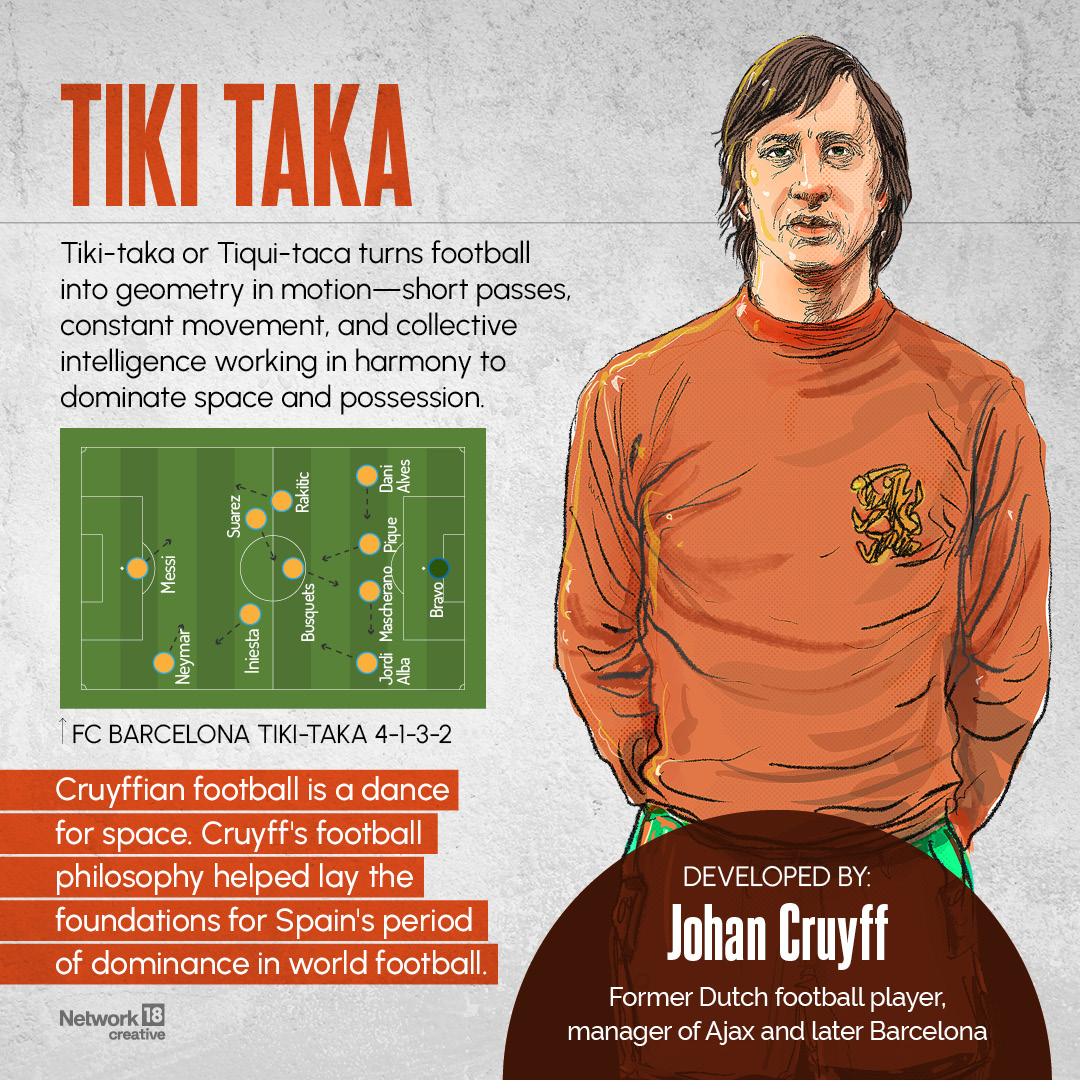
Tiki-taka is a tactical style of football defined by short, precise passing, fluid off-the-ball movement and sustained possession. Its main objective is to circulate the ball to disrupt the opponent’s defensive structure, create space in advanced areas and deny the opposition meaningful time on the ball
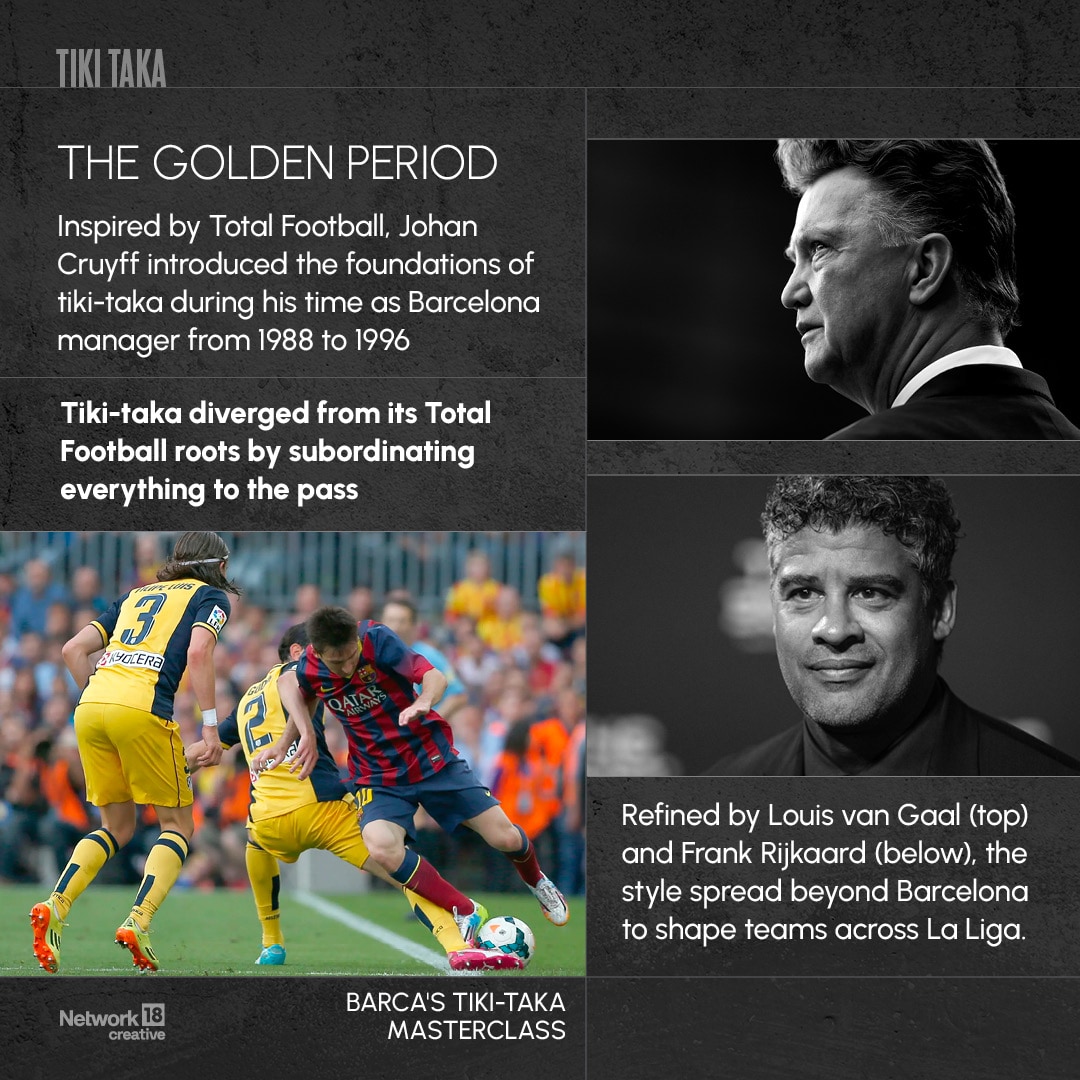
The tactical foundations of this style were established in the Dutch 'Total Football' philosophy, popularised by Johan Cruyff. The term 'Tiki-taka' itself is believed to have been coined around 2006 by Spanish commentators to describe the fast, short-passing, one- and two-touch style of play associated with both the Spanish national team and Barcelona, focusing on quick circulation, positional fluidity and maintaining control through possession
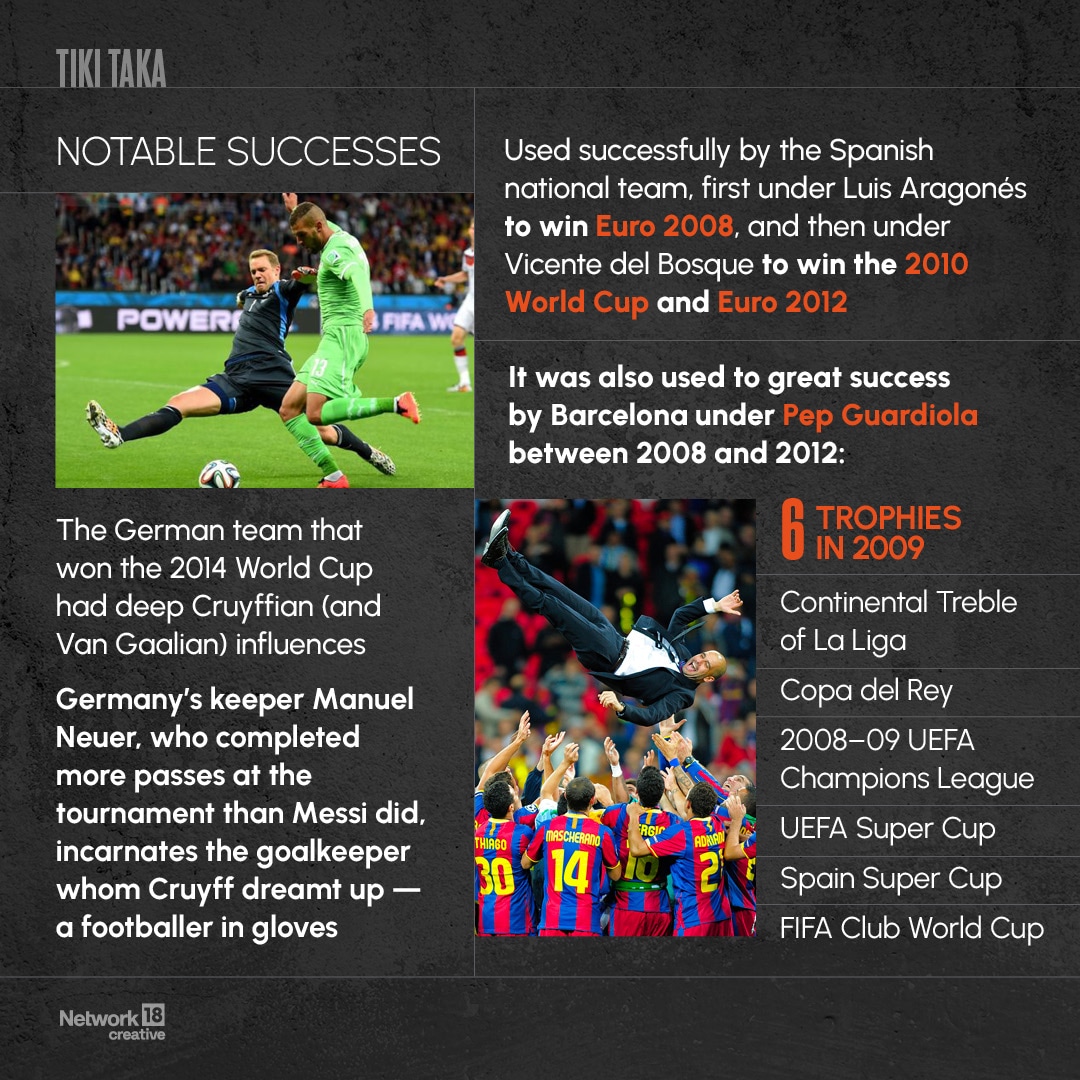
Footballers position themselves to create passing triangles, ensuring the ball carrier always has several passing options. Ball retention is central to the approach, as sustained possession permits a side to control the tempo of the match while limiting the opponent’s chances
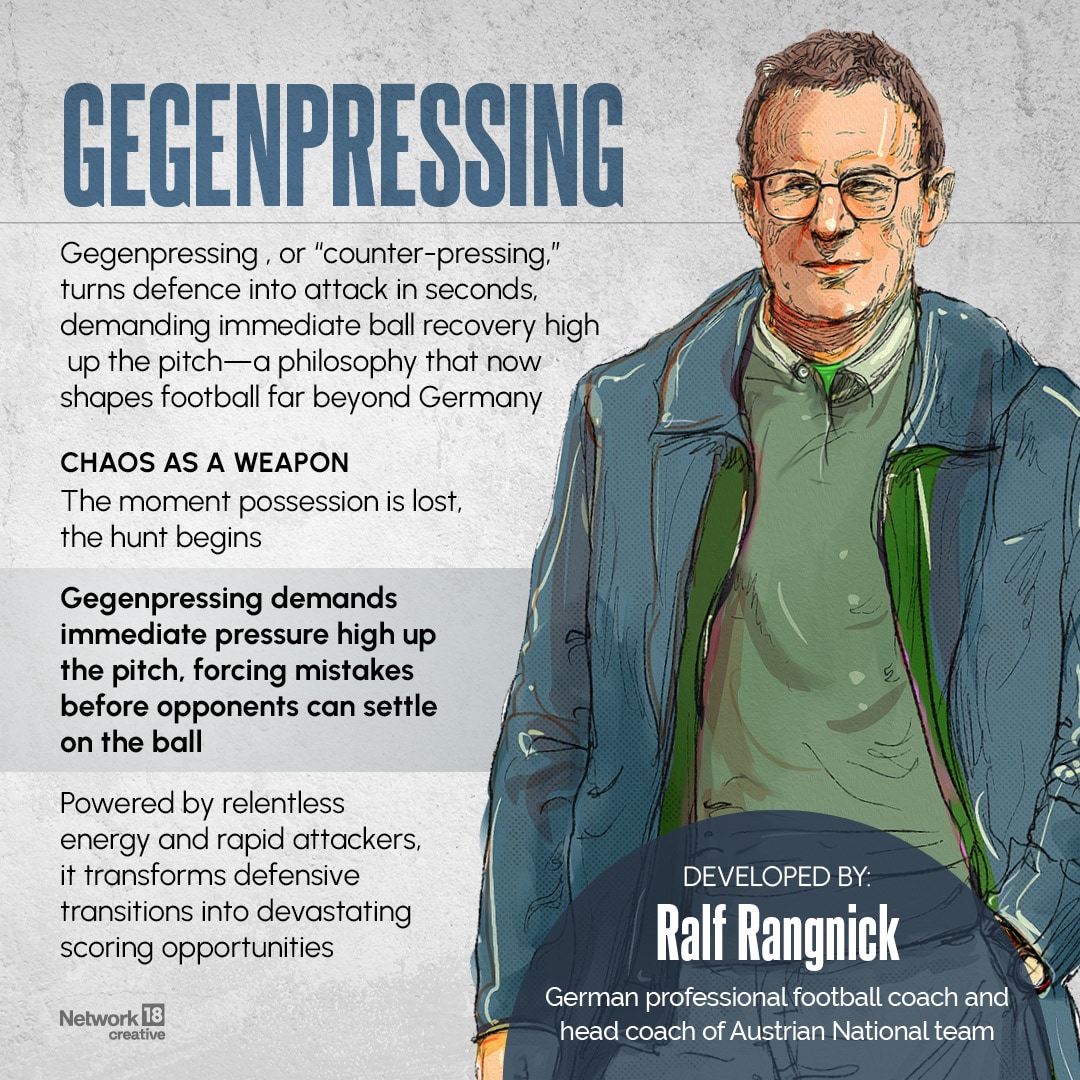
Gegenpressing is a high-intensity football tactic in which a team presses the opponent to regain possession as soon as the ball is lost, rather than dropping back into a defensive shape. This aggressive approach exploits the opponent’s momentary disorganisation right after winning the ball, aiming to recover possession in advanced areas of the field
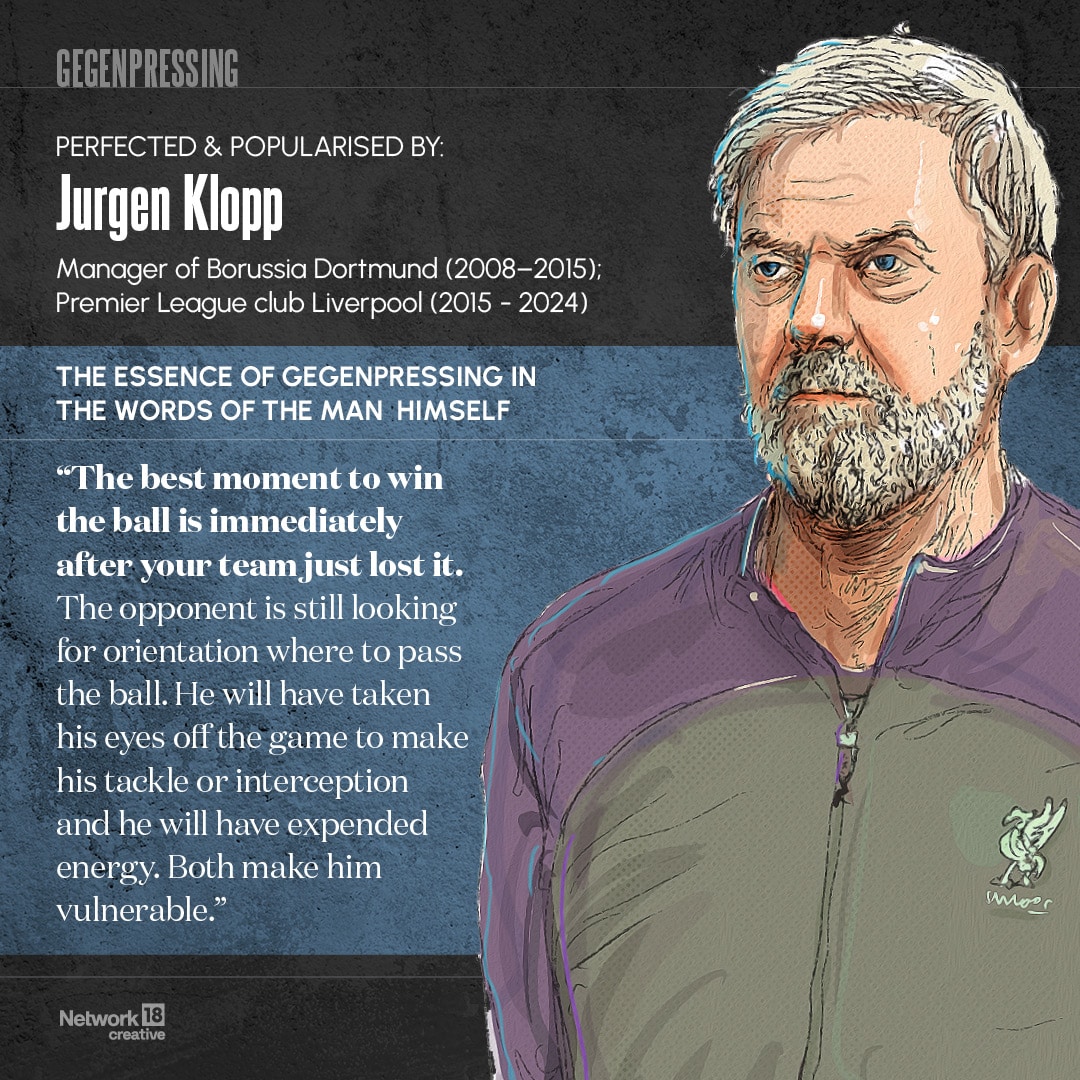
The player who loses possession triggers the initial press, with nearby teammates closing in to provide support and prevent an easy outlet pass. Rather than chasing the ball, footballers focus on shutting down the opponent’s most effective passing options and cutting off available lanes
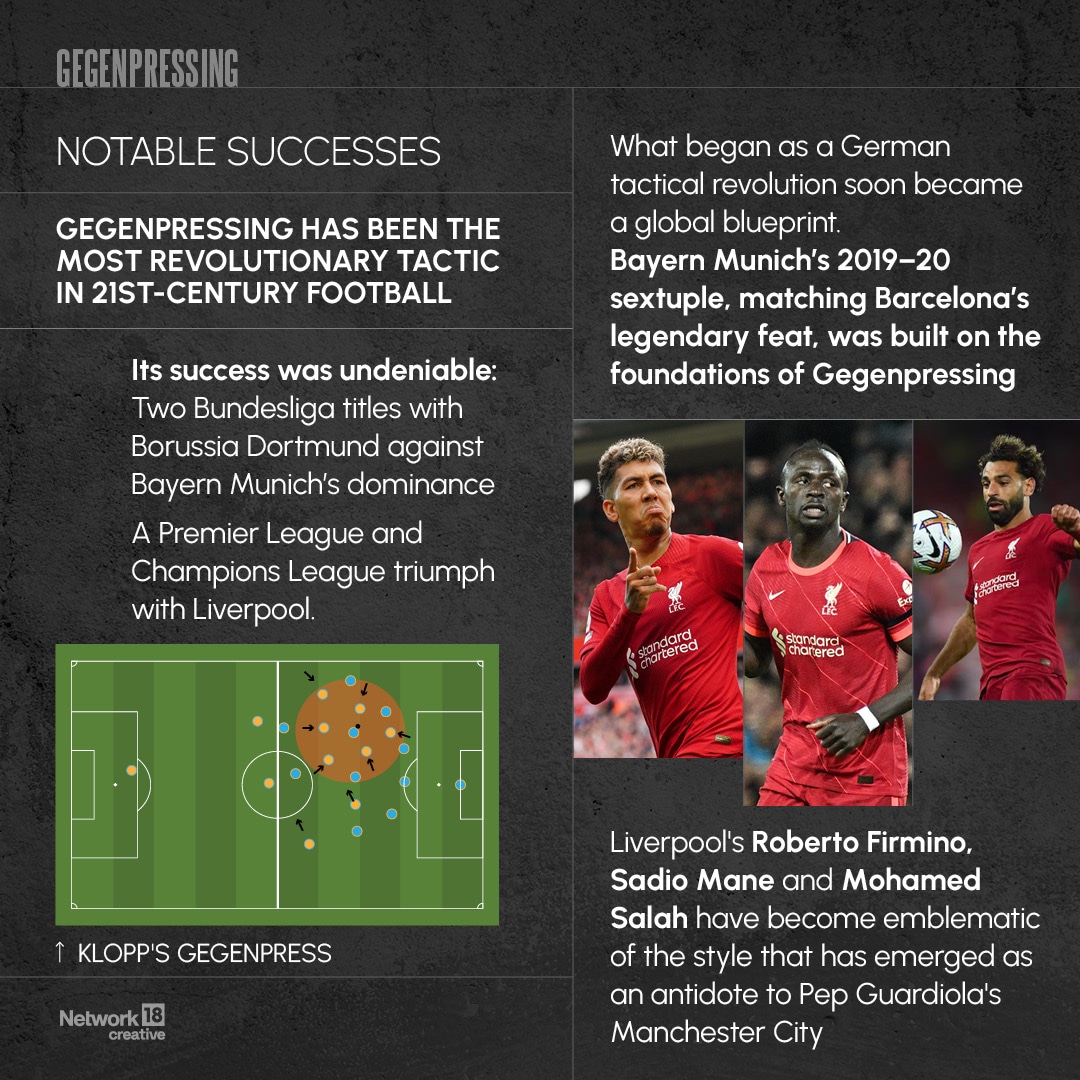
The aim is to induce a rushed mistake or turnover in dangerous areas, converting a defensive transition into an immediate attacking chance. Just after regaining possession, opponents are often still settling the ball, recovering from the challenge and yet to scan and organise themselves within the field
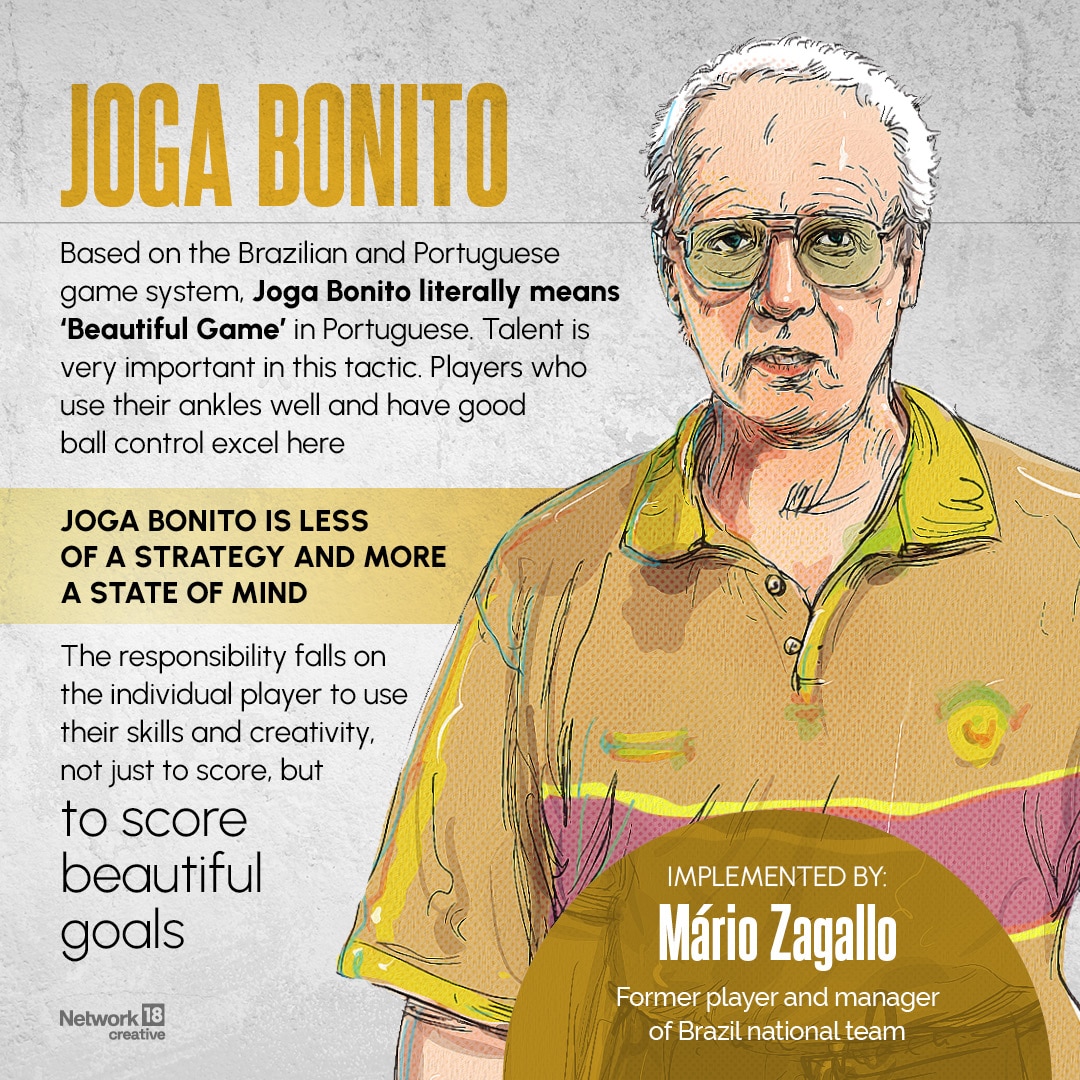
Joga Bonito is an iconic football philosophy that emphasises creativity, joy and individual flair. Popularised by Nike’s 2006 campaign, it champions expressive, skilful play, like elastico moves and no-look passes, over rigid tactics and unsporting behaviour
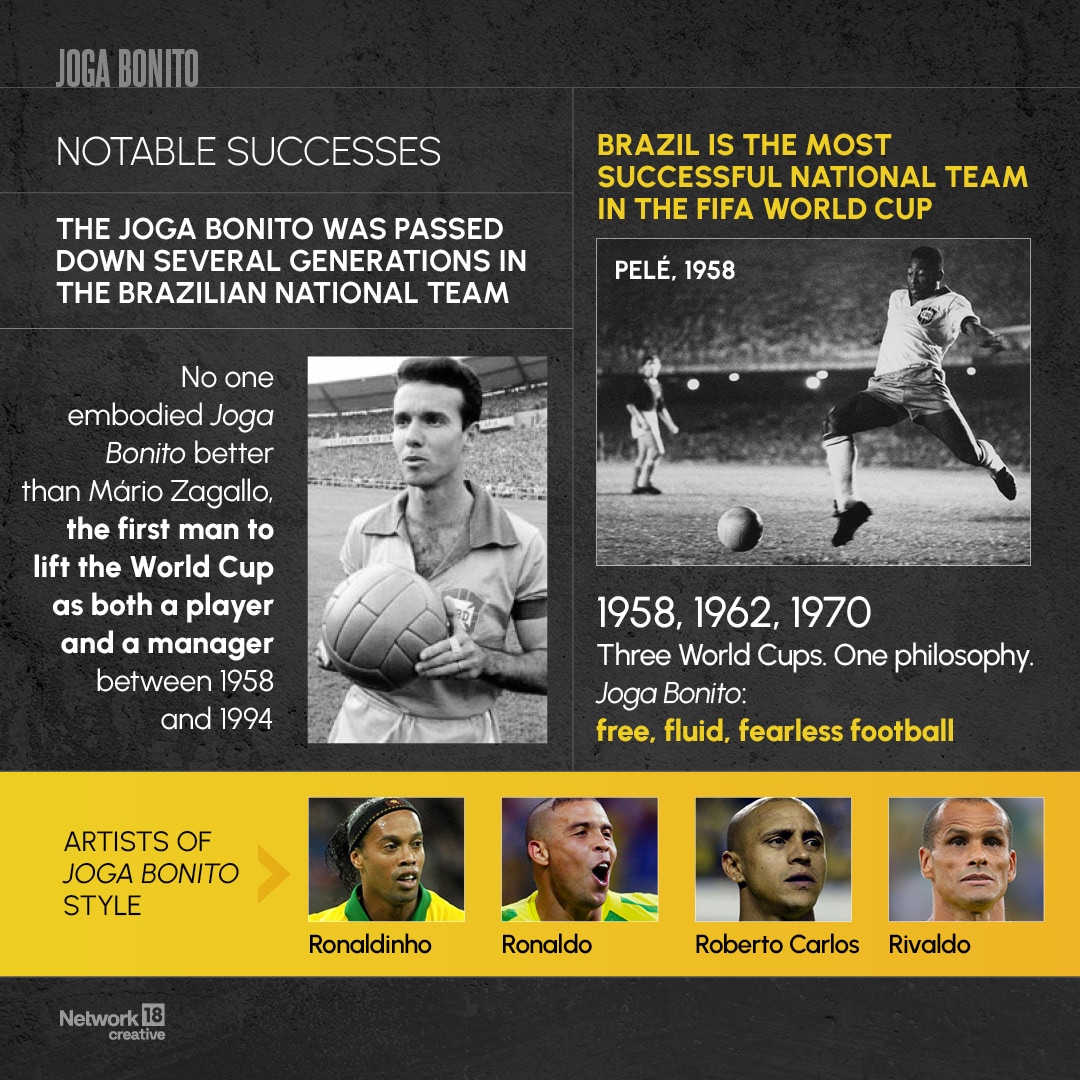
The term originated from the sun-drenched streets of Brazil, rooted in a football culture that views the game as a form of art and expression rather than a contest of force
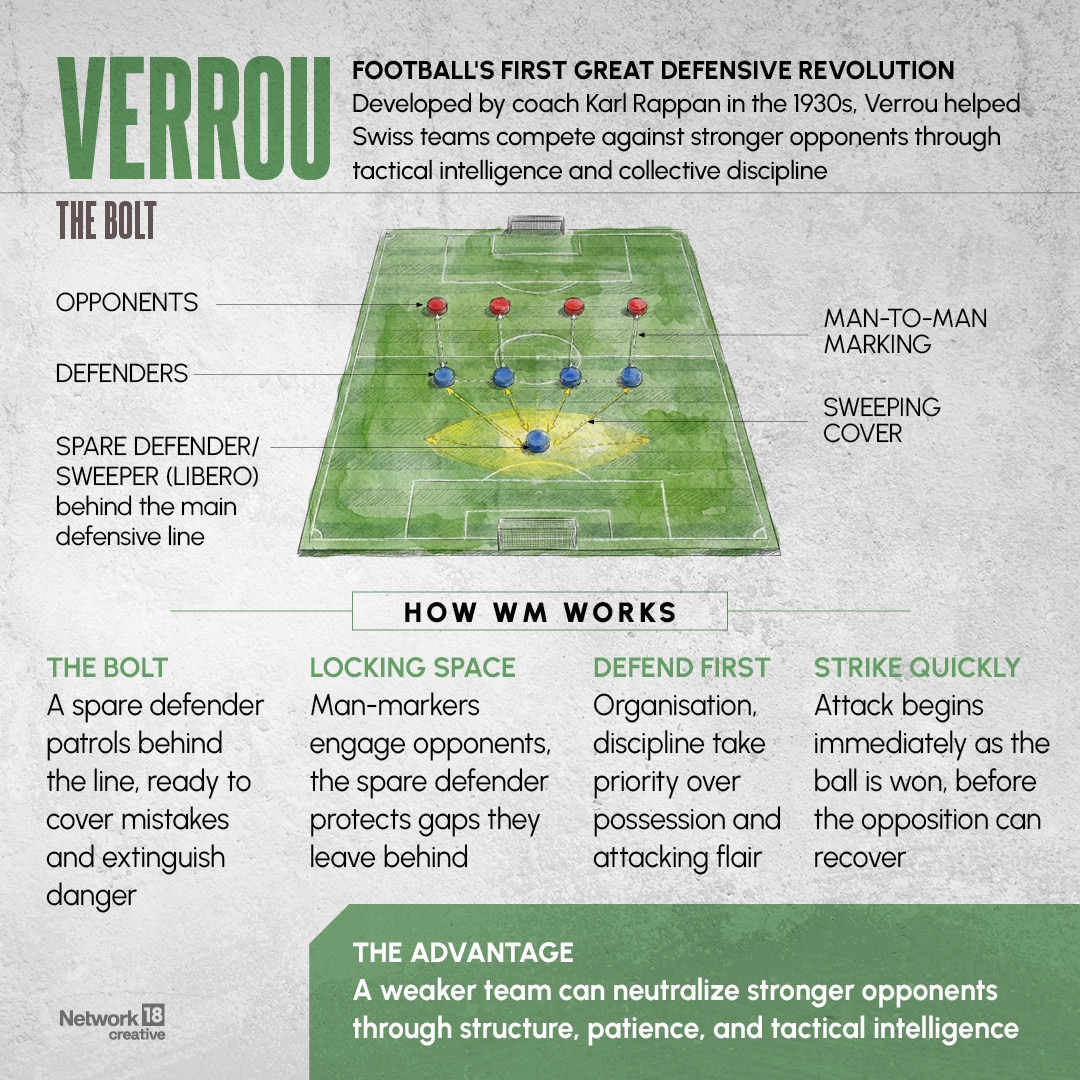
The verrou is a foundational defensive football system developed in the 1930s by Austrian coach Karl Rappan. It introduced a structured backline with an additional defender and a dedicated 'security bolt' positioned behind the main defensive line to sweep up loose balls and provide extra defensive cover
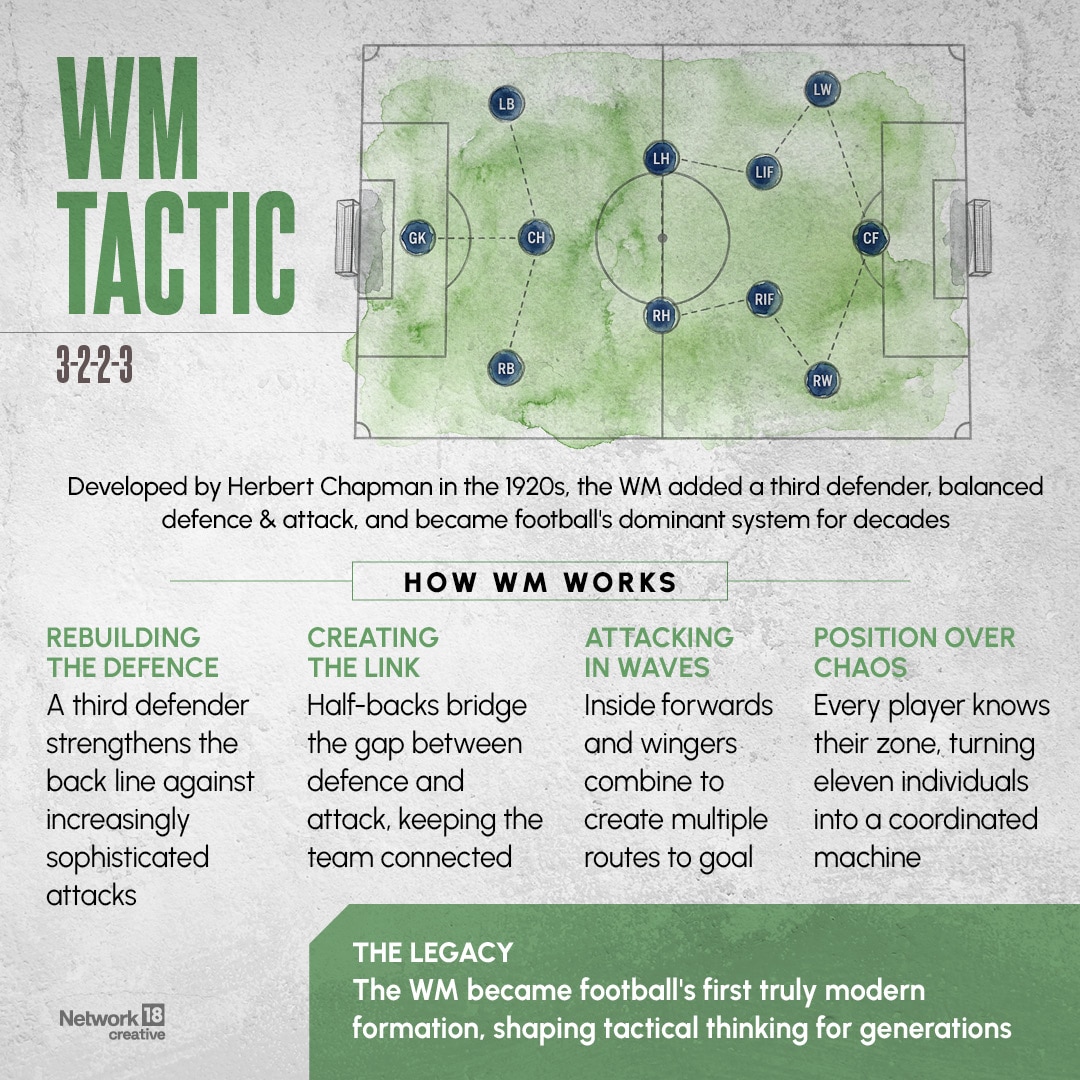
The WM formation is an influential football tactical system pioneered in the 1920s by Arsenal manager Herbert Chapman. Named after the visual shape formed by the footballers’ positions on the field, it functions as a 3-2-2-3 structure consisting of a three-man defensive line, two holding midfielders, two inside forwards and three attacking forwards
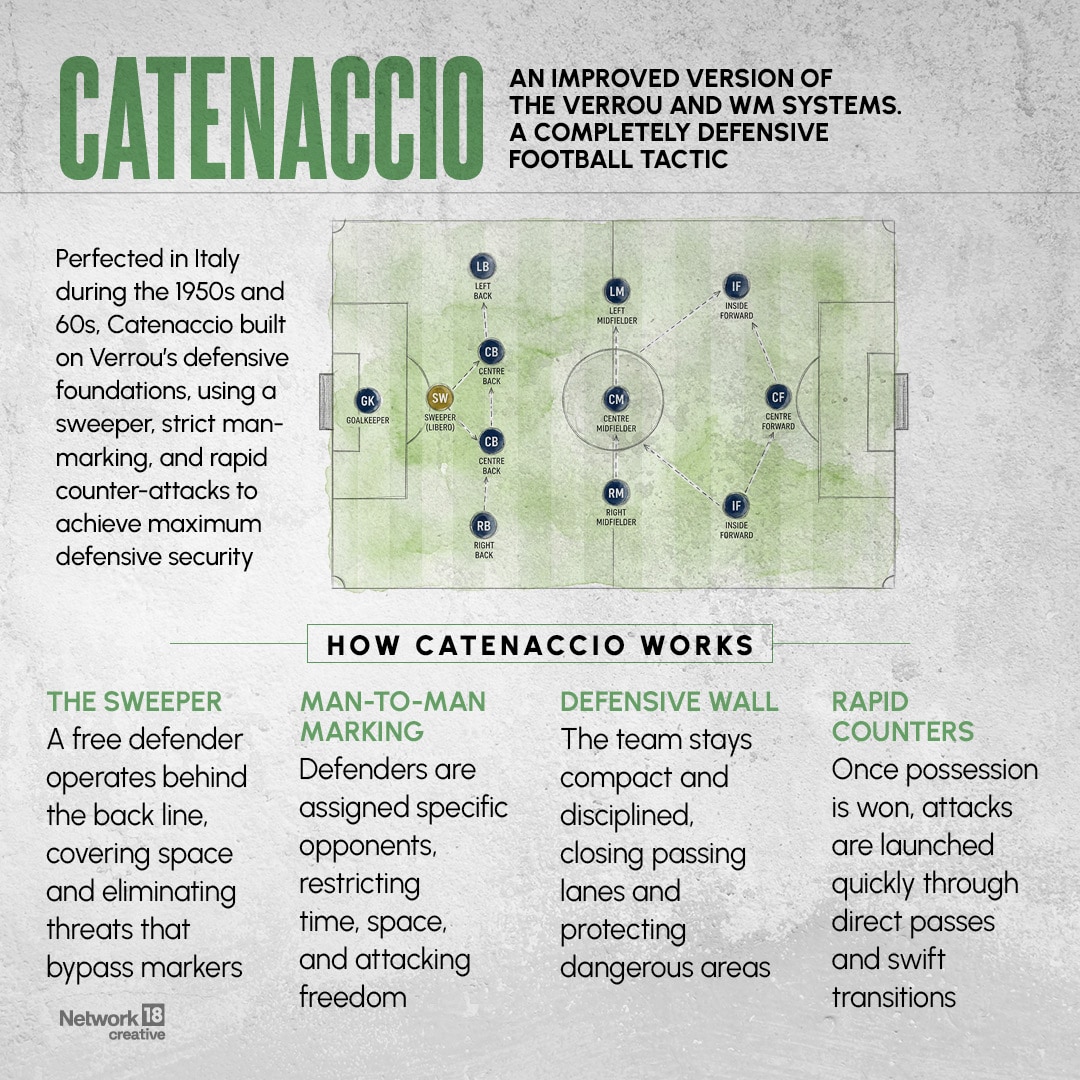
Catenaccio is a structured, defence-oriented tactical system in association football. The term translates from Italian as 'door-bolt', reflecting its primary objective: to bag the defensive line, frustrate opposition attacks and exploit scoring chances through quick, efficient counter-attacks




 English (US) ·