

 1 hour ago
8
1 hour ago
8
ARTICLE AD BOX
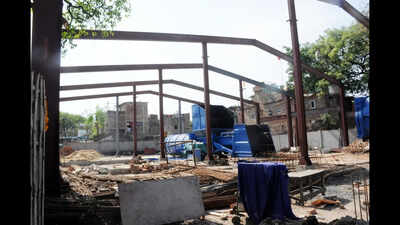
In a significant push towards cleaner urban living, Patna Municipal Corporation is dedicating Rs 69 crore to establish six modern garbage transfer stations. Set to handle 1,650 tonnes of waste each day, these facilities will effectively compact waste, thus curbing open dumping and facilitating smoother transport to disposal sites.
Patna: Patna Municipal Corporation (PMC) has started constructing garbage transfer stations (GTS) across its six circles at an estimated cost of Rs 69 crore. The project aims to create a crucial link between local collection points and final disposal sites, thereby preventing open dumping.Work has begun in the Bankipur, Kankarbagh, New Capital and Patliputra circles, while land acquisition is under way in the Azimabad and Patna City circles. Once completed, these stations will collectively process up to 1,650 tonnes of garbage daily. Each facility has been planned with specific dimensions and budgets to meet the requirements of its respective area.The Azimabad station is estimated to cost over Rs 6 crore with a daily capacity of 150 tonnes.
The Bankipur facility, located on Bazaar Samiti road, has a budget of over Rs 12 crore and a capacity of 300 tonnes. The Kankarbagh GTS in Transport Nagar has been allocated over Rs 12 crore to handle 300 tonnes per day. Work on the New Capital station in Yarpur is nearing completion at a cost of over Rs 11 crore, while the Patliputra GTS near JP Setu and the Patna City facility have budgets of over Rs 12 crore and Rs 13 crore respectively, each designed to manage 300 tonnes of waste daily.
PMC engineers associated with the project said, “The stations utilise mechanical compactors, conveyors and hydraulic systems to handle waste.” Small collection vehicles, including tippers, rickshaws and e-rickshaws, transport refuse from homes, shops and markets to these facilities. The waste is then unloaded onto platforms where machines compress it, allowing larger quantities to be loaded into transport vehicles for onward movement to processing plants or landfill sites at Ramchak Bairiya.This system reduces the number of trips required by smaller vehicles, cutting fuel consumption and easing traffic congestion. It also enables large-scale monitoring of waste transportation.Patna mayor Sita Sahu said, “The network of transfer stations impacts the city by improving waste management efficiency across all wards. The facilities allow for the segregation of wet and dry materials before final disposal, which increases waste recovery and recycling rates.”By enabling segregation at the station level, the volume of waste reaching landfill sites is reduced. The shift to this system is expected to lower operational costs and shorten waste transportation time.








 English (US) ·