

 2 days ago
6
2 days ago
6
ARTICLE AD BOX
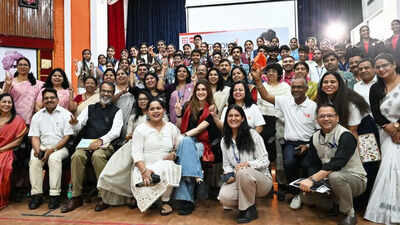
India has spent years building policies around gender equality. The intent is clear. The language is strong. And yet, the gap between what is promised and what is experienced on the ground continues to be wide.What’s beginning to shift, slowly, unevenly is how this issue is being approached. Instead of treating gender as a standalone concern, there is a growing attempt to weave it into everyday systems: how children are taught, how villages are governed, and how institutions respond to violence.A recent field visit by actor and UNFPA India Honorary Ambassador Kriti Sanon highlighted some of these efforts. But beyond the optics of a high-profile visit, the more important question is whether these ideas can sustain themselves without attention and amplification.In schools, conversations are beginning to change. Life-skills programmes are introducing adolescents to ideas that were, until recently, considered uncomfortable or unnecessary: mental health, relationships, and consent. Just as importantly, some programmes are bringing boys into the conversation, challenging the assumption that gender equality is only a “women’s issue.” That shift, if it holds, could prove significant over time.
At the local governance level, the presence of women is no longer just about filling quotas. In some areas, it is beginning to shape priorities, basic but critical ones like safety, sanitation, and access to public resources. These changes are modest but real, thanks in part to groups like the UN Population Fund.Then there is the role of the police, often the most visible face of the state in moments of crisis. Efforts to make responses to gender-based violence more accessible and less intimidating are still evolving.
Trust, after all, cannot be built overnight. But acknowledging the need for a more community-driven approach is a start.None of this suggests a sweeping transformation. The reality is more complicated. Social norms remain deeply entrenched, and implementation is often inconsistent. Progress depends heavily on local leadership, resources, and, at times, sheer persistence.But there is something to be said for this quieter, less visible shift. Gender equality is no longer being spoken about only in terms of policy targets or national campaigns. It is beginninghowever tentatively—to show up in everyday interactions and decisions.That may not make for dramatic headlines. But it is, perhaps, how real change tends to happen.








 English (US) ·