

 1 hour ago
6
1 hour ago
6
ARTICLE AD BOX
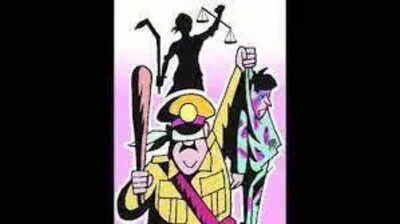
Madurai: The right of a deceased person to receive a decent burial or cremation is not merely a matter of religious observance but it is an extension of human dignity itself, Madras high court observed on Tuesday. The court said this while directing the authorities to take immediate steps for the dignified disposal of the mortal remains of Akash, who died of custodial torture in Manamadurai in Sivaganga district on March 8.Justice L Victoria Gowri observed that there can be no dispute that custodial death allegations require the highest degree of judicial sensitivity and institutional accountability. It was for precisely that reason that the court intervened at the earliest point of time, directed appropriate alteration of offences, ensured independent investigation by CB-CID and monitored the matter till the immediate concerns stood substantially addressed.The judge observed that the family members have been repeatedly informed and adequate opportunity has been granted. A specific direction was issued by the court requiring them to receive the body before 5pm on Monday. Admittedly, the said direction has not been complied with. The continued refusal of the family to receive the body cannot result in indefinite preservation of mortal remains. Such a course would ultimately defeat the very dignity sought to be protected.
The refusal of the petitioner and his family to receive the body, leaves the court with no alternative except to authorise the state authorities to proceed in accordance with law.The postmortem examination has long since been completed. All necessary medico-legal formalities have been concluded. Samples have been preserved. Investigation is proceeding independently through CB-CID. No useful purpose would therefore be served by continuing to preserve the body indefinitely.
A conjoint reading of Section 2(f) of the Tamil Nadu Anatomy Act, 1951 and Rule 8 of the Tamil Nadu Anatomy Rules, 1951, makes it clear that where a body remains unclaimed after completion of legal formalities, the state is empowered to arrange burial or cremation at government expense, the judge observed.Hence, the judge directed the Madurai district collector, Madurai corporation commissioner, dean of Government Rajaji Hospital in Madurai and other authorities to take immediate steps for the dignified disposal of the mortal remains of the deceased Akash.
The disposal should be undertaken strictly in accordance with the religious faith, customs and practices professed by the family, to the extent ascertainable from available records.The judge directed that before undertaking the final rites, the district administration shall ensure that adequate photographic and videographic documentation of the body is preserved as part of the official record. The expenditure incurred for such disposal shall initially be borne by the state in accordance with Rule 8 of the Tamil Nadu Anatomy Rules, 1951 and other applicable governmental instructions.The CB-CID shall proceed with the investigation uninfluenced by the disposal of the body and shall complete the investigation and file its final report before the jurisdictional court as expeditiously as possible, the judge directed.






 English (US) ·