

 1 week ago
17
1 week ago
17
ARTICLE AD BOX
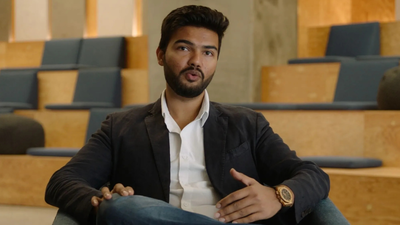
At an age when many entrepreneurs are still refining their first ideas, Tanay Kothari was already leading an AI company valued at about $700 million. Born and educated in India before building his career in the United States, Kothari’s journey has been shaped by early experimentation, failed products, bold pivots and a sharp focus on fundamentals.
Today, as the co-founder and chief executive of Wispr Flow, he is working on technology that aims to make speaking to computers as natural and efficient as typing, signalling a shift in how people interact with software.
Tanay Kothari’s early life, education, and move to the US
Kothari grew up in Delhi and studied at Delhi Public School R K Puram, one of India’s most competitive schools. During his school years, he developed a strong interest in computers and software, spending much of his free time experimenting with programming and building small projects.
These early experiments helped him understand systems by breaking and rebuilding them, an approach that would later define his startup mindset.After completing school, Kothari moved to the United States to study at Stanford University. At Stanford, he focused on computer science and artificial intelligence, gaining exposure to advanced research as well as Silicon Valley’s startup culture. He worked with AI-focused research groups and student projects, which deepened his interest in human–computer interaction.
He is now based in San Francisco, where he leads Wispr Flow.
Early experiments that shaped his thinking
Long before Wispr, Kothari was building and discarding ideas. As a young programmer, he launched several small projects that failed to gain lasting traction. Rather than treating these as setbacks, he used them to learn about product-market fit, user behaviour and the limits of platform dependence. These early failures played a critical role in shaping his later decisions as a founder.
Stanford years and exposure to AI research
Stanford gave Kothari access to both cutting-edge AI research and a network of ambitious builders. He contributed to AI-related coursework and worked with student-led research initiatives exploring machine learning and intelligent systems. Just as important, he absorbed a culture of rapid iteration, where ideas were tested quickly and abandoned if they did not work.Before founding Wispr, Kothari launched multiple startups across consumer and enterprise software.
Some gained short-term attention but were eventually discontinued, often due to changes in platform policies or limited scalability. These experiences reinforced the importance of owning core technology rather than relying on third-party ecosystems.A major turning point came with FeatherX, an AI personalisation startup for e-commerce. The company was acquired by Cerebra Technologies, after which Kothari joined as head of product.
The role gave him experience managing teams, shipping enterprise AI products and operating within a growing organisation.
Founding Wispr and making a difficult pivot
In 2021, Kothari co-founded Wispr with an ambitious idea centred on brain–computer interfaces that could translate thoughts into text. The company raised early funding and built a sizeable team to develop hardware and software together. Over time, however, it became clear that the biggest opportunity lay not in hardware, but in the software layer.The decision to pivot was drastic. Wispr shut down most of its hardware efforts, significantly reduced its team and redirected all resources toward building a voice-first software product. The outcome of that pivot was Wispr Flow.
Building a voice layer for everyday computing
Wispr Flow is designed as an AI-powered voice dictation layer that works across applications and operating systems. Instead of treating speech as a secondary input, the product aims to make voice a primary interface for writing, coding and communication.
Supporting more than 100 languages, it gained rapid attention after its public launch, topping product rankings and spreading quickly through developer and creator communities.The pivot paid off. In early 2025, Wispr Flow raised a major funding round led by Menlo Ventures, with participation from well-known technology founders and investors. Later that year, the company raised additional capital, taking total funding to more than $80 million and pushing its valuation to around $700 million.
The team has since resumed hiring as the product continues to scale.
A broader shift in how humans use computers
Kothari’s work reflects a larger change underway in computing. As AI systems improve, keyboards and screens may no longer dominate how people interact with machines. Voice, combined with context-aware AI, offers a faster and more accessible interface for many tasks.At 27, Tanay Kothari is still early in his entrepreneurial journey. Yet his path from early experiments in Delhi to leading a fast-growing AI company in Silicon Valley already highlights how persistence, learning from failure and timely pivots can turn ambitious ideas into technology that reshapes everyday computing.






 English (US) ·