

 2 hours ago
4
2 hours ago
4
ARTICLE AD BOX
There is a strong perception, led notably by Magnus Carlsen, that the new generation of Indian chess prodigies are exceptionally strong calculators. This inherently makes them a formidable force in classical chess, yet they often struggle with intuitive play, a weakness that directly impacts their performance in shorter time controls.
This perception is not entirely unfounded. Since Viswanathan Anand, India’s presence in Rapid and Blitz chess has faded significantly. The five-time World Classical Champion’s last rapid medal, a gold in 2017 was also the last time an Indian (male) stood on the podium at the World Rapid and Blitz Championships. Both the fact, and with that perhaps, the perception shifted in Doha, where Arjun Erigaisi made history by winning a double bronze, returning with medals in both the Rapid and Blitz events.
Though rare, this feat was still a disappointing end to Arjun’s campaign in the eyes of his former trainer, N. Srinath. He believes that Arjun, the top-ranked Indian in all three formats, could have won medals of a better colour had he received more invitations to compete in Super Elite events.
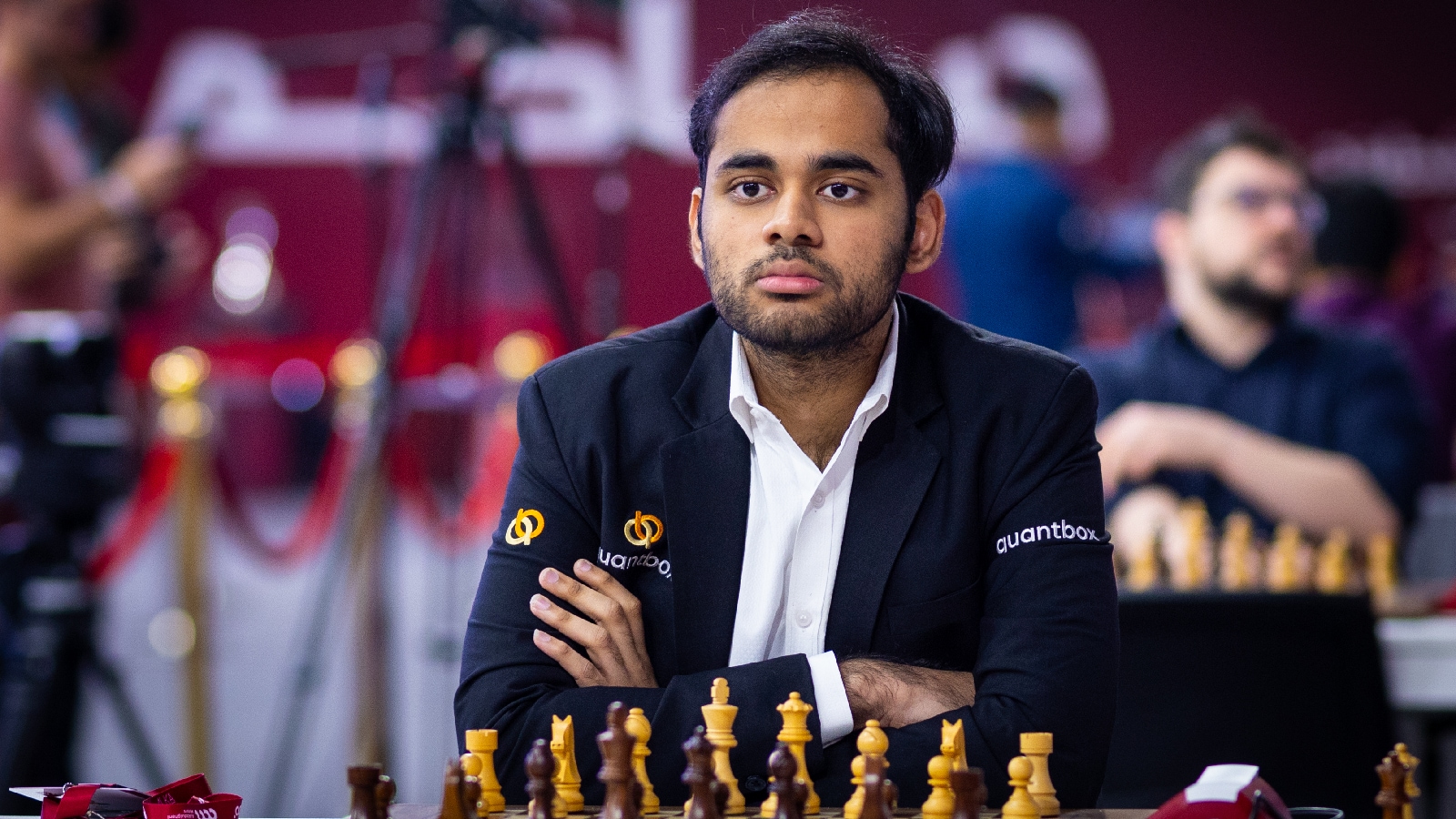 At the 2025 World Rapid & Blitz, Arjun stood a cut above the rest of the 41 Indians across the Open and Women’s sections. (FIDE/Anna Shtourman)
“Yes, he played Tata Steel and Norway Chess… two top-tier closed events this year, but compared to his peers, he competed in fewer tournaments than players at his level typically do across the year,” says Srinath.
According to him, Arjun hasn’t had as many opportunities to face the absolute elite, the 2750+ Elo group, as he deserves. “That exposure plays a crucial role in a player’s development at this level.”
“Someone who started the year as a 2800-rated player, he only took part in two elite events, with the Grand Chess Tour being the most notable exclusion last year,” he adds.
Cut above the rest
At the 2025 World Rapid & Blitz, Arjun stood a cut above the rest of the 41 Indians across the Open and Women’s sections. He deployed impeccable defensive play to hold Carlsen to a draw in the Rapid section, halting the Norwegian’s winning run on Day 1. After a couple of setbacks, he fought back to win games on demand, ultimately finishing tied for second place. Only a slight tiebreak advantage for Vladislav Artemiev denied Arjun the silver medal.
Story continues below this ad
In Blitz, the trickiest of the events, Arjun had an even more dominant show in the Swiss round-robin stage. A mastery in fast time-control, he even forced unflinching Carlsen to flinch big time. He took down the eight-time World Blitz Champion, the undisputed king of Blitz chess, in a game so intense that it drew a strong reaction from his opponent, who ended up smashing the table in frustration after losing on time.
Arjun dominated his opponents and topped the leaderboard, scoring 15 points in 19 rounds. An unfortunate loss to Nodirbek Abdusattorov in the semifinals abruptly halted his great run, yet throughout, Arjun looked every bit as poised and perceptive as a great intuitive player must.
Yet, Srinath believes Arjun still needs to add more dimensions to his play, something that comes from regularly facing tougher opponents.
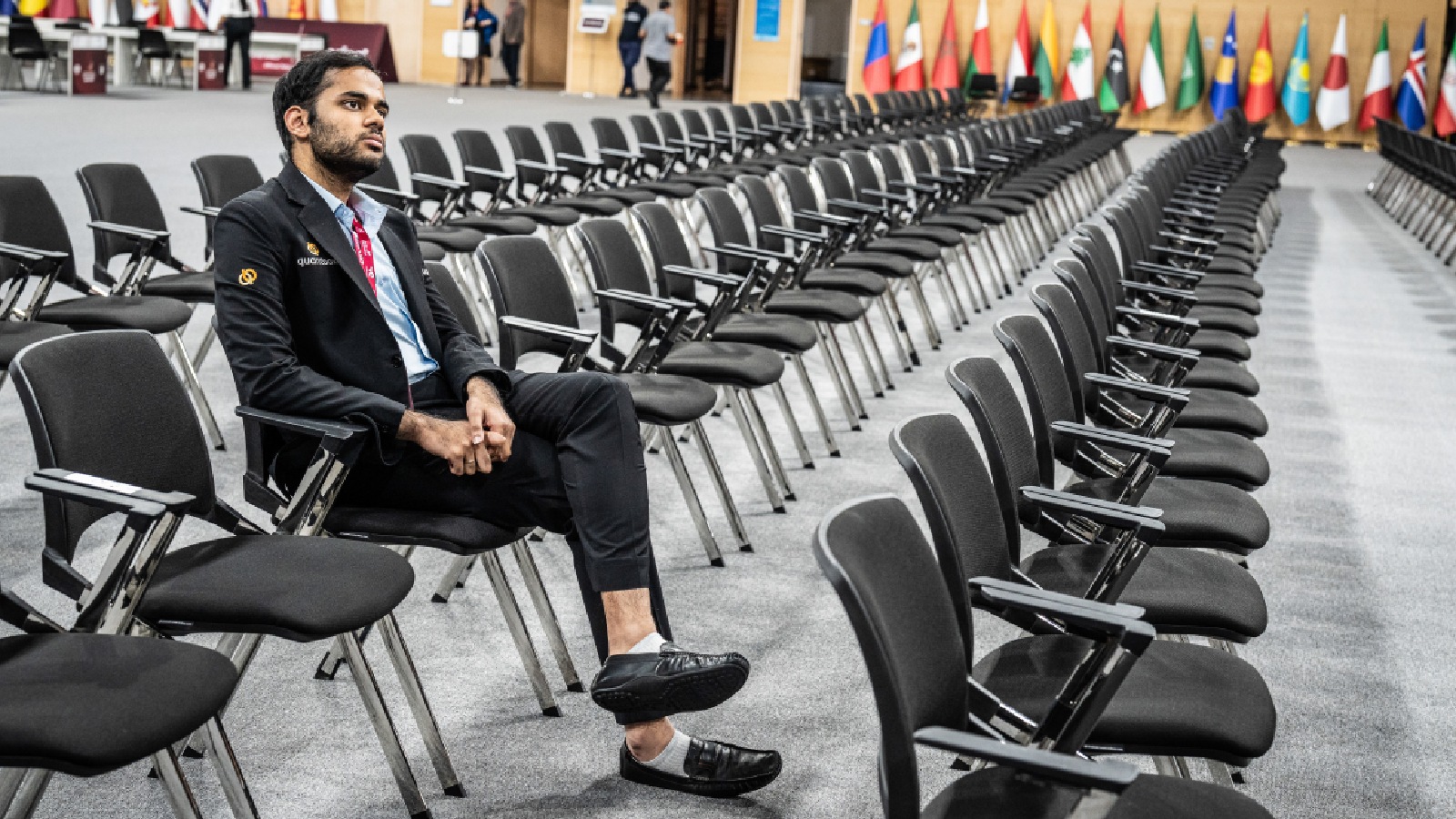 Arjun dominated his opponents and topped the leaderboard, scoring 15 points in 19 rounds. An unfortunate loss to Nodirbek Abdusattorov in the semifinals abruptly halted his great run, yet throughout, Arjun looked every bit as poised and perceptive as a great intuitive player must. (FIDE/Lennart Ootes)
“There are many areas Arjun must improve on his journey as a player. But specifically regarding invitations and practice against top-tier opposition, it’s crucial to play those elite players. Take someone like Wei Yi or Wesley So…. They are very solid and very strong players, against whom you cannot just go and beat them up like you could against a similarly strong player who is around 2650 or 2700.”
Story continues below this ad
“These are the players who will severely punish even a minor misstep. They may not always create complexity or take enormous risks to defeat you, but they know exactly how to capitalise on errors. That is precisely the kind of practice you gain from competing against players above 2750,” he adds.
Arjun himself has been vocal about not receiving enough opportunities to compete in elite events. “The best thing would be to be part of closed events (invitationals). But given the circumstances, I had to take some risks (by playing Open events),” Arjun had told The Indian Express in 2024.
Visibility factor
As a major force behind the origin of one of India’s strongest closed events, the Chennai Grandmaster tournament, Srinath also offers reasons why Arjun has been repeatedly sidelined from an organiser’s perspective, while the likes of D Gukesh and R Praggnanandhaa remain the first-choice Indian players.
“It likely comes down to the visibility an organiser can gain,” he argues. “Naturally, having a world champion in your tournament significantly boosts media coverage compared to having a non-world champion. From an organisational standpoint, Gukesh is certainly a great player to have.”
Story continues below this ad
“Pragg also brings in substantial viewership. Globally, there are Magnus and Hikaru, and in India, Gukesh and Pragg are major names and brands which a lot of organisers would love to feature.”
Srinath adds that Arjun’s nationality also plays a role, given the intense competition within India. He believes Arjun is on par with Germany’s Vincent Keymer and Uzbekistan’s Abdusattorov, but to ensure greater diversity in the lineup, the other two are often chosen over him.



 English (US) ·