

 7 hours ago
6
7 hours ago
6
ARTICLE AD BOX
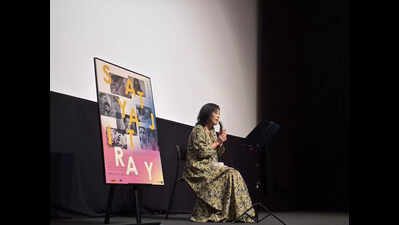
Yuka Okuda, a Tagore song performer and Bengali language instructor, provided an explanatory session after the screening of ‘Charulata’ at Le Cinema.
KOLKATA: Akira Kuarosawa once said, “Not to have seen the cinema of Satyajit Ray means existing in the world without seeing the sun or the moon.” That sentiment has gained renewed force in Japan, where seven Ray films —“Charulata,” “Mahanagar,” “Nayak,” “Kapurush,” “Mahapurush,” “Jai Baba Felunath,” and “Jalsaghar”— have, for the first time, been released nationwide in theaters as well as on VOD and home video with Japanese subtitles.
The releases have been supported by explanatory seminars led by Japanese connoisseurs and researchers, and the demand has grown to the point that the films are set for a Blu-ray release in March. Filmmaker Sandip Ray traces the Japanese screening history back to the early 60s, when awareness of Ray had already spread through his Cannes laurels and the Venice success of “Aparajito.” Recalling that period from their home on Lake Temple Road, he linked the films’ Japanese distribution to Toho-Towa Company Limited, founded in 1928 by the film pioneer Nagamasa Kawakita, and emphasized the role of Kawakita’s wife, Kashiko Kawakita, as a committed admirer.
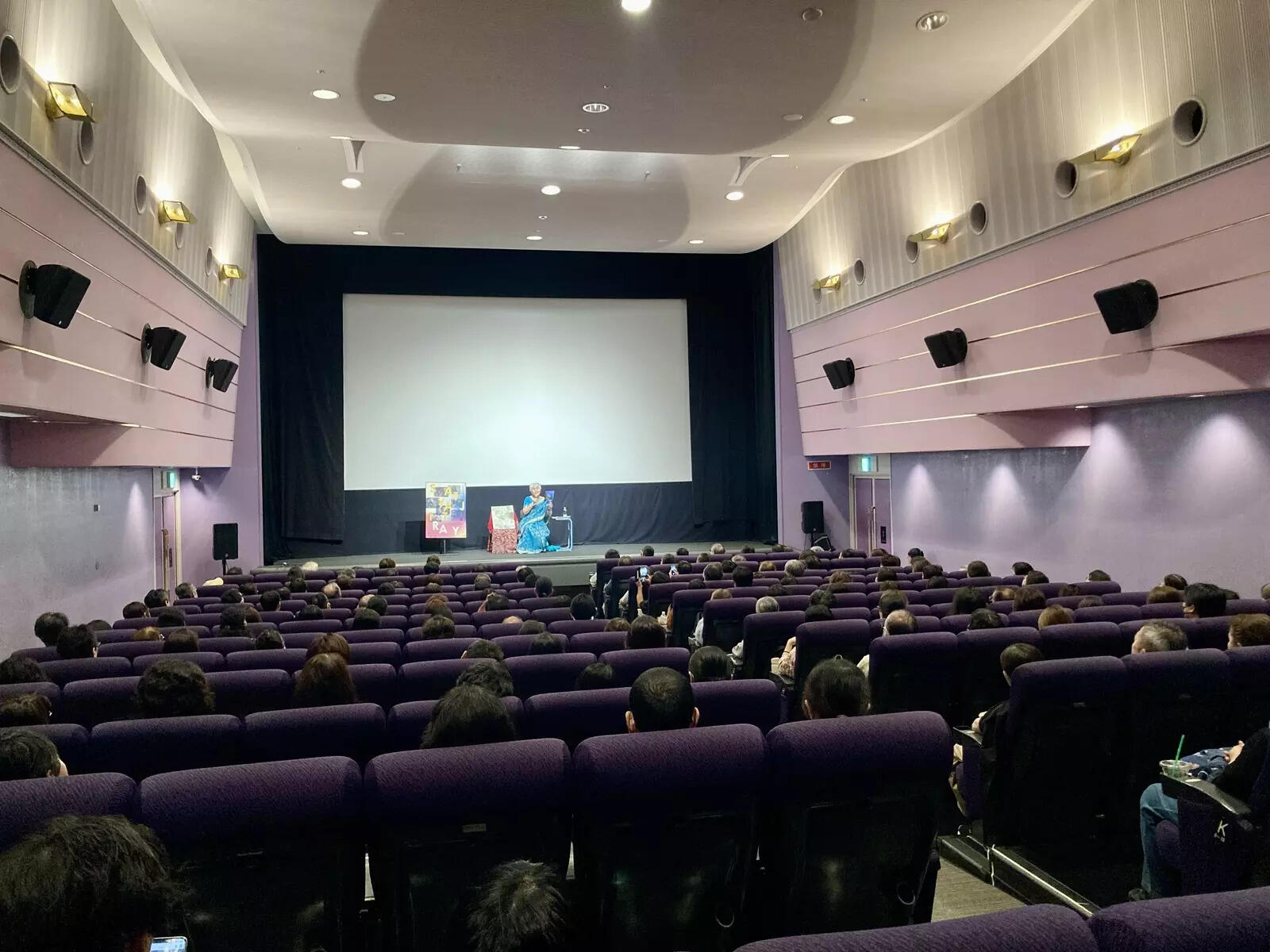
Asian cinema researcher Tamaki Matsuoka delivered a lecture after “Jalsaghar”
“She was very close to our family and a die-hard Satyajit follower right from the beginning,” he said, adding that when Ray first visited Japan in the 60s, it was she who arranged a meeting in Kyoto between Ray and Kurosawa in 1966. Sandip Ray noted that, “I think till the 80s, they distributed all of Baba’s films in various cities in Japan. The films must have done good business there. Otherwise why would she ask about new films every year?” The admiration between the two cinematic cultures was not one-sided, because Ray too held Japanese cinema in high regard.
He first learned about Kurosawa through British film critic Dilys Powell’s account of the 1951 Venice Film Festival. Kurosawa’s “Rashomon” won the Grand Prix and, after being acquired by RKO for world distribution, reached Kolkata within a year, becoming the first Japanese film screened for the city’s cine buffs. The Bengali audience responded, appreciating the story’s originality, its undercurrent of eroticism, and the unmistakable virtuosity of its technique.
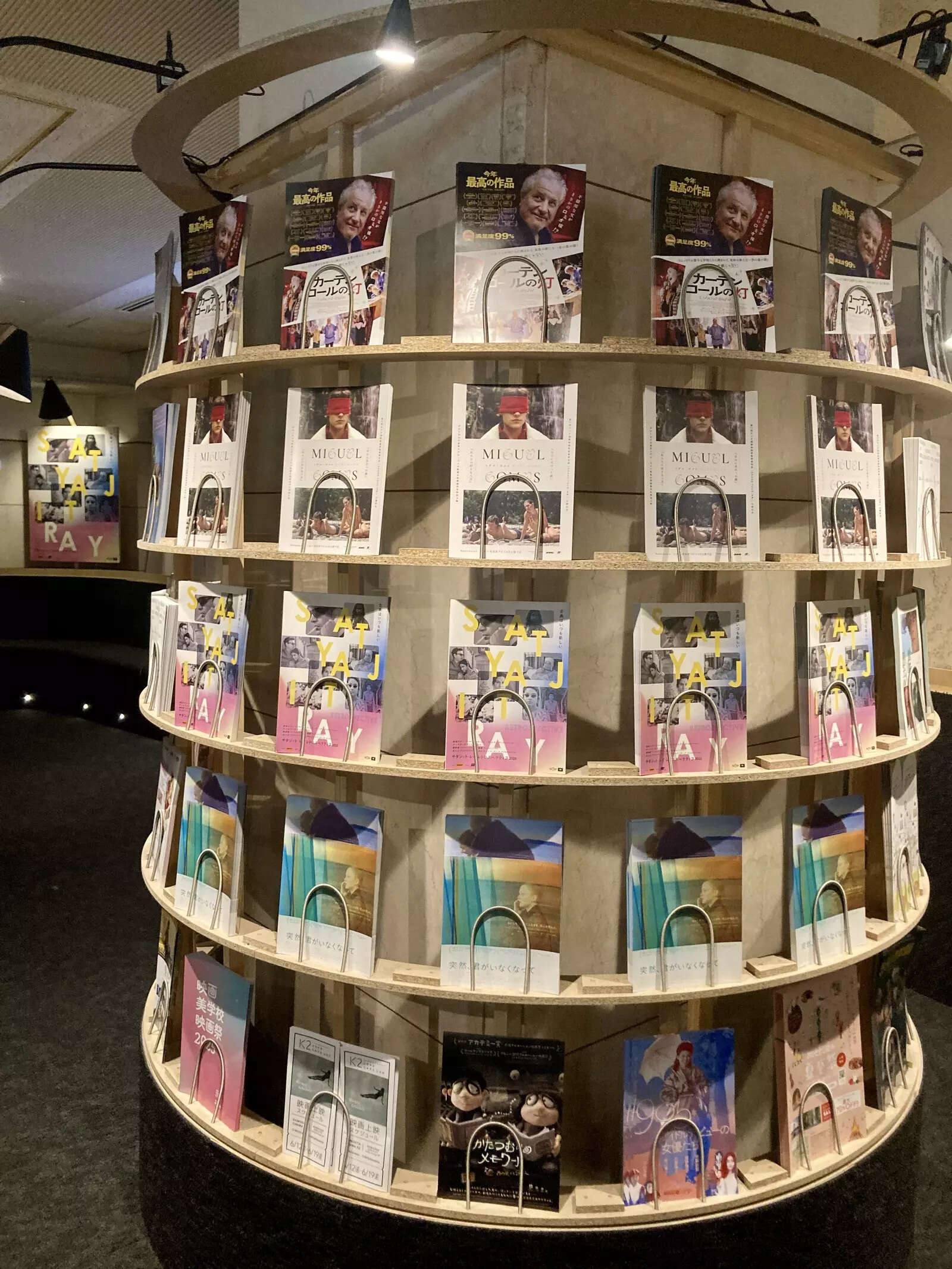
Flyers with Ray film details exhibited at theatres prior to the release
That early encounter with “Rashomon” in Kolkata remained central to Ray’s view of Kurosawa. Riddhi Goswami of Ray Film Society described the intensity of the experience: “He later described that the effect it left on him was electric. He was so spellbound that he saw it three times on consecutive days and wondered each time if there was another film anywhere which gave such sustained and ‘dazzling proof of a director’s command over every aspect of film making’.
” Ray’s engagement widened to Japanese cinema as a whole, particularly its pursuit of “inner truth” and an organic, “living” artistic quality that he saw as distinct from studio-bound theatricality. In “Our Films, Their Films”, Ray praised the disciplined versatility of Japanese actors and the painterly use of “natural light” to create atmosphere. The seven restored titles - produced by RD Bansal - began their theatrical run on July 25 at Le Cinema Bunkamura in Tokyo.
The engagement was planned for three weeks with three films screened daily, but a further week was added due to high demand. This extension followed an early promotional push in which flyers were distributed in theatres and posters were displayed from the third week of June 2025.
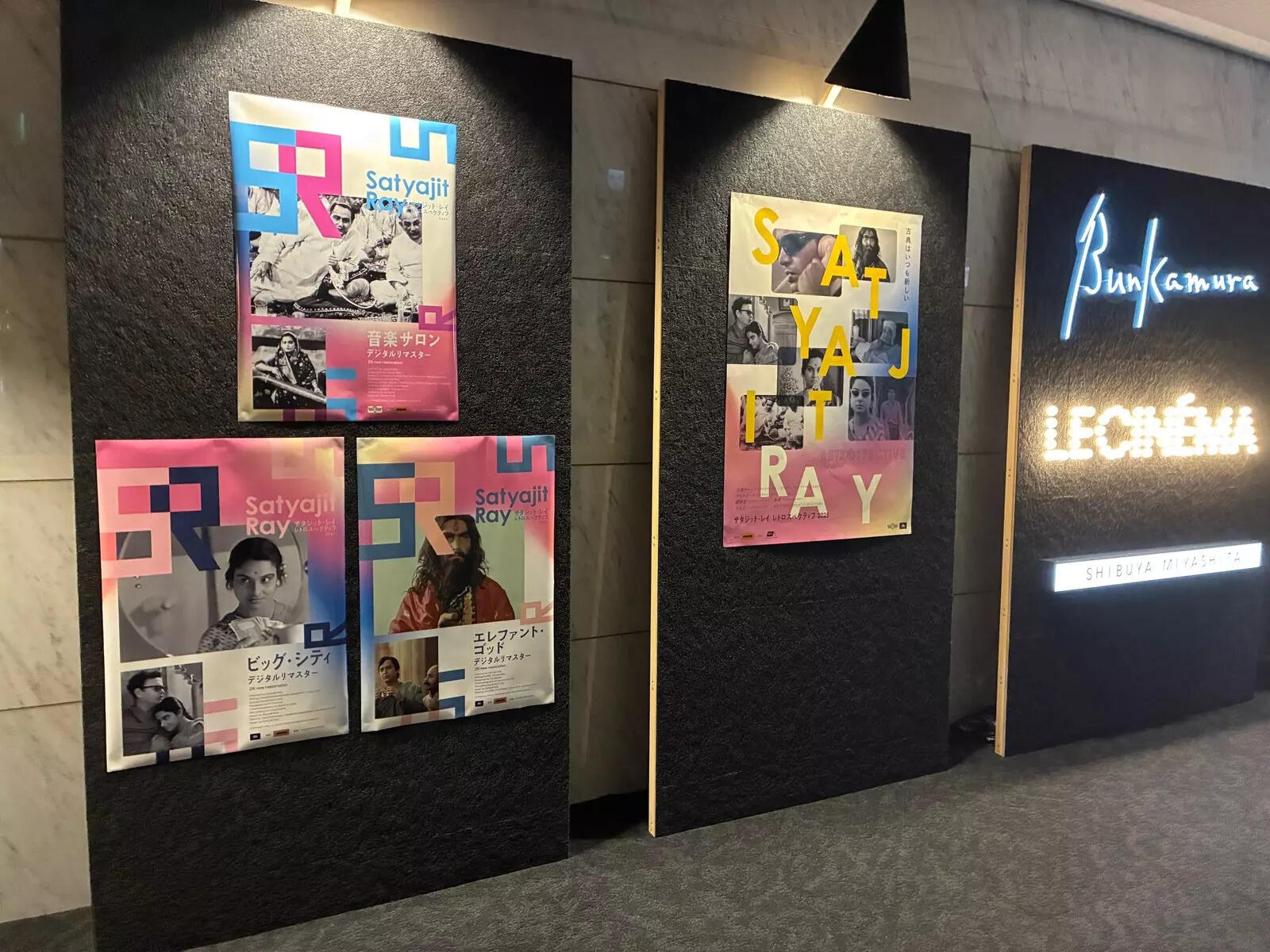
Le Cinema Entrance Photo
“The films not only screened in Tokyo, but also in other cities such as Hiroshima, Osaka, Kyoto, Nigata among others, covering 15–20 cinemas nationwide" said Varsha Bansal, who helmed the restorations of these Ray classics produced by her grandfather RD Bansal, positioning the Tokyo run as the first stage of a longer national rollout. Munetoshi Matsuo, head of marketing for the Japanese distribution, said, “Triggered by the success of several Indian films in Japan in recent years, many Japanese have become interested in Indian films. He is "greatly pleased” with the reception. “Our goal was to encourage the audience to return for multiple viewings and attract first-time viewers of Ray movies. I am proud to say that we were successful in achieving both objectives.
As for the transaction video on demand (TVOD) release at the end of last year, we experienced a slower start compared to our cinema release. One reason could be that the Japanese audience prioritize watching new movies on TVOD instead,” Matsuo said.
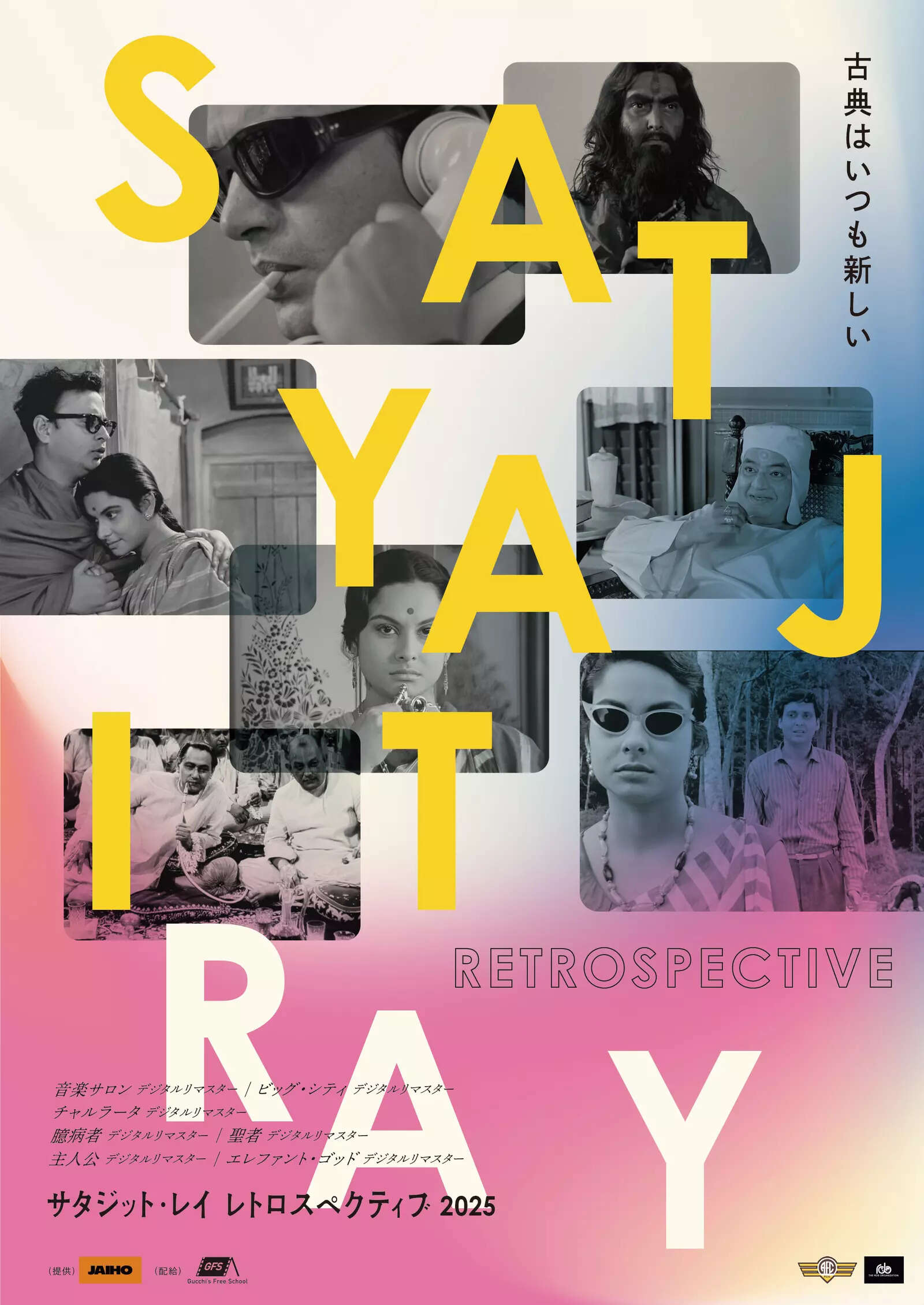
The screenings were paired with contextual events that extended the theatrical experience into guided discussion and interpretation, reinforcing the curatorial intent behind the release.
On July 26, film researcher and producer Eri Morinaga spoke after “Mahanagar”. On the day after, Asian cinema researcher Tamaki Matsuoka delivered a lecture after “Jalsaghar”, creating a consecutive sequence of expert-led engagements.On August 3, Yuka Okuda, a Tagore song performer and Bengali language instructor, provided an explanatory session after the screening of "Charulata". “I offered some reflections on the impact of the Rabindra Sangeet featured in the film, sharing my thoughts with heartfelt sensitivity to the director’s intentions.
Some members of the audience expressed their desire to watch the film once again. It made us realize, all the more, that Ray’s cinema is a deeply layered and magnificent creation,” Okuda told TOI.
Bansal added, and this programming was later complemented by a digital release on Japanese platforms on December 17. “Blu-ray retail sales will commence from March 5 onwards. We are happy that the Japanese fans can keep a piece of Ray films in their libraries as prized collectors' items,” Bansal said. Sandip Ray is happy that contemporary Japanese audiences are also viewing Ray’s films with so much of interest. “I have heard about this. Someone sent me some booklets,” he said. Film scholar Sanjoy Mukhopadhyay described the surge as an important “cinematic event" and a symbol of Indo–Japan friendship. He grounded that significance in a shared cultural disposition toward “existential inquiry”. He argued that Japanese and Indian traditions converge in their search for the “essence of existence”, asking why one exists and why life remains ambiguous.
He sharpened the contrast by invoking a 1955 representation of simpler living against a contemporary global capitalist order in which commodities become fetishes and people are reduced to consumers rather than characters, producing a suffocating condition. "Audiences in advanced capitalist nation like Japan are embracing such works to recover an older truth marked by serenity, enduring faith, and a contemplative distance toward life and death,” Mukhopadhyay said, and he linked this sensibility to filmmakers such as Mizoguchi and Ozu by reading “true Japan” as a pre-technological Japan grounded in a strong philosophical understanding of life. "Contemporary Japanese audience’s interest in films of Ray is an index of a renewed valuation of philosophy over mere images,” he said.




 English (US) ·