

 1 hour ago
6
1 hour ago
6
ARTICLE AD BOX
Last Updated:June 25, 2026, 12:27 IST
The Centre says citizenship is determined under the Citizenship Act, not by a single document. Here's what records can help establish Indian citizenship.


A photo of a passport (PTI)
The Centre has clarified that an Indian passport is not, by itself, conclusive proof of citizenship, triggering a political debate after the Ministry of External Affairs (MEA) reiterated the legal position during a recent media briefing.
The clarification prompted questions over what documents establish Indian citizenship and whether any single document can serve as definitive proof.
The government has maintained that citizenship is governed by the Citizenship Act, 1955, while passports are issued under the Passports Act, 1967. It also pointed to Section 20 of the Passports Act, which allows the Centre, in certain public interest cases, to issue a passport or travel document to a non-citizen.
The clarification also referred to court rulings that have held that possession of a passport alone does not establish citizenship.
Here are some frequently asked questions explaining how Indian citizenship is determined.
Q. How can Indian citizenship be acquired?
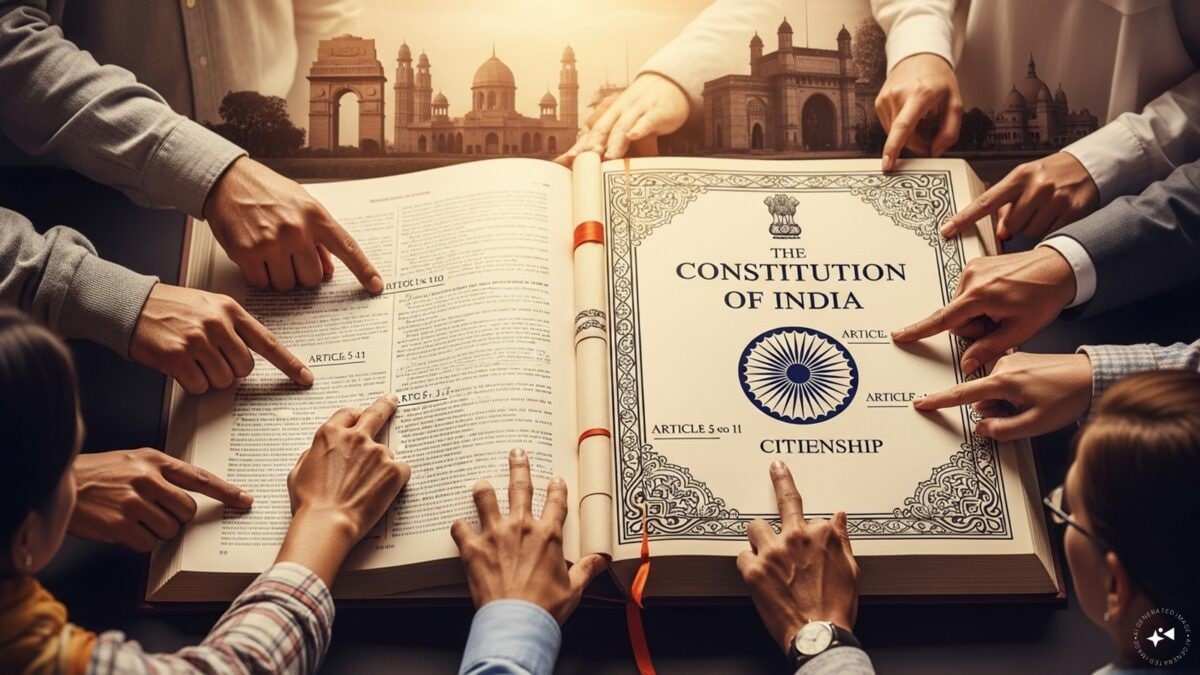
Under the Citizenship Act, 1955, Indian citizenship can be acquired in five ways:
- Citizenship by birth
- Citizenship by descent
- Citizenship by registration
- Citizenship by naturalisation
- Citizenship by incorporation of territory
Q. Is there a single document that proves Indian citizenship?
No. India does not issue one universal document that conclusively proves citizenship for every citizen. Citizenship is determined based on the manner in which it was acquired and the supporting records available under the Citizenship Act.
Q. What is direct proof of Indian citizenship?
For individuals who acquire Indian citizenship through registration or naturalisation, the citizenship certificate issued by the Government of India serves as direct proof of citizenship.
Q. Does every Indian citizen receive a citizenship certificate?
No. Citizenship certificates are generally issued only to those who become Indian citizens through registration or naturalisation. Most Indians are citizens by birth or descent and therefore may never possess such a certificate.
Q. How is citizenship established for citizens by birth or descent?
For most Indians, citizenship is established through a combination of documents relating to their date and place of birth, parentage and nationality. Since there is no single document applicable to everyone, authorities may rely on multiple records.
Q. Which documents can help establish Indian citizenship?
Depending on individual circumstances, documents that may help establish citizenship include:
- Birth certificate
- Citizenship certificates of parents
- Records establishing a parent’s Indian citizenship
- Indian passports of parents
- Other official records relating to birth, parentage and nationality
- Other contemporaneous government records may also support a claim, where applicable
Q. Can an Indian passport be used in citizenship-related applications?
Yes. An Indian passport can serve as supporting evidence in certain citizenship-related applications. Government guidelines refer to passports and citizenship certificates as proof while processing applications involving spouses, children or parents of Indian citizens. However, the passport alone is not treated as conclusive proof of citizenship in every legal circumstance.
Q. Are Aadhaar, voter ID and driving licence proof of citizenship?
No. Aadhaar cards, voter identity cards and driving licences primarily establish identity, residence, electoral registration or driving eligibility. They are not designed to determine citizenship status and, therefore, are not considered conclusive proof of citizenship on their own.
Q. Why don’t identity documents automatically establish citizenship?
Each government-issued document serves a specific legal purpose. Aadhaar is intended for identity verification, voter ID for electoral registration and driving licences for authorising driving privileges. Since these documents are not issued to certify citizenship, they cannot independently establish citizenship status.
Q. Why did the government clarify that a passport is not proof of citizenship?
The clarification followed remarks by the Ministry of External Affairs stating that a passport is primarily a travel document that certifies the holder’s nationality for international travel. Legally, citizenship is determined under the Citizenship Act, while passports are issued under the Passports Act.
The government also cited Section 20 of the Passports Act, 1967, under which the Central Government may issue a passport or travel document to a non-citizen if it considers it necessary in the public interest.
It further referred to judicial rulings, including Bombay High Court judgments, which have held that possession of a passport does not by itself establish Indian citizenship.
The clarification has sparked political reactions, with Opposition leaders questioning which documents citizens should rely on to establish citizenship.
The Centre, however, has maintained that this is not a new policy but a long-standing legal position based on existing law and judicial interpretation
Handpicked stories, in your inbox
A newsletter with the best of our journalism
About the Author

Vani Mehrotra is the Deputy News Editor at News18.com. She has more than 10 years of experience in national and international news and has previously worked on multiple desks.
News india If Not A Passport, What Proves Indian Citizenship? 10 FAQs Answered After MEA's Clarification
Disclaimer: Comments reflect users’ views, not News18’s. Please keep discussions respectful and constructive. Abusive, defamatory, or illegal comments will be removed. News18 may disable any comment at its discretion. By posting, you agree to our Terms of Use and Privacy Policy.
Read More






 English (US) ·