

 1 day ago
5
1 day ago
5
ARTICLE AD BOX
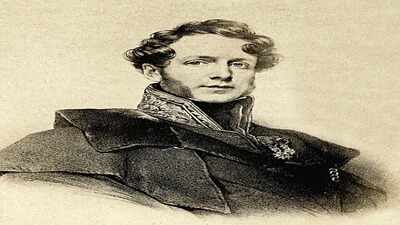
French antiquarian Jacques Boucher de Perthes, whose discoveries in the Somme Valley helped reveal that human history was far older than previously thought. Image Credits: Wikimedia Commons
History is often rewritten not in grand palaces or famous battlefields, but in places that appear entirely ordinary. In the middle of the nineteenth century, French customs officer and amateur antiquarian Jacques Boucher de Perthes spent much of his time examining gravel pits along the Somme River in northern France.
He was looking for flint, yet what he found helped transform humanity's understanding of its own past.Among the gravels, Boucher de Perthes recovered worked stone tools and handaxes that appeared unmistakably shaped by human hands. The discovery might seem ordinary today, but in the 1850s it challenged one of the most deeply held assumptions in European scholarship about human history. At the time, Darwin’s theory of human evolution was still recent, and many scholars still aligned human origins with biblical chronology.
The idea that humans had lived in a far more distant past, alongside extinct animals, was difficult for many scholars to accept.Why the discovery disproved old theoriesThe discoveries in the Somme Valley challenged some of the most broadly accepted theories about human evolution. Stone implements in ancient layers in company with the fossils of extinct species indicated that humans lived significantly earlier than the majority of scientists believed.
At a time when biblical chronology limited the age of humankind to several thousand years, the idea of an ancient human prehistory was hard for many people to accept.The new findings led scientists to reconsider their assumptions. They not only supported Boucher de Perthes’s theories but also helped establish the great antiquity of humans and laid the groundwork for modern prehistoric archaeology.According to the research published on The Origins of the Acheulean, the acceptance of the findings did not happen immediately, as scientists doubted whether the implements found really belonged to ancient layers where they had been discovered.
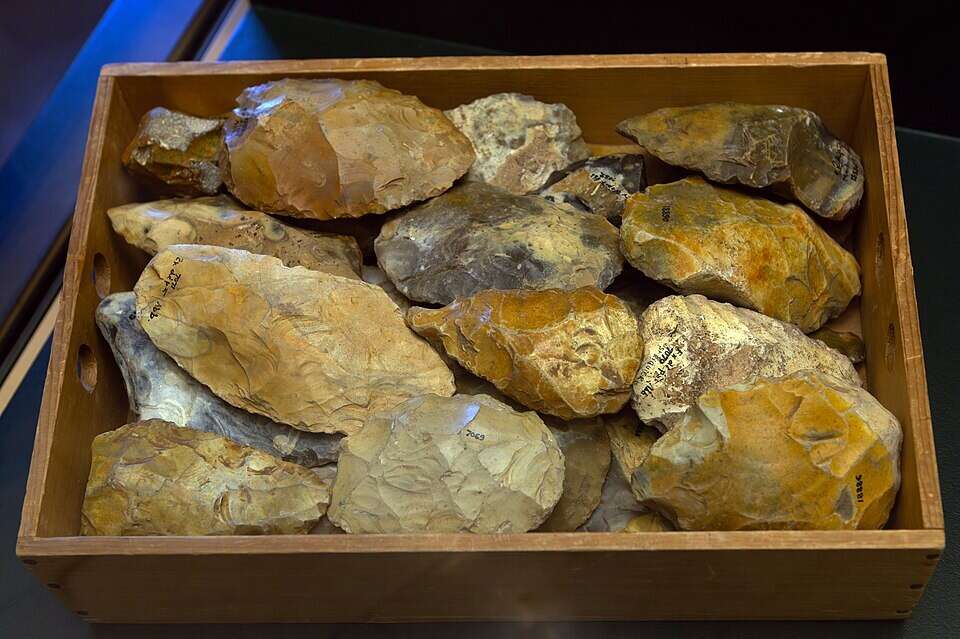
The worked flints and handaxes discovered in the Somme gravels became some of the earliest evidence for a prehistoric human past. Image Credits: Wikimedia Commons
From controversial claim to scientific breakthroughAccording to the Ashmolean Museum's John Evans Centenary Project, British geologist Joseph Prestwich and archaeologist John Evans travelled to the Somme Valley to examine the evidence for themselves. Their field investigations confirmed that the stone tools were indeed embedded within ancient gravels associated with extinct fauna. This verification transformed Boucher de Perthes's controversial observations into credible scientific evidence.The discovery came at a pivotal moment in archaeology’s development. During the nineteenth century, researchers were beginning to classify prehistoric cultures according to the materials used in their tools. The growing acceptance of Boucher de Perthes’s evidence strengthened the concept of a Stone Age and helped create a chronological framework for understanding early human societies. Handaxes soon became some of archaeology’s most important diagnoses.
Their distinctive shape and wide distribution allowed researchers to compare sites across regions. Long before modern dating techniques existed, archaeologists used such tools to establish relative chronologies and trace patterns of human development.The Somme discoveries also became closely associated with Saint-Acheul, a nearby locality where similar stone tools were found. The site eventually gave its name to the Acheulean, one of the longest-lasting and most widespread stone-tool traditions in human history. Acheulean handaxes were made by ancient human ancestors for more than a million years and have been found across Africa, Europe, and parts of Asia.More than 175 years later, the handaxes unearthed from the French gravels remind us that some of history’s greatest discoveries come simply from careful observation.









 English (US) ·