

 14 hours ago
3
14 hours ago
3
ARTICLE AD BOX
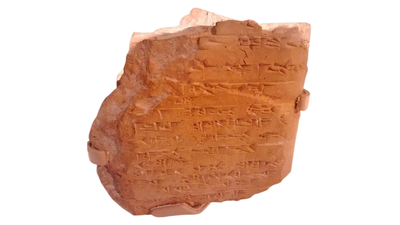
Hittite cuneiform is the form of cuneiform script used in writing the Hittite language. Image Credit: Wikimedia Commons
The discovery in central Anatolia proved to be a major revelation for archaeology, reshaping knowledge of the ancient Near East. As the ruins were being excavated, thousands of clay tablets were uncovered by archaeologists working at the site.
Thousands of clay tablets were found in clusters amid the wreckage of the ancient archives.But the discovery proved to be far more than an impressive collection of artful artifacts. It provided an account in written words of the culture of an entire civilization that was otherwise unknown. No longer was Hattusa simply a barren site on a dry hilltop; it was now a readable archive of a once-powerful Bronze Age civilization.
The tablets did more than preserve the names and titles of long-lost Hittite kings; they also preserved the empire's own language.A ruin in the center of AnatoliaHattusa was located in central Anatolia and served as the Hittite Empire's political center. Modern research regards it as the empire's political hub. Systematic excavations have been going on since 1906 when the first German archaeological expedition began working in Boğazköy, which became the site of the ancient Hattusa city.
This matters because it marks the point when the site became a source of historical evidence.
The excavation was not an ordinary dig; it became the foundation for reconstructing many aspects of Hittite history, including its political, administrative and textual record.However, the site's importance was not defined by its huge stone fortifications. The real value of Hattusa is seen in the fact that it was an archive city of the Hittite Empire.
After getting to the appropriate layers of excavation, researchers realized that this site stored written sources relating to the state apparatus. That is why Hattusa stands out among other ancient ruins: it contained administrative records.The tablets that were found in clustersIn his field reports, Sayce described the discovery of a large number of tablets in clusters during the 1906 digs. As described in the resources from the digital library of the University of Chicago, these tablets did not show up here and there but rather in large numbers with a significant number of large tablets and clusters appearing together from the ground.
This pattern is consistent with an archive disturbed by fire or collapse, leaving records piled together for thousands of years. To archaeologists, it meant that a collection of records existed underneath all those ruins.Indeed, the sheer volume made Hattusa stand out from other similar cities of the same era. That was enough to transform research on Hittite history. From this point onwards, the city would become the most important source of Hittite documents.
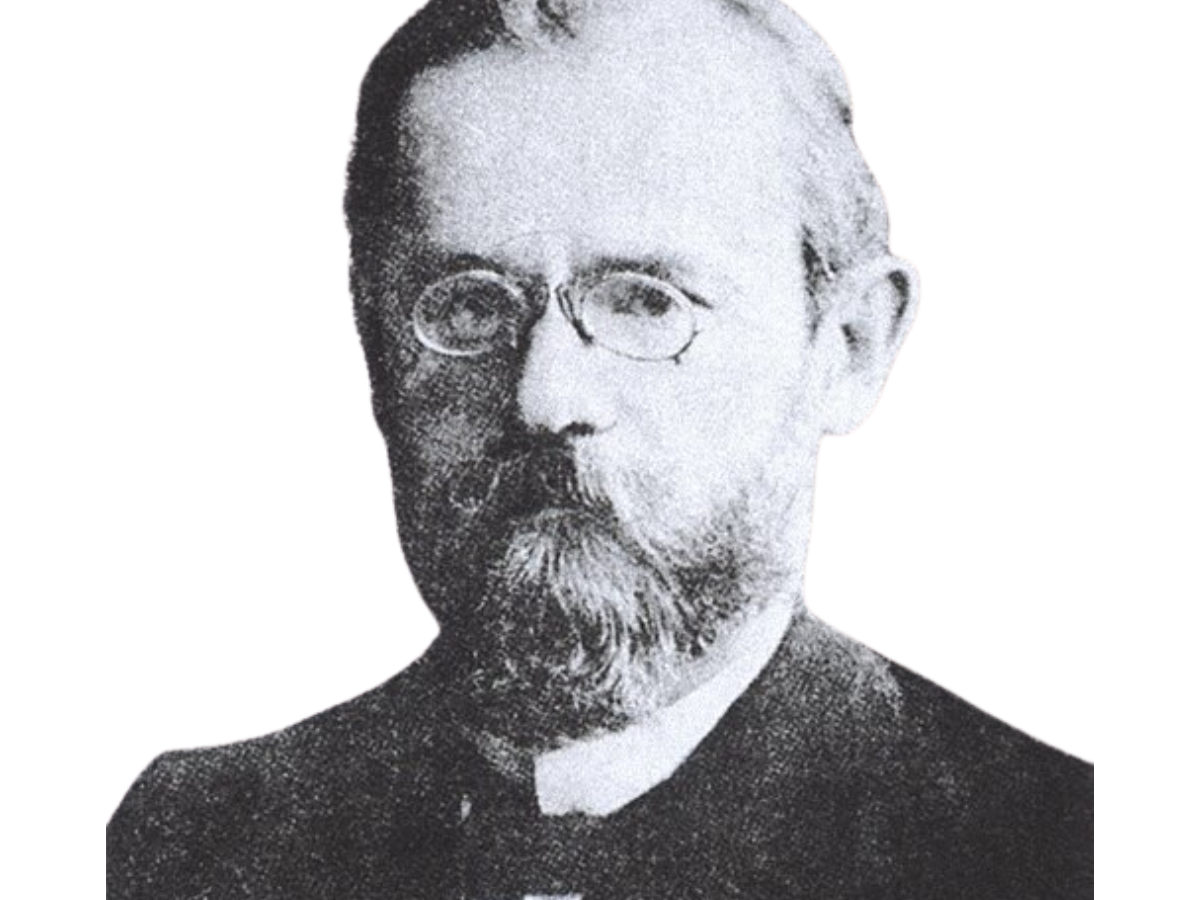
Hugo Winckler (4 July 1863 – 19 April 1913) was a German orientalist, archaeologist, and historian who uncovered the capital of the Hittite Empire (Hattusa) at Boğazkale, Turkey. Image Credit: Wikimedia Commons
A language no man had known beforeIt took some time before the tablets revealed much about the people themselves. They used cuneiform writing, but the language they spoke eluded scholars at first. As mentioned by the University of Texas, the Hittite language turned out to be Indo-European only in 1915 after a study conducted by scholar Bedřich Hrozný on tablets excavated from Istanbul Museum. It took years from the very beginning of the excavation to discover the truth about them.This helps explain why the Hittites remained little known for so long. Their existence remained obscure until their archive was brought to light through excavations at Boğazköy. The real value of the Hattusa tablets is that they gave researchers not only additional artifacts but also a way to identify Hittite culture and place it in historical context.How 1906 changed the study of the ancient worldBy the time of the 1906 dig, the Hittites were known mainly as a name in the literature.
They became known as a society that left behind its own written record for archaeologists to find. Before the tablets were decoded, information about the civilization came indirectly from the writings of other peoples. Once the discoveries at Hattusa were translated, the documents themselves could be studied. Thus, the civilization moved from indirect descriptions to documentation in its own right.The documents recovered at Hattusa were so valuable because they comprised most of the written records left by the Hittite civilization. Historians were thus able to piece together what Hittite civilization was like as a whole. All manner of administrative, ritual, and diplomatic documents were found that fit into a larger context. The archive allowed historians to understand the Hittite civilization as a functioning state.







 English (US) ·