

 54 minutes ago
2
54 minutes ago
2
ARTICLE AD BOX
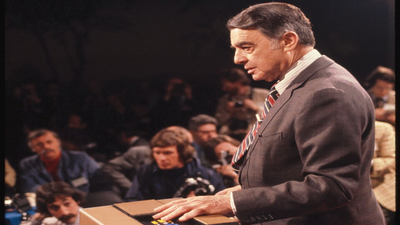
A child's impatience for an instant photograph in 1943 sparked Edwin Land's invention of the instant camera. Image Credit: Wikimedia Commons
Twentieth-century innovation is often remembered through complicated laboratory experiments, military breakthroughs or boardroom strategy. But one of the most profound leaps in imaging technology began with a flash of simple, childhood impatience.The story opens in 1943, when American inventor Edwin Land snapped a picture of his three-year-old daughter Jennifer on a family vacation in Santa Fe, New Mexico. The little girl wanted to see the result and asked her father a simple question: why she couldn’t see the photograph immediately?Consumer photography back then was a matter of rigorous patience. Holiday snaps had to be sent off or taken to professional labs, meaning days or even weeks of darkroom work before the physical prints could be touched.
To the grown-up, this tedious delay was the universal law of chemistry. It was the weakness of a child.It revealed a blind spot in technologyBut Smithsonian Magazine's history of photography makes it clear that adults universally accepted this delay as an intrinsic condition of the art form. But Jennifer’s question exposed a major blind spot in technology. It didn’t invent a new device, but it totally redefined the problem. The old assumption that images took time no longer seemed so much a law of nature, but more a limitation of design.
Land's challenge was not to make the postal system faster or to build a faster photo lab. As a full booklet from the American Chemical Society explains, he had to create an imaging system all by himself. He had to take a wet darkroom, with all the exposure, chemical development and printing all together, and make a dry, practical, portable one.The answer, says the Harvard Business School Baker Library, home of Land’s personal papers, came to the inventor within an hour of his daughter’s question.
He was so excited by the challenge that he went straight to his patent lawyer, who was also holidaying in Santa Fe, and sketched out the chemical principles of a 'dry camera'.The long road to the public frameThe conceptual breakthrough came quickly, but it took years of gruelling research to turn a child's impatience into working engineering. For four years, Land and his team at the Polaroid Corporation had been working in secret on the system, under the internal project code name SX-70.The main thing was the chemistry. Land’s design used one mechanism, a sealed pod of reagents embedded in the film. The film was drawn through internal rollers, and the pod burst, spraying the processing chemicals evenly over the negative and positive sheets, and giving a stabilised image in about sixty seconds.
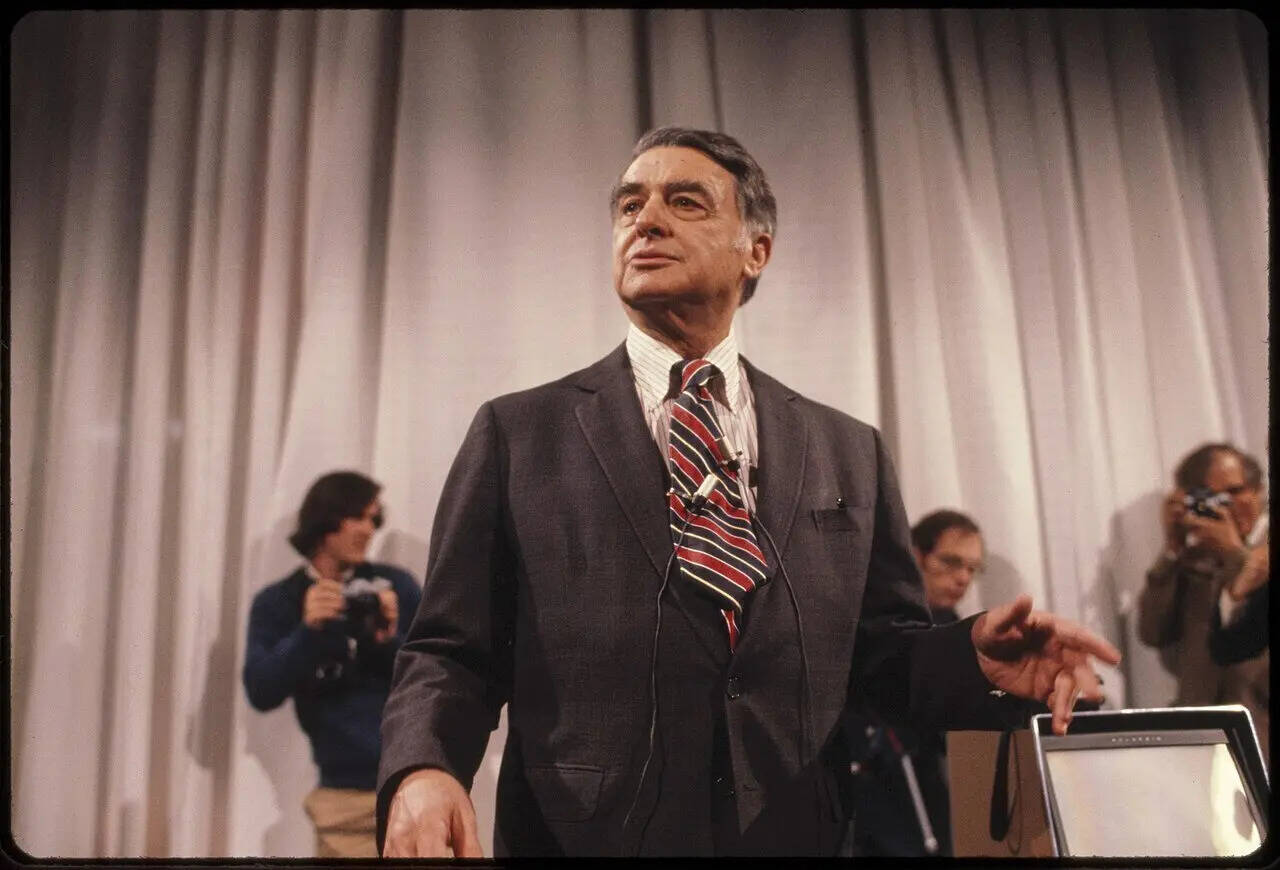
A child's impatience for an instant photograph in 1943 sparked Edwin Land's invention of the instant camera. This innovation, born from a simple question, revolutionized photography by eliminating the need for darkroom processing. Image Credit: Wikimedia Commons
One report states that the project had some major stability problems up until launch, with initial test images fading into nothingness after a few hours.
Chemists needed to find a stabilising compound to stop the development process and fix the image for good.The breakthrough came on February 21, 1947, when Land gave a public demonstration of the first successful instant camera at a meeting of the Optical Society of America in New York City. In 1948, the following year, the device was commercialised as the Polaroid Land Camera Model 95. Initially, they only produced sepia-toned prints, but the stock sold out instantly, sparking a huge commercial camera revolution, the report says.The older roots of instant gratificationThe expectation of instant gratification is a constant in modern culture, a product of the digital age that was born with smartphones and social media algorithms. But the history of the instant camera shows that human impatience is older than modern technology by decades.A survey of the archives shows that Land’s invention did not create a new desire in man, but translated an existing psychological want into mechanical reality.
The camera’s huge commercial success revealed that a cultural appetite for immediacy existed long before the digital tools to fulfil it.The invention changed not just consumer habits, but the experience of memory itself. Instead of waiting for processing, families could see an image in their hands. This theatricality of development brought the psychological distance between the event and its proof closer together, making photography a collective performance.Ultimately, the work of Edwin Land shows that a simple question can change an entire industry. The irritation of a toddler with a holiday photo toppled a corporate and scientific status quo, accelerating a culture of visual immediacy that defines today’s world.









 English (US) ·