

 3 days ago
9
3 days ago
9
ARTICLE AD BOX
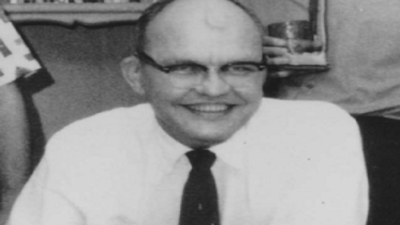
Jack St. Clair Kilby (November 8, 1923 – June 20, 2005) was an American electronics engineer. Image Credit: Wikimedia Commons
In 1958, during the summer, an engineer by the name of Jack Kilby found himself alone within a secluded Texas Instruments laboratory. When his coworkers were off for a corporate shutdown, Kilby faced a stubborn problem that was a key obstacle to further miniaturisation of electronics.
In the past, computers and electronic gadgets depended on a myriad of components, including transistors as well as resistors. This made machines heavy, expensive, and difficult to scale.Kilby used the shutdown to try a different approach. Instead of wiring separate components together, he wondered whether he could assemble everything needed on a single sheet of silicon. He' is incorrectly capitalized mid-sentence, which breaks the sentence mechanically.
This simple idea became one of the earliest integrated-circuit prototypes, a development that helped revolutionise computing by showing the possibility of making electronics smaller, less expensive, as well as more durable.How a single chip simplified complex wiringThe fundamental technological leap in Kilby's innovation was the concept of integration. In the past, engineers constructed circuits that connected individual parts in a series.
Kilby's invention shattered the concept by merging diodes, transistors, resistors and capacitors into an all-in-one, compact design.Based on a review of the past indexed in PubMed, the shift transformed the way engineers thought about the production process and its quality. Instead of having to deal with an array of flimsy hand-wired connections, the industry was able to view the circuit as one component. The article explains how Kilby's monolithic integrated circuit put these functions into a very small space and laid the foundation for later microprocessor development.
In solving a system-wide issue, the 1958 chip provided the possibility of a design which engineers could reproduce and further refine over the years in the future.
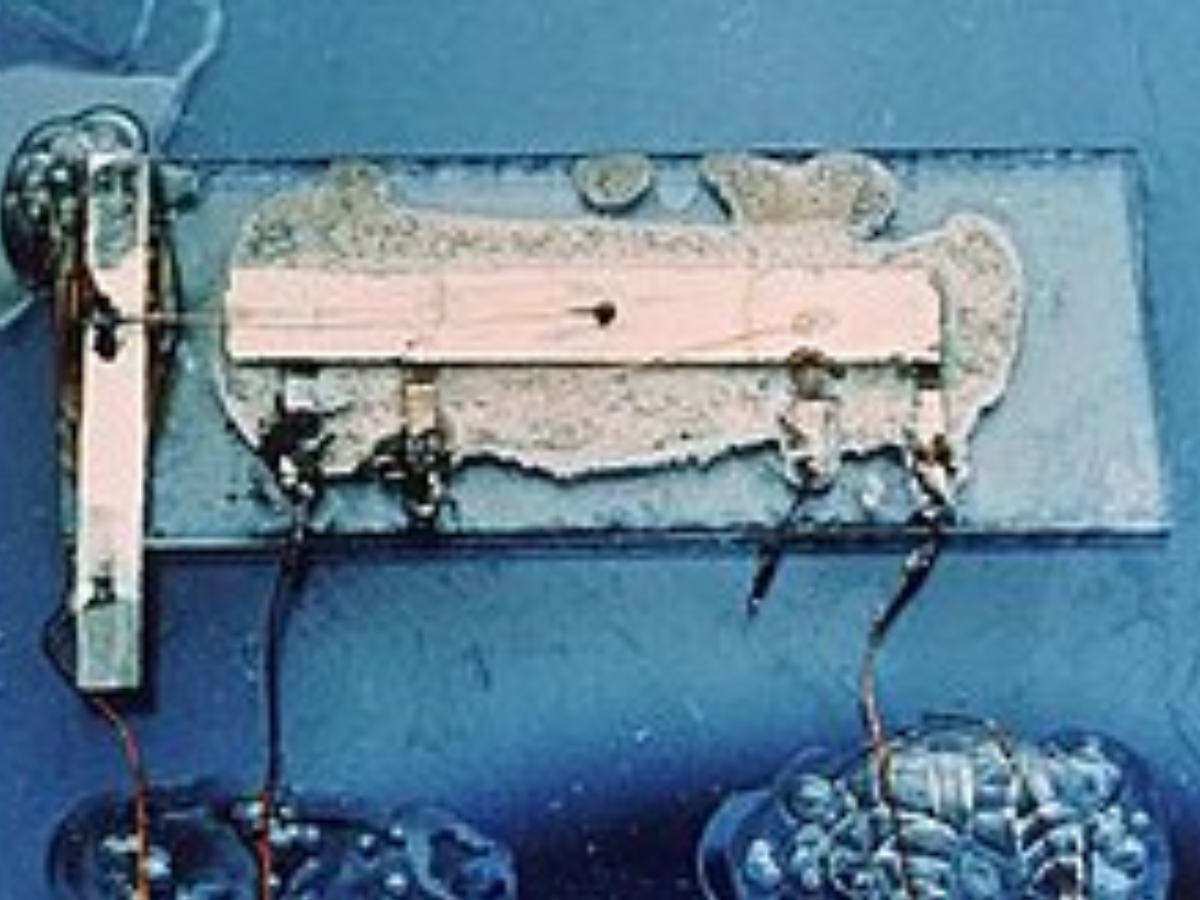
Kilby’s original 1958 prototype: a single strip of germanium with hand-soldered wires. Image Credit: Wikipedia
The foundational element of digital technologyThe initial research project quickly morphed into a worldwide technology revolution. Being able to fit several functions into a tiny area meant that electronic components could rapidly shrink, become faster and more affordable to make.
It changed manufacturing and helped make large computing systems commercially viable.The broad significance of this invention in different fields is described in a study paper that was published in the magazine Springer Nature, where it's noted that integrated circuits quickly became the core building block of modern electronic systems. It's not only about computer systems from the beginning; it's also about medical instruments, control systems and everyday consumer electronics.
Kilby's invention was not designed to make a difference to one device. It also laid the groundwork for the digital hardware that followed.The legacy that will last for the future of technologyHistorians regard 1958 as an important moment in the history of technology. Kilby's feat was noteworthy not only because he created an operational device, but also because he demonstrated that a revolutionary manufacturing theory actually worked when applied in real life.
Kilby successfully combined manufacturing, fabrication, and system design in a small piece of silicon.The modern age is accustomed to taking tiny and powerful devices for granted. However, the beginning of this journey was by a single engineer working at one workstation. Kilby's small-scale breakthrough in the middle of the summer shutdown resolved an issue that had slowed the advancement of electronics for a long time. Demonstrating that a variety of elements could be integrated on a single chip let computing evolve from huge, costly machinery into the modern digital tools that we utilise every day.
This is still among the top technological breakthroughs, in part because it changed the definition of the boundaries of what is possible.









 English (US) ·