

 1 hour ago
3
1 hour ago
3
ARTICLE AD BOX
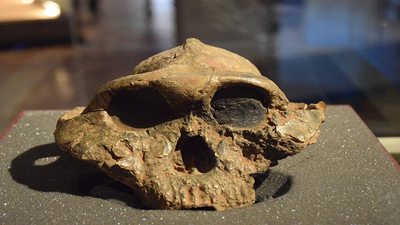
The KNM-ER 406 fossil skull (Paranthropus boisei), discovered by Richard Leakey at Koobi Fora in 1969. Image Credit: Wikimedia Commons
While walking through the dry, eroded gullies of Koobi Fora in northern Kenya in 1969, Richard Leakey came across a fossil fragment. The discovery did not have much fanfare at the time of its occurrence.
There was no intact skull available at the time. However, the fossil that Leakey discovered at this place came to be known in future days as an important find in the field of East African fossils. This chance discovery helped reshape how scientists classify human evolution.The location of Koobi Fora became famous for something other than the site of discovery long after its discovery. It became an important scientific reference.
Through the fossils discovered by Leakey at this place, it was evident that there were many fossils lying hidden underneath the layers of sediments in this area. Even fragmented skull fossils had tremendous importance as they gave the scientific community something to compare the different ages and shapes of humans.An ancient landscape full of inhabitantsKoobi Fora is especially valuable because it has challenged simple ideas about human evolution.
For many years, human evolution was often described as a simple ladder-like process. However, the discovery made in Kenya shook up this idea. In place of a linear evolution, a crowded genealogical tree emerged, in which several species coexisted in the same place at the same period of time.As explained by the Smithsonian Human Origins Program, several species of early humans, namely Homo rudolfensis, Homo habilis, Homo erectus, and Paranthropus boisei, coexisted in the Turkana Basin for almost half a million years between 2.0 and 1.5 million years ago.
The above-mentioned overlapping in time is what makes the question of early human species so interesting.
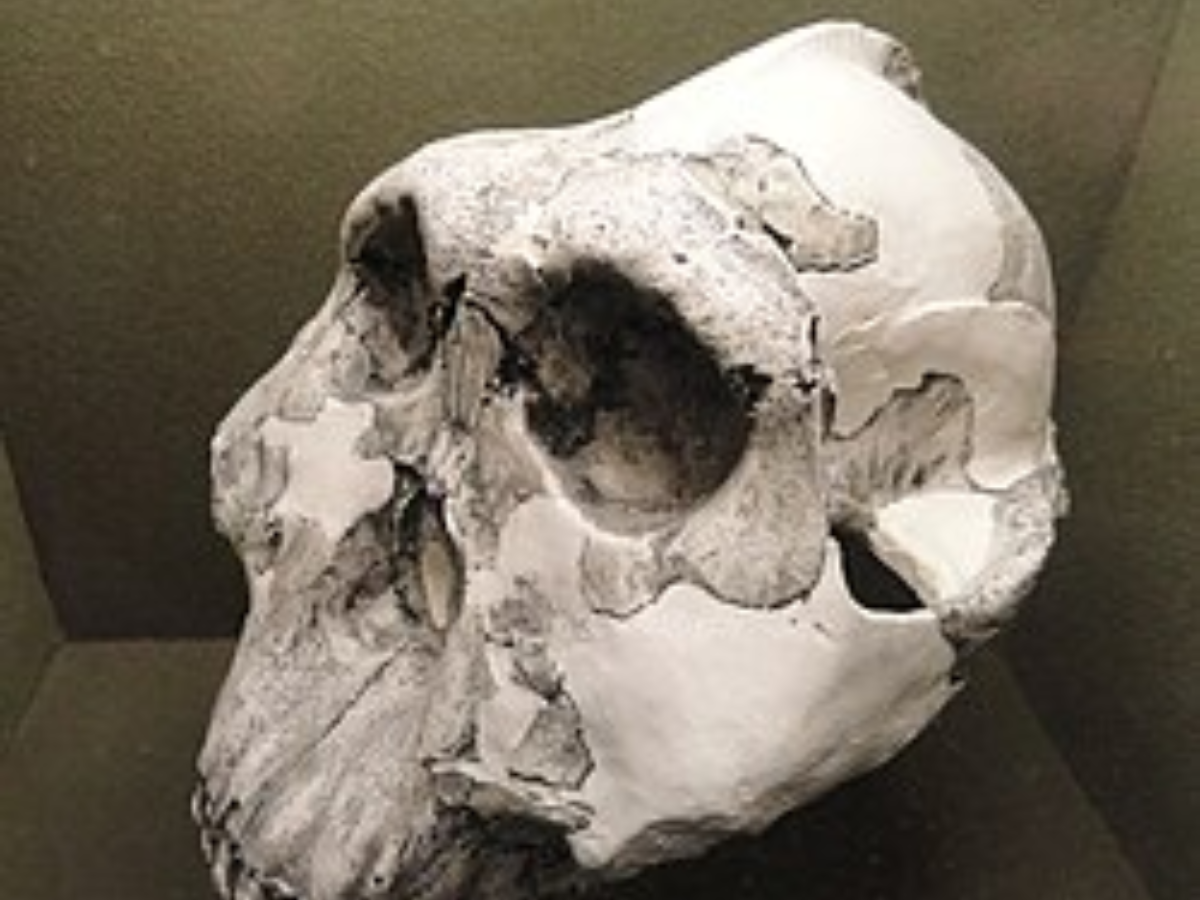
Paranthropus boisei is a species of australopithecine from the Early Pleistocene of East Africa about 2.5 to 1.15 million years ago. Image Credit: Wikipedia
An area that constantly tests the historyOver time, Koobi Fora was not only based on its original fame. This place continued to be a laboratory of discoveries. Decades after the first expedition of Leakey, the earth continues to yield new clues that challenge previous scientific views. New bones or teeth can refine or sometimes revise earlier scientific interpretations.An indexed article in PubMed proves that the fossil of a hominin found in the Koobi Fora Formation indicates the constant activity of the basin in the present-day classification, migration, and behavior of early species debate. The continuing fossil record keeps the site relevant. It serves as a key record for studying where early humans lived, how they changed, and which fossils belong in our evolutionary story.Much more than just broken bonesThe history of the Kenyan badlands goes far beyond the remains of the skull. This place also holds fossil footprints that help researchers study how these ancestors walked. They represent one of the earliest examples of the proof of efficient bipedal locomotion. Thus, thanks to such findings, we can learn more about how our early relatives behaved and lived.Taken together, the physical and behavioural evidence helps researchers ask better questions.All these years later, the discovery continues to inspire new research and has made the Kenyan badlands a window onto the distant past.









 English (US) ·