

 1 day ago
8
1 day ago
8
ARTICLE AD BOX
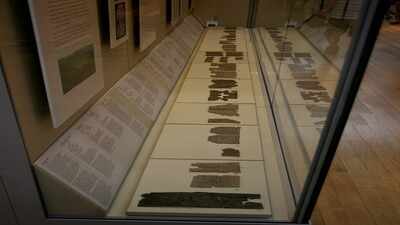
Fragments of the Vindolanda writing tablets on display in the British Museum. Image Credits: Wikimedia Commons
In archaeology, there are times when the most significant finds do not come from impressive structures or hidden treasures, but rather objects that are so mundane that one would not give them a second thought.
This was the situation in 1973 at the Roman fort of Vindolanda, situated south of the famous Hadrian’s Wall in northern Britain, when archaeologist Robin Birley and his wife Patricia detected signs of ink writing on pieces of water-soaked wood unearthed in a muddy excavation trench.What first looked like fragments of wet wood turned out to be Roman writing tablets. It turned out to be Roman writing tablets that had survived for centuries, buried in the ground.A muddy trench becomes a Roman archiveVindolanda is now known not just for walls and weapons, but for a small set of wooden tablets that survived because the site stayed wet and low in oxygen. The preservation was unusual because the soil chemistry and microbial conditions helped protect leather and wood that would usually decay. This shows that soggy ground was not a detail to ignore.As Birley and his team excavated the site, they recovered thin wooden tablets covered with traces of ink. As noted in a recent study of the Vindolanda tablet corpus, unlike inscriptions carved into stone or metal, these were everyday documents written by ordinary people.
Letters, lists, reports, and official correspondence had survived in remarkable condition, offering a rare glimpse into life on Rome's northern frontier.Voices from the edge of the EmpireThe Vindolanda tablets quickly stood out because they were ordinary in content but rare in survival. They preserve letters, notes, and administrative text from a Roman military world that usually survives only in stone, metal, or later copies. Research by the University of Edinburgh describes the corpus as around 800 Roman tilia and places it within studies of epistolarity and governance.
In other words, the tablets are not just artefacts. They are working evidence for how people wrote, organised, and managed life two thousand years ago.
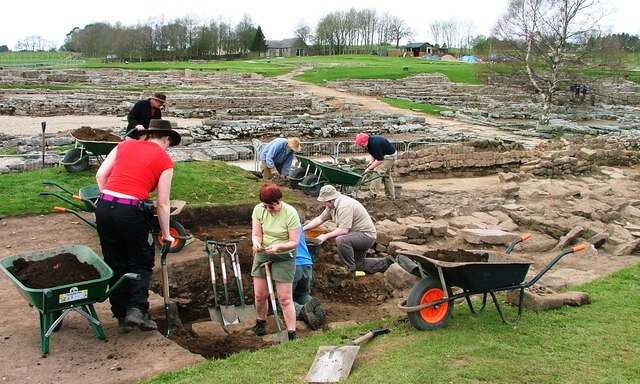
Glimpse of excavations at Vindolanda that led to the discovery of hundreds of wooden writing tablets, providing records of the daily life of Roman Britain. Image Credits: Wikipedia
For historians, these documents were not just a source of data but evidence of how writing worked in daily life. The tablets also challenged earlier assumptions about literacy in Roman Britain. The role of written communication in the management of a frontier society was significant.Why the tablets still matter todayFifty years after the discovery, the tablets from Vindolanda continue to inspire studies for historians and researchers. New imaging technologies and preservation methods have made it possible to study fading inks, different handwritings, and other details that were previously invisible. In other words, the Vindolanda tablets are important not only for historians but also for experts in ancient handwriting and communication.
Each new method reveals more about the people of Vindolanda, making the collection an ongoing source of discovery.The true significance of the Vindolanda tablets lies in their content. While emperors and generals dominate the historical record, these fragile records give us access to the voices of ordinary people. Through the letters, requests, reports, and other personal communications in the collection, we get a glimpse into the lives of ordinary Romans of the period.Robin Birley's 1973 work at Vindolanda did not uncover gold or magnificent ruins. However, the wet wooden fragments would prove even more valuable.









 English (US) ·