

 1 week ago
8
1 week ago
8
ARTICLE AD BOX
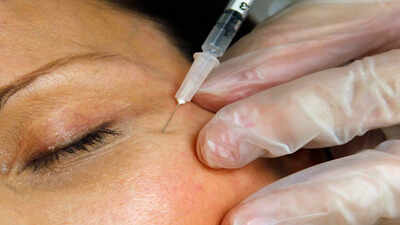
A patient receives a Botox injection at a clinic| Image Credit: AP
The history of the botulinum toxin type A dates back long before it was used for cosmetic procedures. A review in PubMed Central on the clinical history of botulinum toxins notes that Alan Scott, an ophthalmologist, pioneered therapeutic botulinum toxin use for strabismus, with early clinical work before wider 1980s adoption.By the mid-1980s, there had been thousands of patients involved in large clinical trials, and thus botulinum toxin was being established as a treatment for eye-muscle disorders.At this stage, botulinum toxin use was strictly medical.The 1987 observation in blepharospasm treatmentA significant breakthrough came in 1992 during the treatment. As mentioned in a peer-reviewed review published on PubMed Central, Jean and Alastair Carruthers observed the visible reduction of furrows between the eyebrows (glabellar area) in the patients who received injections of botulinum toxin type A, as well as improved skin appearance near the eye.Such observations were beyond the initial goal of the treatment. They were made incidentally in the process of therapy, but nevertheless became consistent across patients.The same review highlights that this moment is widely regarded as the widely cited as a key early link between therapeutic botulinum toxin use and cosmetic improvement.From observation to controlled studiesAfter that observation, a more formal study on the phenomenon started soon thereafter.
Reportedly, the Carruthers are believed to be among the first who embarked on clinical research into the application of botulinum toxin in cosmetic wrinkle treatment.The first peer-reviewed reports on the aesthetic application of botulinum toxin type A appeared in 1988, marking its introduction into cosmetic medicine.Anatomy behind wrinkle changesThe cosmetic effect seen in eye clinics has a correlation with the anatomy of the face. According to a clinical review, glabellar frown lines are produced primarily by the action of the corrugator supercilii and procerus muscles through their frequent contraction.
Once these muscles are put to rest, the skin overlying them becomes smoother.This association between the cosmetic effect and the underlying anatomy explains why ophthalmic patients who were injected in close proximity to these muscles experienced cosmetic effects. It meant that the effect made cosmetic sense but had something to do with the location of the injection.Another point made in the clinical review mentioned above noted that muscle relaxation can also make wrinkles softer when the face is animated.From therapeutic use to cosmetic medicineThis transition took place gradually and was controlled. As per one PubMed review paper, botulinum toxin type A was first approved in 1989 for ophthalmic conditions such as strabismus and blepharospasm. Its cosmetic approval for glabellar lines came much later, in 2002.Another comprehensive review paper on the clinical history substantiates this timeline, where the medical application was first used for a decade before being used cosmetically through sustained research.One other review describes this timeline as stepwise, starting with its use as an ophthalmological medication and then moving to accidental cosmetic usage along with research.Why the 1987 moment matteredThe significance of the 1987 discovery does not lie in its being a remarkable one, but in its reproducibility in the clinic. It occurred in the area of the face associated with the treated muscles and thus made it possible to see and quantify the effects.Indeed, as shown in clinical research literature, the coincidence of the treated area and the wrinkle area was the determining factor in recognizing the cosmetic effect in the early days of this phenomenon, which might otherwise have gone unrecognised.The cosmetic use of botulinum toxin emerged from ophthalmology practice rather than aesthetic research. The story began in the ophthalmologist’s office, where physicians noted an unusual facial appearance in patients with eye-muscle disorders in 1987. As several clinical articles documented, these observations were followed by research and publications in the late 1980s, culminating in eventual FDA approval for cosmetic use in 2002.The transition from therapy to aesthetics was not immediate.









 English (US) ·