

 1 hour ago
7
1 hour ago
7
ARTICLE AD BOX
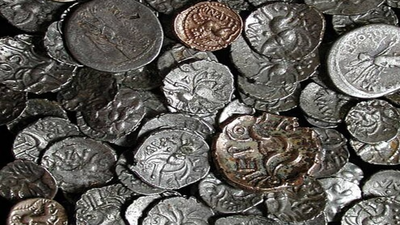
The Hallaton Treasure, the largest hoard of British Iron Age coins, was discovered in 2000 near Hallaton in southeast Leicestershire. Image Credit: Wikimedia Commons
A routine search on a hillside in Leicestershire led to one of Britain’s biggest Iron Age discoveries. Local fieldworkers and metal detectorists found a large number of coins. The discovery was later linked to a sacred site at Hallaton, along with a rare Roman cavalry helmet and other antiquities.Fragments found in a ploughed field prompted major excavations that revealed evidence of ritual activity, animal sacrifice, and contacts between local Iron Age communities and the expanding Roman world. This initial chance discovery led to systematic excavations that transformed scholars’ understanding of the region’s past, according to a University of Leicester.Hallaton: From Coin to Ritual Site of Major Historical SignificanceThe Hallaton finds are important to historians because the coins were not isolated object.
Archaeology of the site revealed that the location was more than a place in which valuables could be hidden or lost in the midst of a rush. The site appears to have been a ritual shrine where objects may have been deliberately deposited over generations.Excavations in 2001–2003 developed into a major project because of an accidental find. The University of Leicester report on the excavations unearthed the site of a major shrine, several coins and the famous Hallaton Helmet.
Coins found in ritual contexts are generally interpreted as offerings rather than accidental losses. The coins are not just lost coins, but indicate repetition of offering and display over long periods. Hallaton was a story of human behaviour and belief and how special Iron Age communities marked out important parts of the landscape.How Hallaton changed views of Iron Age and Roman BritainAccording to a University of Leicester monograph, the finds have substantially revised interpretations of Iron Age–Roman relations in post-conquest Britain.The number of artefacts suggests a complex pattern of interaction, tension and exchange in the political landscape. These artefacts show that local Iron Age communities were not overwhelmed by the arrival of the Romans. The site also shows that local people made active decisions about where to keep, bury and deposit objects. Hallaton offers evidence for how an Iron Age community may have adapted to change.
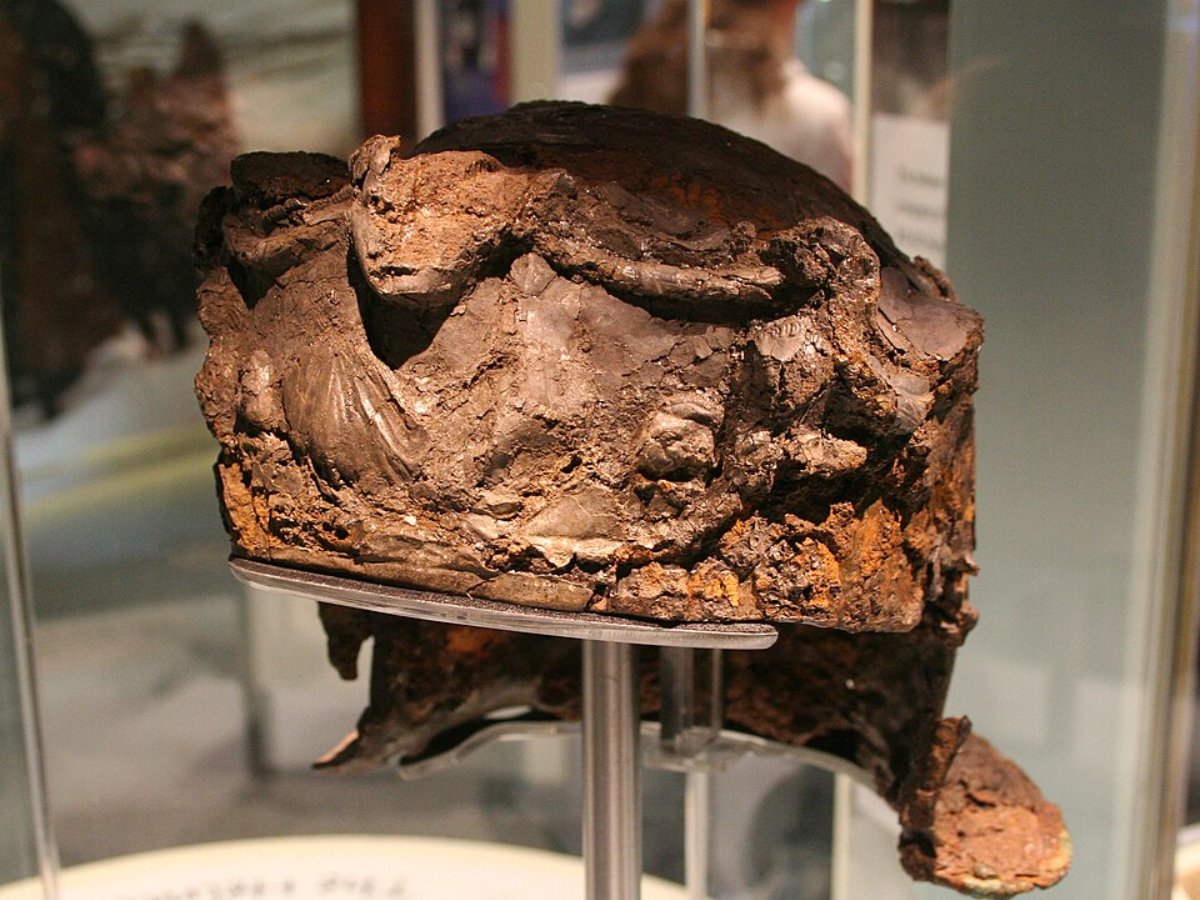
The Hallaton Helmet is a decorated iron Roman cavalry parade helmet originally covered in a sheet of silver and decorated in places with gold leaf. Image Credit: Wikimedia Commons
Coins may indicate trade, wealth or ritual offerings. By contrast, a military-style helmet suggests authority and direct military contact.The helmet may link the hilltop site with the wider Roman frontier.Without over-interpreting the evidence, Hallaton appears to have sat at a cultural boundary between local tradition and Roman practices. This is why it continues to be an important touchstone for discussions about early Britain.Why Hallaton still matters todayArchaeology often begins with a small find that becomes more meaningful when placed in context.
What began as a chance discovery of ancient coins in a field turned out to reflect long-term ritual activity and changing social relations.The research reveals that the assemblage contained more than 5,000 Iron Age and Roman coins, and the legendary helmet. This find is large enough to tell us that the hilltop was a place of many coordinated activities over many generations.The site remains significant because it preserves complex, long-term human activity. It also shows how careful excavation can turn small finds into a fuller historical picture.









 English (US) ·