

 1 hour ago
3
1 hour ago
3
ARTICLE AD BOX
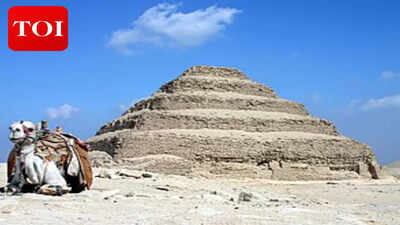
Saqqara is an Egyptian village in the markaz (county) of Badrashin in the Giza Governorate, that contains ancient mausoleum crypts of Egyptian royalty, serving as the necropolis for the ancient Egyptian capital, Memphis. Image Credit: Wikipedia
Opening up an ancient tomb shaft that had been buried for years was not just one more find in Egypt's long list of excavations. Extracting decorated coffins and wrapped remains was an important development in archaeology.
It showed that many details about the past can be studied without opening sensitive objects, which can help preserve information.Saqqara is not just a collection of graves. Over time, newer burials were placed on top of earlier ones, creating a complex underground maze of shafts and chambers. Because the site is so fragile and historically rich, archaeologists must avoid destructive excavation practices. According to a multidisciplinary study that was recently published in PLOS ONE, applying non-invasive imaging methods became essential to research design in Saqqara.Exploring without disturbingThe true merit of the discovery of the painted coffins lies in the lack of need to disturb the artifacts. For centuries, examining a mummy involved dissecting it and destroying the ancient cloth used for the process. The pristine condition of the 2020 coffins makes it possible to use only the high-end equipment currently available to researchers.Computed tomography (CT), also known as a CAT scan, is widely used in the study of Egyptian artifacts. As reported in the British Journal of Radiology Case Reports, the latest generation of cross-sectional CT allows scientists to examine the bones, the soft tissue, and the interior structure of wooden coffins without any intrusion.
Thus, through mapping of inner layers one after another, experts can examine these sensitive artifacts again and again as the technology improves.
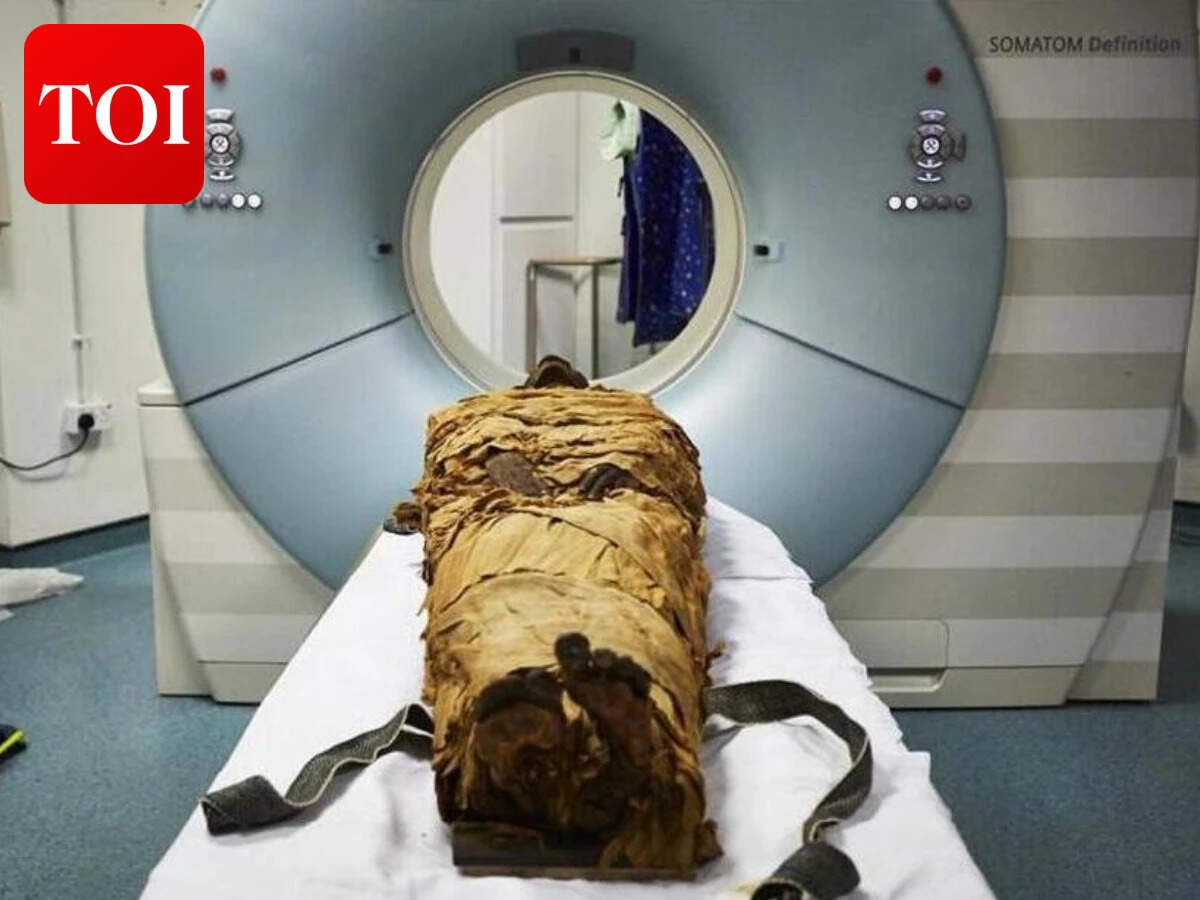
The sound of a 3,000 year old mummified individual has been accurately reproduced as a vowel-like sound based on measurements of the precise dimensions of his extant vocal tract following Computed Tomography (CT) scanning. Image Credit: Wikimedia Commons
Reading the clues on the exteriorAlthough what remains within a coffin is historically interesting, the external features provide equally rich historical records. The painted surfaces, varnishes, and resin layers do not only serve the aesthetic purposes intended for the afterlife.
They also give important technical information regarding the socioeconomic standing of the dead individual, trading routes, and materials available to ancient embalmers.Analyzing the chemical composition of these layers without removing them provides an opportunity to understand the work methods and rituals used to create the coffins. If a coffin is found in a sealed shaft, the connection between the object, its inscriptions, and its environment remains intact.
Using non-invasive methods, researchers can document these connections early so future comparisons are possible.A new paradigm in global archaeologyThis study of artifacts from Saqqara reflects a broader interest in non-destructive archaeology. Destructive excavation is increasingly being replaced by more exacting methods. A single unspoiled tomb shaft can bring together archaeologists, radiologists, and chemists in one project.The painted coffins of Saqqara show that archaeological science can advance without sacrificing discovery. The specialists continue to uncover important insights into the health, culture, and religion of the ancient Egyptians. As analytical instruments continue to improve, material evidence may yield new revelations.









 English (US) ·