

 1 hour ago
3
1 hour ago
3
ARTICLE AD BOX
Last Updated:March 10, 2026, 19:31 IST
After the viral hospital footage of the President, the UAE envoy speaks on leadership, missile defence success and why Iran’s strikes on civilian hubs violate international law


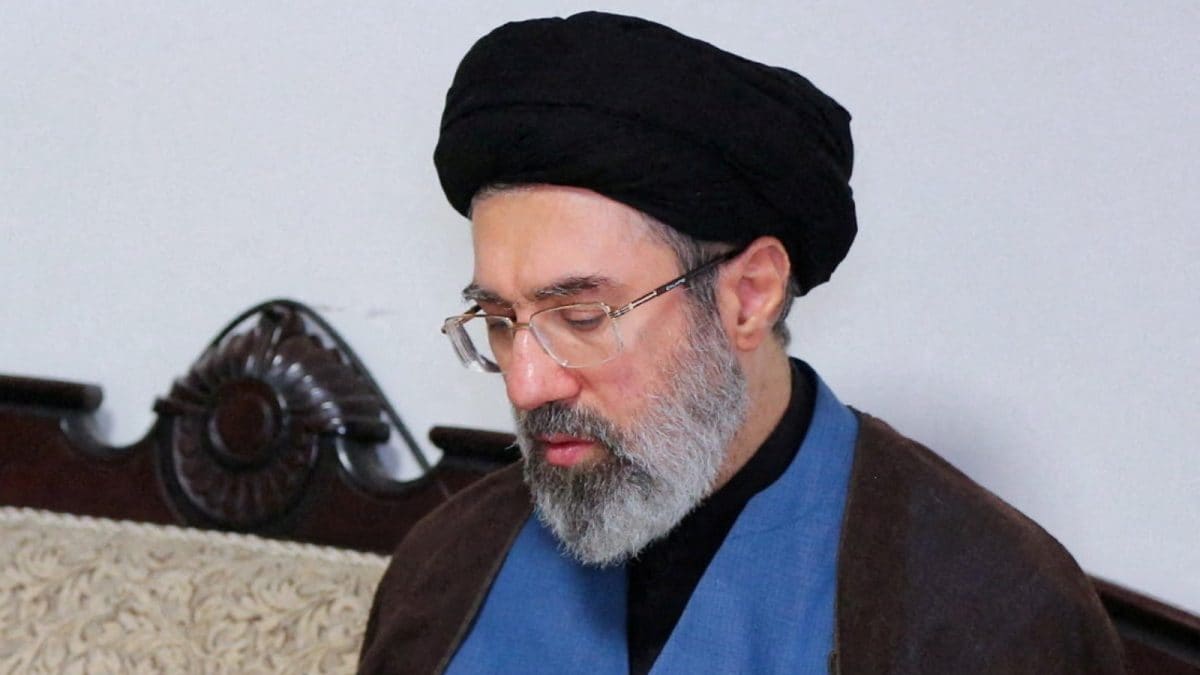
UAE President Mohamed bin Zayed Al Nahyan meets an injured patient receiving treatment at a hospital. (Reuters)
As tensions escalate across West Asia, the UAE has emerged as both a frontline state and a voice for restraint. Viral footage of UAE President Mohamed bin Zayed Al Nahyan visiting civilians injured in recent strikes has resonated widely in India, especially among the large Indian diaspora living in the Emirates. In this exclusive interview with CNN-News18, UAE ambassador Abdulnasser Jamal Alshaali explains the leadership ethos behind the visit, the country’s sophisticated air defence response to Iranian missiles and drones, and why targeting financial hubs and civilian infrastructure is unacceptable under international law. He also highlights India’s support for the UAE’s sovereignty and the enduring bond between Emiratis and the Indian community.
Footage of the UAE President visiting the hospital has gone viral in India. Can you describe the connection between the royal family and its people?
What you saw in that footage was leadership when it mattered most.
His Highness Sheikh Mohamed bin Zayed Al Nahyan went to a hospital to sit with five injured civilians: two Emiratis, one Indian, one Sudanese, and one Iranian.
Let that detail land.
The UAE President visited an Iranian civilian in hospital while Iran was attacking the UAE and said directly, “They are all our responsibility." That is the character of His Highness and our country’s leadership.
He addressed the residents of this country as our extended family.
For Indians in the UAE, that phrase is not a metaphor.
The Indian community has been part of this country’s story for generations: not as guests, but as people who belong here.
When His Highness uses the word “family", he is drawing on a relationship that goes back decades, built in hospitals, boardrooms, construction sites, classrooms, in the very daily life of this nation.
The words of His Highness were those of a person who has watched Indians and Emiratis grow this country together, and who takes the safety of Indians residing in our country personally.
That connection between leadership and people is the foundation on which the UAE has been built.
How has the UAE so effectively intercepted drone and missile strikes from Iran?
The UAE operates an integrated, multi-layer air defence system that combines long-range, medium-range, and short-range capabilities to provide comprehensive coverage of national airspace against a wide variety of aerial threats.
This is not a single system but a layered architecture designed precisely for scenarios of this nature.
As of March 10, UAE air defences have detected and engaged 253 ballistic missiles, with 233 destroyed in the air, 18 impacted at sea, and 2 impacted within UAE territory. 8 cruise missiles were detected and destroyed. Of 1,440 drones detected, 1,359 were intercepted, with 81 falling within UAE territory, causing minor material damage in a limited number of locations.
This performance reflects both the technological sophistication of the UAE’s systems and the high operational readiness of our armed forces, who have conducted themselves with the utmost professionalism, efficiency, and distinction.
The UAE is a peace-loving, business-oriented country. Why are financial hubs and civilian infrastructure being targeted?
The UAE has consistently pursued a path of good neighbourliness, de-escalation, and diplomatic engagement.
The UAE and fellow Gulf Cooperation Council states conveyed clear messages to Iran that their bases and airspace would not be used to launch attacks against it, expecting those assurances to be respected. They were not.
Targeting civilian infrastructure has no military justification.
It is a violation of international humanitarian law. It is also strategically counterproductive. 118 countries and international organisations have condemned these attacks. India is among them.
Prime Minister Modi’s call to His Highness was itself a signal to the world of where India stands—unambiguously in support of the UAE’s sovereignty and the safety of its people.
When a country of 1.4 billion people and the world’s fifth largest economy signals that position, the international community takes notice.
The UAE has not sought escalation. But let me be clear: the UAE reserves its full and legitimate right under Article 51 of the UN Charter to deter aggression. We have chosen restraint.
That restraint should not be mistaken for vulnerability. The UAE’s response has been to defend its territory with professionalism, maintain essential services without disruption, and continue calling for de-escalation through legitimate international channels.
First Published:
March 10, 2026, 19:31 IST
News world ‘Indians Are Family’: UAE Envoy On President Mohamed Bin Zayed's Viral Hospital Visit After Iran Strikes | Exclusive
Disclaimer: Comments reflect users’ views, not News18’s. Please keep discussions respectful and constructive. Abusive, defamatory, or illegal comments will be removed. News18 may disable any comment at its discretion. By posting, you agree to our Terms of Use and Privacy Policy.
Read More





 English (US) ·