

 1 hour ago
9
1 hour ago
9
ARTICLE AD BOX
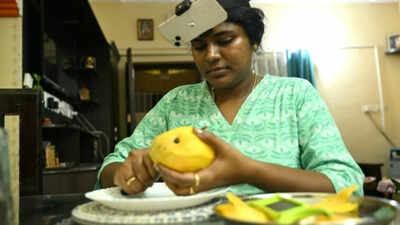
Imagine this: In a small kitchen in Chennai, a woman stands over a cutting board, smartphone strapped to her forehead (like one of those head torches), slicing mango with the swiftness and finesse of a practiced hand.For most of us, this is just another ordinary moment in the kitchen — the kind of household chore performed every day in homes across the country. But somewhere, in a robotics lab far away, every move she makes is being studied — movements that might soon teach a robot how to prepare a meal on its own.All across India, thousands of people are taking part in a low-key experiment that could completely change how we manage daily life.
Homemakers, factory workers, delivery folks, flower sellers, recent grads — they're, in fact, getting paid to film themselves doing all sorts of chores: folding towels, ironing shirts, washing the dinner plates, making tea. Basically, all these everyday actions are becoming the teaching material that will power a whole new breed of AI-driven robots made to help out at home, in offices, and in factories.In essence, it’s hands-on teaching while doing the job.
If you think this is just some sci-fi scenario, think again. India is quickly becoming the world’s leading launch pad for these futuristic helpers.
Why human touch is *crucial* in teaching robots
We all saw how AI exploded recently: from chatbots and image generators to endless waves of new tools. Those work because computers can soak up mountains of digital data. But teaching a robot is a totally different challenge.Now, a robot doesn’t just need to recognize a mango. It needs to know how to pick it up without squishing it, how to hold a knife, how to adjust when the fruit changes shape, and what to do if it slips.
The things humans barely think about are often the very tasks robots struggle with most.In fact, researchers have a name for this: “embodied AI” or “physical AI.” That means robots with smarts, but also with hands, eyes, and the ability to really interact with their environment. To pull this off, developers need tons of real-world examples, recorded from real people, just going about their routines.Which is where India comes in.
Meet the chore trainers of the AI era
Take Nagireddy Sriramyachandra, a 25-year-old in Chennai. As reported by Agence France-Presse, she straps a phone to her head and records herself doing chores around the house. Her videos go straight to AI data companies. They go over every frame, teaching the machines how to replicate people's actions: how to grab, turn, fold, and move like a human.
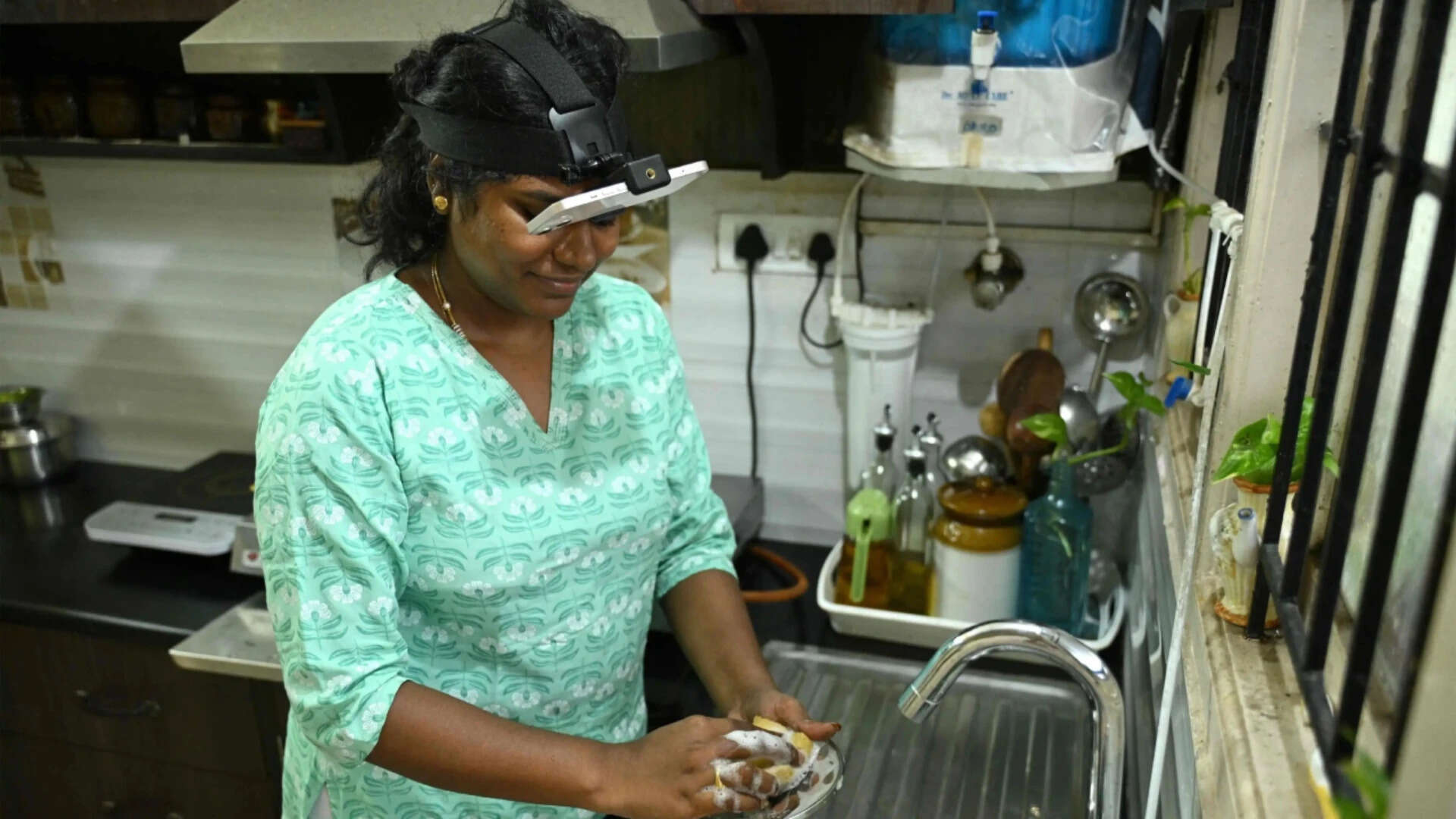
For contributors like her, it’s a new way to earn money. Some earn a bit over two dollars an hour, depending on the task.“Who else pays you 250 rupees an hour just for doing housework?” she says, with a hint of gratitude in her voice, between tasks.She laughs, “Maybe I’ll get a robot for myself someday.”Most of these recordings use an “egocentric” camera, which is basically a first-person view. The camera captures exactly what she sees and does. Every small twist of the wrist, each fumble, every angle and grip — all get turned into data for the robots.And as it turns out, companies are hungry for these exact hands-on recordings: cooking, folding clothes, making tea, doing dishes, arranging random objects on a shelf. If you do it at home, they want it on tape — that’s their training material.
India’s place in the robot revolution
You might know India as a tech support center, or as the world’s hub for data labeling and content moderation. While a chunk of the brightest and most brilliant minds migrate to Silicon Valley, the rest of them end up in the ecosystem of assisting and supporting those operations.But that work is shifting. India now produces the building blocks for AI robots needing to learn about the physical world.And the humanoid robot market is heating up. In fact, Morgan Stanley’s projection says there could be a $5 trillion global market with over 1 billion humanoid robots by 2050, mostly on the industrial and commercial side.Companies like Objectways, based in both India and the US, collect data for clients around the globe.
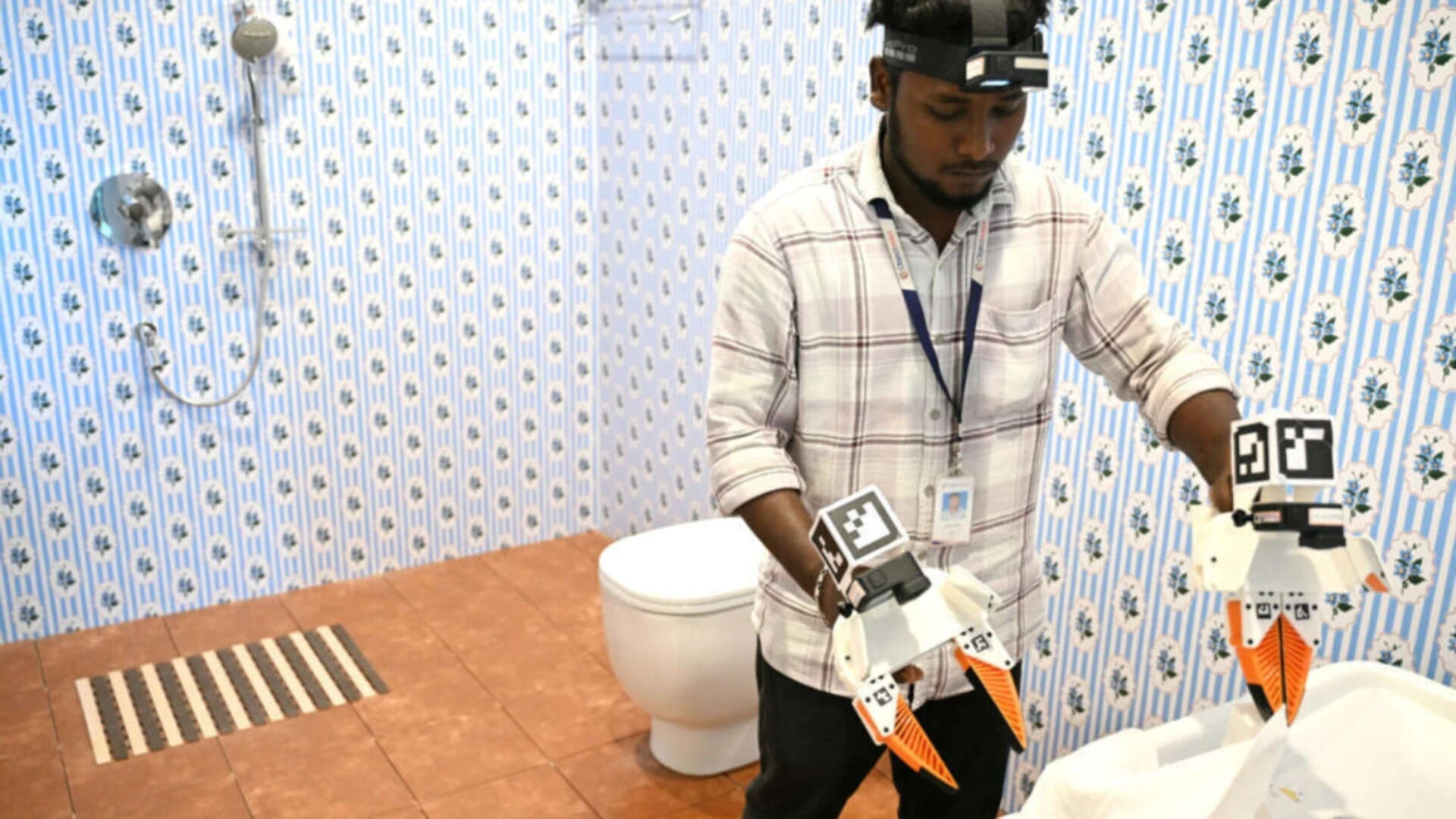
Some people film from their own homes, while others work in studios set up that look like real apartments, complete with kitchens and bedrooms. They repeat tasks over and over (think folding towels, making sandwiches, organizing furniture) — all day long.Per the AFP report, “Folding clothes, making coffee, cooking this or that, even something as basic as sandwich making,” says Ravi Shankar, head of Objectways. He believes robots are meant to take over these chores so people can focus on more meaningful work.
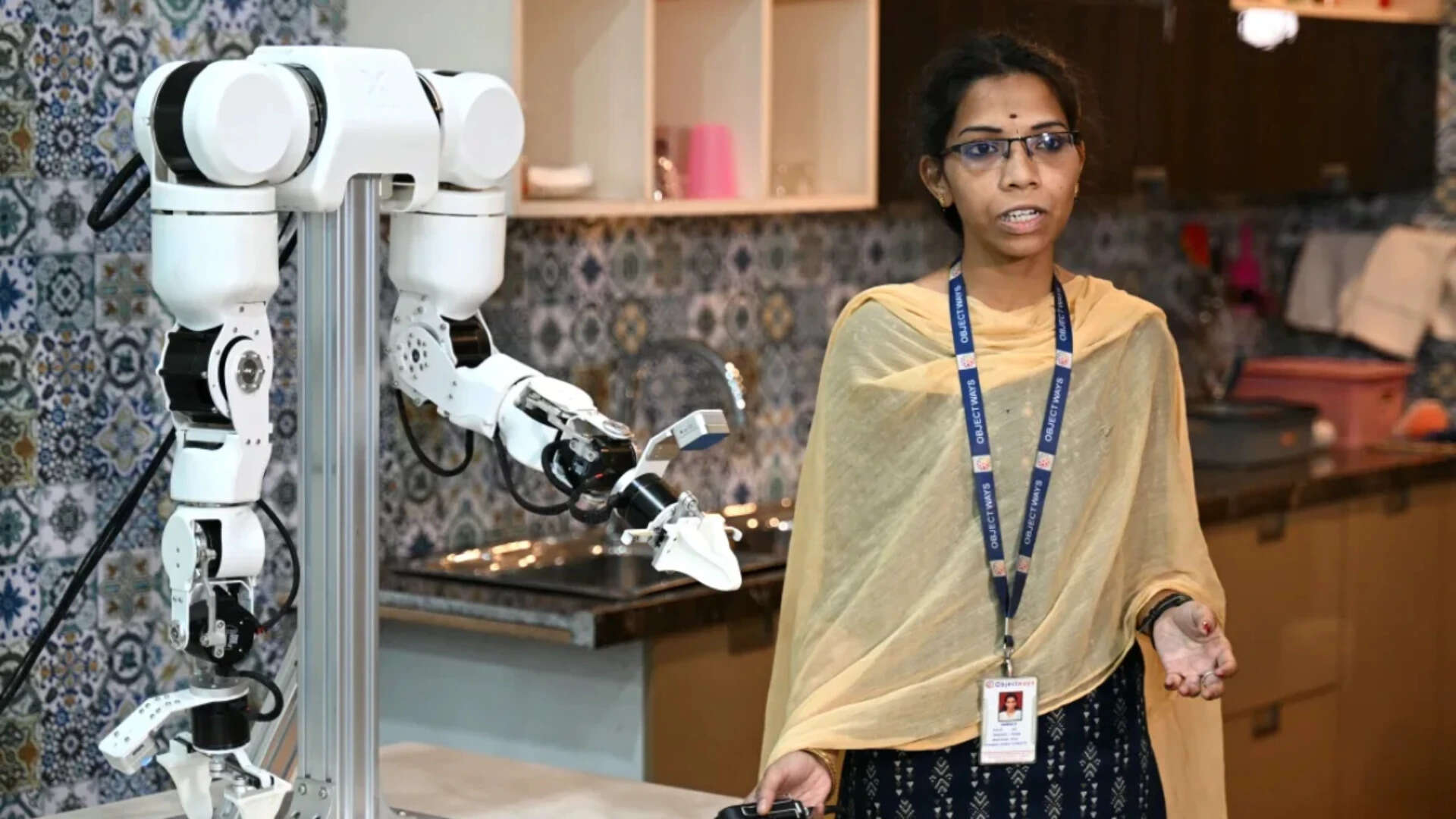
For now, this “spatial AI” industry means new jobs in places like Tamil Nadu, where Shankar himself grew up. Textile workers, craftspeople, and factory staff — all help teach robots fine motor skills, sometimes wearing motion sensors on their arms and legs.The same report shows, at a textile factory in Karur, eight workers with head-mounted cameras iron fabric and add labels to hats, all for AI training. Sometimes they’ll switch up the wallpaper or furniture, just to make sure the robots see a wide range of possible homes.As Aditi Surie, a digital labor researcher in Bengaluru, points out, India has become the world’s middleman for this kind of AI training data. “It's likely that these data collection services will increase,” she says, as companies line up for more recordings, and the industry just keeps growing.
How household chores became a technological puzzle
At first glance, a lot of these chores seem ridiculously simple. We do it on a regular basis — what’s so complex about these that a technical tool has to follow these chores to learn those step-by-step!Take towel folding, for example: you see a corner, grab it, flip the fabric, smooth out the wrinkles.
But for a robot, this is a major challenge. It has to figure out where to grab, predict how the towel will flop around, and make every motion count so nothing falls on the floor.But academic research shows even “easy” tasks like folding laundry or washing dishes stump robots way more often than one would expect. Every house is different: the lighting, the layout, the shape of your cups, the creases. The variables seem endless.The hope is that, with enough videos and sensor data, the machines will finally learn how to handle all the real-life messiness humans take for granted.
A growing industry — with fresh anxiety about automation, and uncertain expectations
Clearly, as per the AFP report, India’s role in AI training is only getting bigger. Everyone from big companies to government think tanks is watching the rise of humanoid robots and wondering what it means for jobs.If Morgan Stanley’s prediction stands true, there’s a growing worry that the AI boom could wipe out whole categories of work, mainly among white-collar professionals.But NITI Aayog, the Indian government's tech think tank, points out that barely anyone talks about India’s informal workforce.
As per a report released ahead of a global AI summit in India this year, most discussions around artificial intelligence and labour "focus on white-collar professionals and predict an almost certain loss of jobs in the segment" without urgent action. The report also underlines, "Little attention, if any, is paid to how AI can serve India's 490 million informal workers, the very people who form the backbone of our economy.
"Instead of just worrying about lost jobs, the report urges that we think about how AI might actually help or hurt workers in less visible, hands-on jobs — like cobblers, street vendors, and farmers.
The human hands behind tomorrow's machines
There's something quietly remarkable about all this — AI learning human movements, with the aim of mimicking them eventually. For as long as anyone can remember, chores have been the most normal (and universal) thing people do.
Washing dishes after dinner, folding laundry on a sleepy morning, cutting up fruit in a sunlit kitchen. Billions of small routines play out every day, everywhere.Now, these ordinary moments are being turned into data, like digital lessons for machines that might share our living spaces someday.Per the AFP report, Manish Agarwal of Humyn Labs in Bengaluru doesn’t just film actions — he records conversations, too.
Clients ask for everything from political debates to entertainment chat, all in service of AI speech recognition.Agarwal doesn’t think robots will destroy livelihoods. He imagines a future where workers and robots team up. “A welder in India might end up managing a robot welder in Prague,” he says.
A future with ‘domestic robots’? Excitement, concern, and a few tough questions
All this robotic progress feels huge — and it’s supposed to be. People may say it or think about it with utter ease: machines that can do the repetitive stuff we’d all rather avoid, like cleaning, cooking, helping the elderly, organizing the house, and all that.But is it that easy to imagine a future where robots — not our dear domestic workers (house-help didis or bhaiyas) — do all this work?What about those whose sole livelihood lies in that sector?Not everyone is thrilled about training robots, especially since the final result might be a machine that replaces your own job.Take Ponni, 55, who’s made flower garlands on the roadside in Bengaluru for years. She’s worn a phone on her head too, but she wonders out loud: “If the next generation has to do work like mine, they’re going to have a problem.”People are worried about this shift. Some fear they’re “training their own replacements,” while others say progress can’t be stopped anyway.Furthermore, there’s a valid debate about the fast-changing scenario: Do people really know what their footage is being used for? Are they paid fairly for creating training data that will be worth a fortune later on?
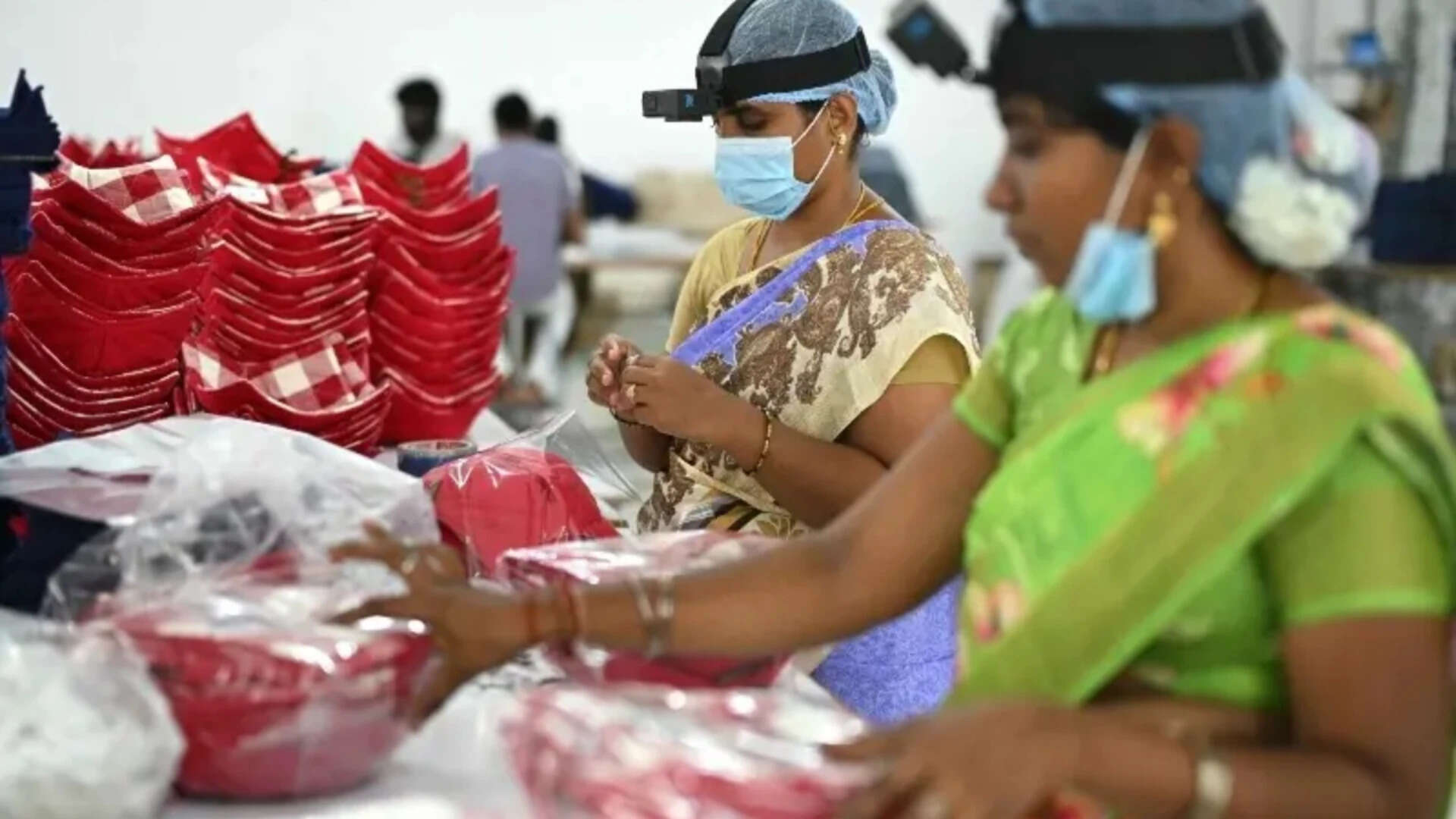
There’s plain old fatigue, as well.At Objectways' studio, engineering grad Rani N. spends hour after hour filming herself folding towels on different spots of a bed, just so the AI gets enough variations.
She calls the job “tolerable,” but admits it takes getting used to — always being “on camera.”Privacy is another worry. These first-person recordings often show the private details of people’s homes and daily lives. Unless strong rules around consent, privacy, and fair pay are enforced as these projects scale up, there’s a worry that all this will end up being nothing but exploitative.Will this future feel like freedom or disruption?Probably a little of both.But one thing is certain: the tech behind tomorrow’s household robots isn’t just being invented in Silicon Valley labs. It’s coming together in Indian kitchens and bedrooms, thanks to regular people who are teaching robots, step by step, one small chore at a time.Sure, supporters of an AI-coded future believe that this work can ultimately save people from daily drudgery and open the door to newer kinds of jobs — like being exposed to fresh perspectives. Their hope? Maybe the future isn’t people against robots, but people and robots, working side by side.Will the reality align with those hopes?Time will tell.All we can do right now is keep up with the changing landscape and wait for it to unfold.









 English (US) ·