

 1 week ago
13
1 week ago
13
ARTICLE AD BOX
Last Updated:April 07, 2026, 13:03 IST
Iran Wants Human Chains As Military Shield For Power Plants, Bridges: How do human chain protests work? Has it been used in Iran before? What does the law say? News18 explains


Iranian army members march during Army Day parade at a military base in northern Tehran. (AP File)
In response to US President Donald Trump’s threats, Tehran has announced ‘Iran’s Youth Human Chain for a Bright Future’ specifically targeting power plants and bridges. The Iranian government wants the nationwide ‘human chain’ protests to serve as a physical and symbolic shield against threatened US military strikes on the country’s civilian infrastructure.
How do human chain protests work? Has it been used in Iran before? What does the law say? News18 explains
HOW DO HUMAN CHAIN PROTESTS WORK?
A human chain is a form of non-violent demonstration where participants link arms or hands to show solidarity for a common cause. Thousands of people stand in a continuous line, often spanning kilometers across cities or around specific sites.
They are used to create a “human ring" that physically blocks access to a location or visually demonstrates the scale of public support for a movement.
By standing together peacefully, protesters aim to convey a message of unity and “reserved but commanding power".
A UNIQUE ‘MILITARY SHIELD’ IN IRAN
Iranian officials, including the Deputy Sports Minister Alireza Rahimi, have specifically urged athletes, artists, and students to form human chains around power plants and bridges.
The tactic is being used for the following reasons:
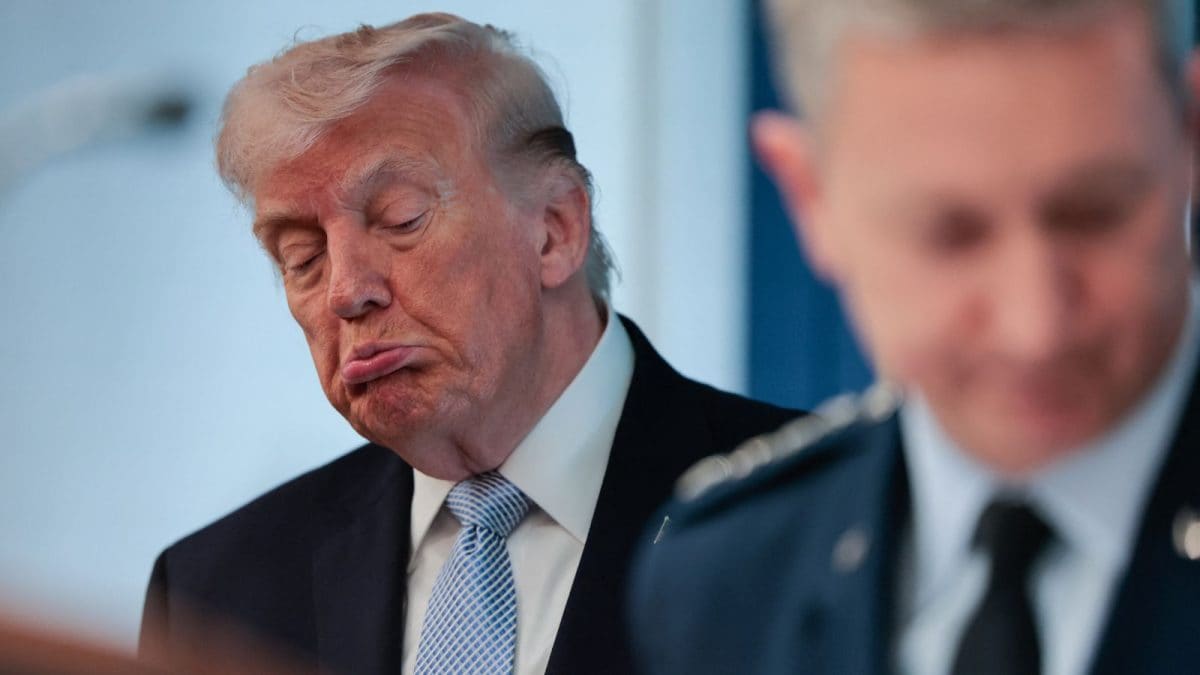
- The move is a direct response to ultimatums from US President Donald Trump, who threatened a massive bombing campaign against Iran’s electrical grid and infrastructure if the Strait of Hormuz is not reopened.
- By placing civilians at potential targets, Iran is highlighting that attacking such infrastructure would constitute a war crime.
- On Hormuz Island, residents formed a human chain along the coast to signal that any military intervention would face a united nation rather than just a government.
- Critics and opposition figures argue the regime is using “human shields" to protect high-ranking officials and security sites, noting instances where officials stood among ordinary worshippers or crowds during active strike threats to avoid being targeted.
HAVE HUMAN CHAINS BEEN USED AS SHIELDS IN IRAN IN THE PAST?
Iran has frequently used human chains during periods of high tension to signal national resolve and protect strategic assets. Iran has previously organized human chains around its nuclear sites, such as
Natanz and Bushehr, during past standoffs with the West to demonstrate that any strike would result in civilian casualties.
In 2020, following the shootdown of Flight 752, some officials speculated that Iran kept its civil airspace open during military operations to use passenger jets as a deterrent against retaliatory strikes.
HAS HUMANS BEEN USED AS MILITARY SHIELD GLOBALLY?
The use of civilians to shield military or infrastructure targets is a documented — although often illegal — tactic in modern warfare.
Libyan Civil War (2011): Gaddafi loyalists formed human chains around his compound and airports to protect them from NATO-enforced no-fly zone strikes.
Iraq War (2003): Hundreds of Western anti-war activists voluntarily travelled to Baghdad to act as human shields. They were deployed to strategic sites like the Baghdad South power station and oil refineries to deter coalition bombing.
Bosnian War (1994): Bosnian Serb forces used captured UN personnel as shields at potential NATO bombing sites.
Gulf War (1990–1991): Saddam Hussein’s government detained hundreds of Western “hostages" and placed them at strategic military and industrial sites to prevent an Allied attack.
Israel-Palestine Conflict: Both sides have faced accusations. Human rights groups have documented the Israeli military’s “neighbour procedure", where Palestinian civilians were used to clear buildings. Conversely, Israel has frequently accused groups like Hamas of placing military infrastructure under hospitals and schools to use civilians as shields.
IS IT LEGAL TO USE HUMAN CHAINS AS SHIELDS?
Under the International Humanitarian Law, the use of human shields — whether voluntary or involuntary — is considered a war crime. However, attacking a site shielded by civilians still requires the attacking force to adhere to the principle of proportionality, meaning they must avoid excessive civilian harm relative to the military advantage gained.
The international legal consequences for using or attacking human shields are governed by complex rules that balance the protection of civilians with military necessity. Under current international law, both the state that uses human shields and the military that attacks them can face significant legal liability.
As of April 2026, United Nations investigations have documented widespread use of these tactics. Consequently, international bodies and specific national legislations, such as the U.S. Sanctioning the Use of Civilians as Defenseless Shields Act, are increasingly applying targeted sanctions against individuals responsible for such actions.
A look at the consequences:
Legal liability and consequences: Using human shields constitutes a clear violation of International Humanitarian Law (IHL) and is defined as a war crime under the Rome Statute of the International Criminal Court (ICC). Leaders and commanders can face individual criminal responsibility for directing such actions, with increasing pressure toward international prosecution. These acts are also prosecuted by tribunals as “outrages upon personal dignity" and inhuman treatment.
The presence of human shields does not exempt an attacking force from the core IHL principles of proportionality and precaution. Attacks must be suspended if expected civilian harm is excessive relative to the military advantage. Ongoing debates in 2026 examine if the wrongful use of shields by a defender should adjust the legal threshold for “excessive" damage.
Voluntary versus involuntary shields: While coerced (involuntary) shields retain full protection, the status of voluntary shields remains debated. Although some, according to the ICRC, might lose protections by directly participating in hostilities, they should generally still be factored into proportionality assessments to prevent disproportionate damage.
KEY FAQs
What is Iran asking people to do?
Iranian authorities have reportedly called on citizens—especially youth, athletes, and artists—to form “human chains" around power plants and key infrastructure to deter possible airstrikes amid rising tensions.
Will human chains actually protect these sites?
Not really. In military terms, such actions rarely stop attacks—modern weapons can still strike targets. At best, it may act as a psychological or political deterrent by raising the risk of civilian casualties.
Is this legal under international law?
Generally, no. Using civilians as “human shields" to protect military or strategic targets is prohibited under international humanitarian law and can be considered a war crime under the Geneva Conventions and the Rome Statute.
With agency inputs
First Published:
April 07, 2026, 13:02 IST
News explainers Iran Wants Human Chains To Protect Power Plants And Bridges: Will It Work? Is It Legal?
Disclaimer: Comments reflect users’ views, not News18’s. Please keep discussions respectful and constructive. Abusive, defamatory, or illegal comments will be removed. News18 may disable any comment at its discretion. By posting, you agree to our Terms of Use and Privacy Policy.
Read More







 English (US) ·