

 53 minutes ago
6
53 minutes ago
6
ARTICLE AD BOX
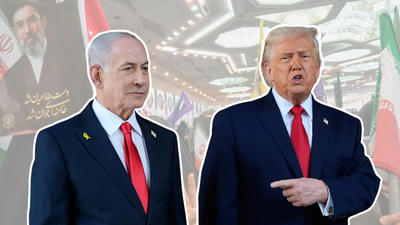
Israel’s decision to resume strikes on Beirut’s southern suburbs has added a new layer of complexity to the fragile diplomacy between Washington and Tehran, with Iranian officials questioning whether military escalation by Israel is undermining efforts to reach a broader agreement with the United States.The renewed attacks come as US and Iranian officials continue indirect negotiations aimed at ending months of confrontation across the region. While discussions remain focused on security issues, Tehran has repeatedly argued that developments in Lebanon cannot be separated from wider US-Iran talks. Iranian Foreign Ministry spokesperson Esmaeil Baghaei said on Monday that negotiations were progressing slowly because of deep mistrust, conflicting messages from Washington and continued Israeli military actions.“Negotiations have started amid severe suspicion and mistrust, and the exchange of messages is taking place in this atmosphere,” Baghaei said. He added that “the other party is constantly changing its views and putting forward new or contradictory demands (...) it is natural that this situation will prolong negotiations.”The remarks came hours after Israel announced it would resume strikes on Beirut’s southern suburbs, known as Dahiyeh, a Hezbollah stronghold that had largely been spared from major attacks in recent weeks following pressure from the administration of US President Donald Trump.
Beirut strikes raise questions over diplomacy
Israeli Prime Minister Benjamin Netanyahu and Defence Minister Israel Katz said they had instructed the Israel Defense Forces to strike Hezbollah targets in Beirut following what they described as repeated violations of the ceasefire by the Iran-backed group.“Following the repeated violations of the ceasefire in Lebanon by the Hezbollah terror organization and the attacks against our cities and citizens, Prime Minister Benjamin Netanyahu and Defense Minister Israel Katz instructed the IDF to strike terror targets in the Dahiyeh quarter of Beirut,” their joint statement said.The move followed reports that Israel had been lobbying Washington for approval to expand operations against Hezbollah in Beirut. According to reports cited by The Times of Israel, Netanyahu had spoken with US Secretary of State Marco Rubio in an effort to secure greater freedom of action, while Israeli officials acknowledged privately that American restrictions had limited military operations in the Lebanese capital.“The Americans are showing greater openness, but there is still no final approval — at least for now,” an Israeli official told Israeli media.A senior US official said Washington had proposed a de-escalation formula under which Hezbollah would halt attacks on Israel first, with Israel then refraining from escalating military action in Beirut. However, Lebanese officials and Hezbollah allies rejected the sequencing, insisting that Israel should stop military operations before any commitment from Hezbollah.
Iran links Lebanon ceasefire to wider US talks
For Tehran, developments in Lebanon have become closely tied to negotiations with Washington. Baghaei argued that Israeli actions in Lebanon could not be viewed separately from US policy in the region and said any agreement aimed at ending the wider conflict would have to include implementation of a ceasefire in Lebanon.Iran has also accused Washington of sending mixed signals during negotiations. Baghaei warned that if contradictory statements were part of a negotiating tactic, they would fail, while adding that if they reflected divisions within the US administration, Washington needed to establish a clearer position.At the same time, US officials have accused Iran of encouraging Hezbollah to maintain military pressure on Israel to strengthen Tehran’s leverage in talks with Washington. One senior US official was quoted as saying that “Hezbollah is following Tehran’s lead” and had shown little interest in de-escalation.








 English (US) ·